1AB Isle of Man

Browse the Collection

A changing selection. Much passes through 1AB unseen; particular enquiries are always welcome.

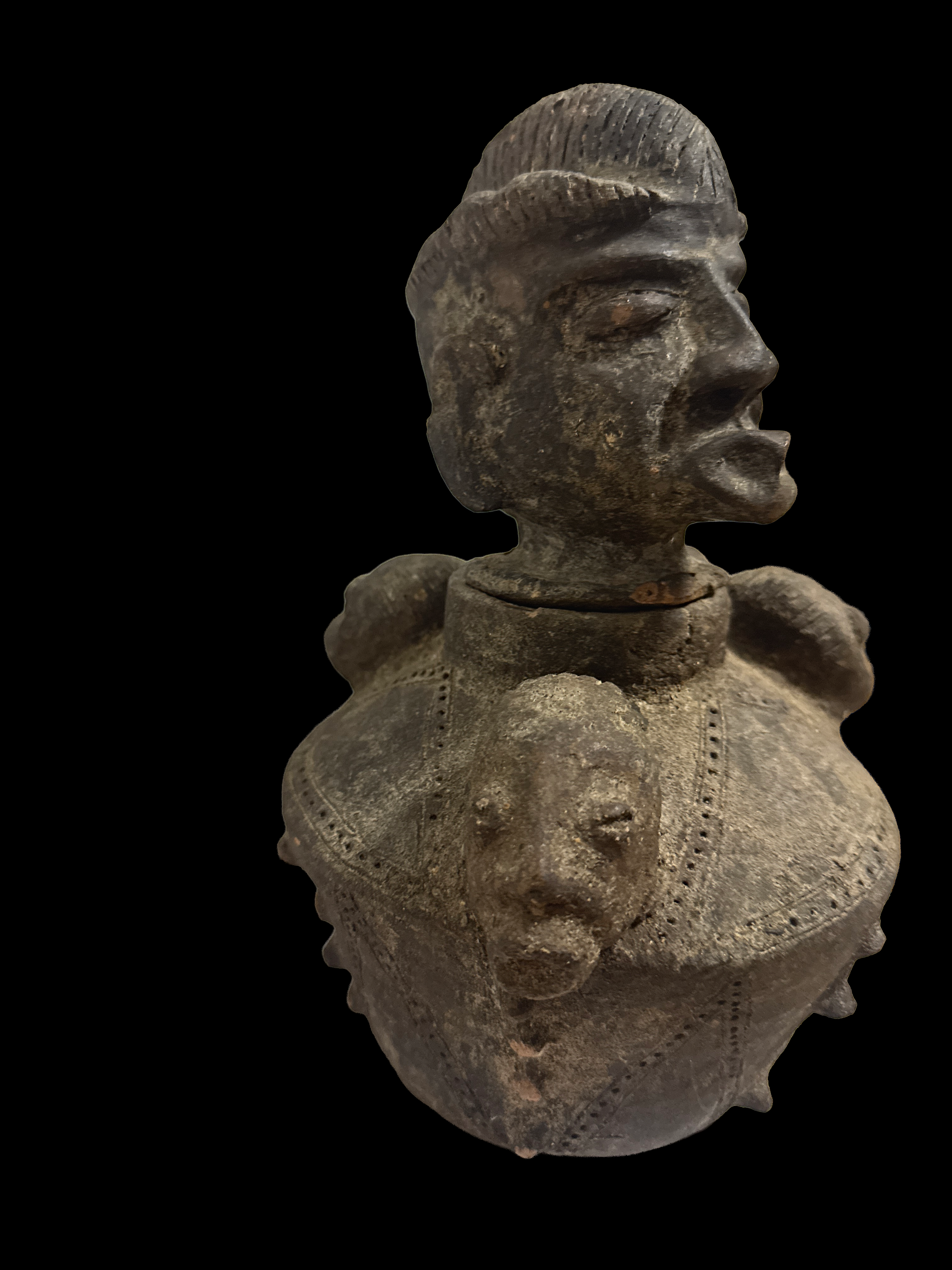
An Unusual African Anthropomorphic Terracotta Vessel
Collectables

Anthropomorphic Effigy Vessel with Removable Head

attr. early 20th century

A striking anthropomorphic vessel, crowned by a removable human head of remarkable expression, its heavily lidded eyes, pronounced projecting lips and finely incised coiffure lending the face an arresting, almost haunting presence. The globular body is richly worked with punctate geometric bands, in raised bosses and an unusual arrangement of three subsidiary heads, creating a composition of considerable sculptural character.

From the longstanding private collection of a French missionary who lived and worked in Africa, for whom the vessel was a particularly treasured piece. According to his account, vessels of this character were associated with persons of standing.
The Elephant in the Room
Art

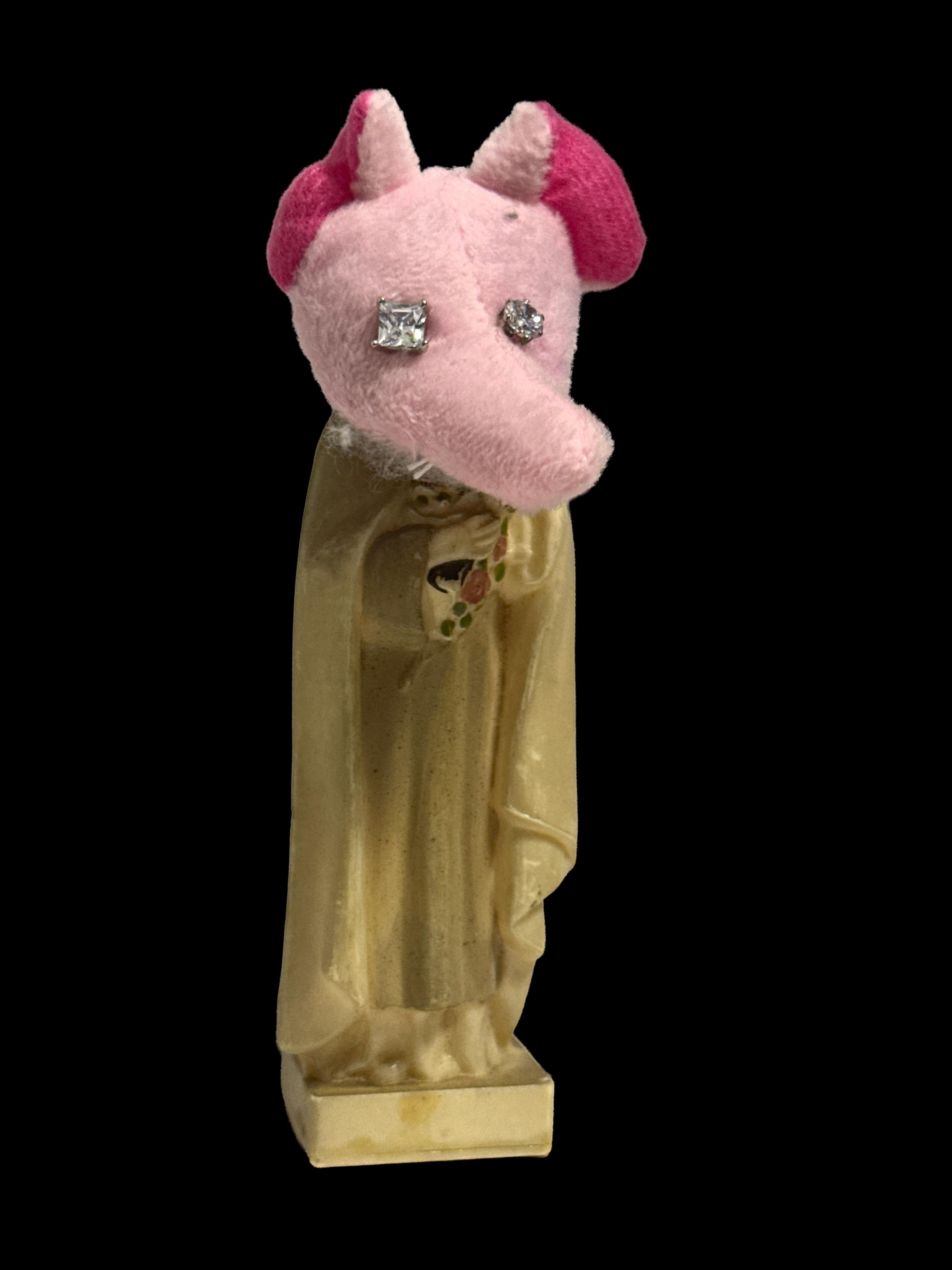
The Elephant in the Room

A ruminative work by this late NY socialite and artist, pairing a devotional statuette with a pink plush snout and rhinestone eyes

Produced late in a fiercely original practice, this intimate work by Helen Livingston Broome sets a pink plush snout and mismatched rhinestone eyes against a cream-and-gilt devotional statuette. It captures Broome's dry theatricality in miniature: high-camp absurdity held inside a restrained silhouette that rewards lingering attention and holds its own beside far larger work

Studio and collection of the artist, New York; thence by descent to the present owner. Accompanied by a letter of authentication from the Estate of Helen Livingston Broome

Compact at 12.5 cm yet visually assertive, the piece balances soft-toy fabrication and paste sparkle against quiet figurative form, offering a sharper, more concentrated counterpoint than broader multi-part assemblages while holding its ground alongside larger works in a cabinet or collection

Price on enquiry
Some Bunny Loves You (The Three Graces)
Collectables

Some Bunny Loves You (The Three Graces)

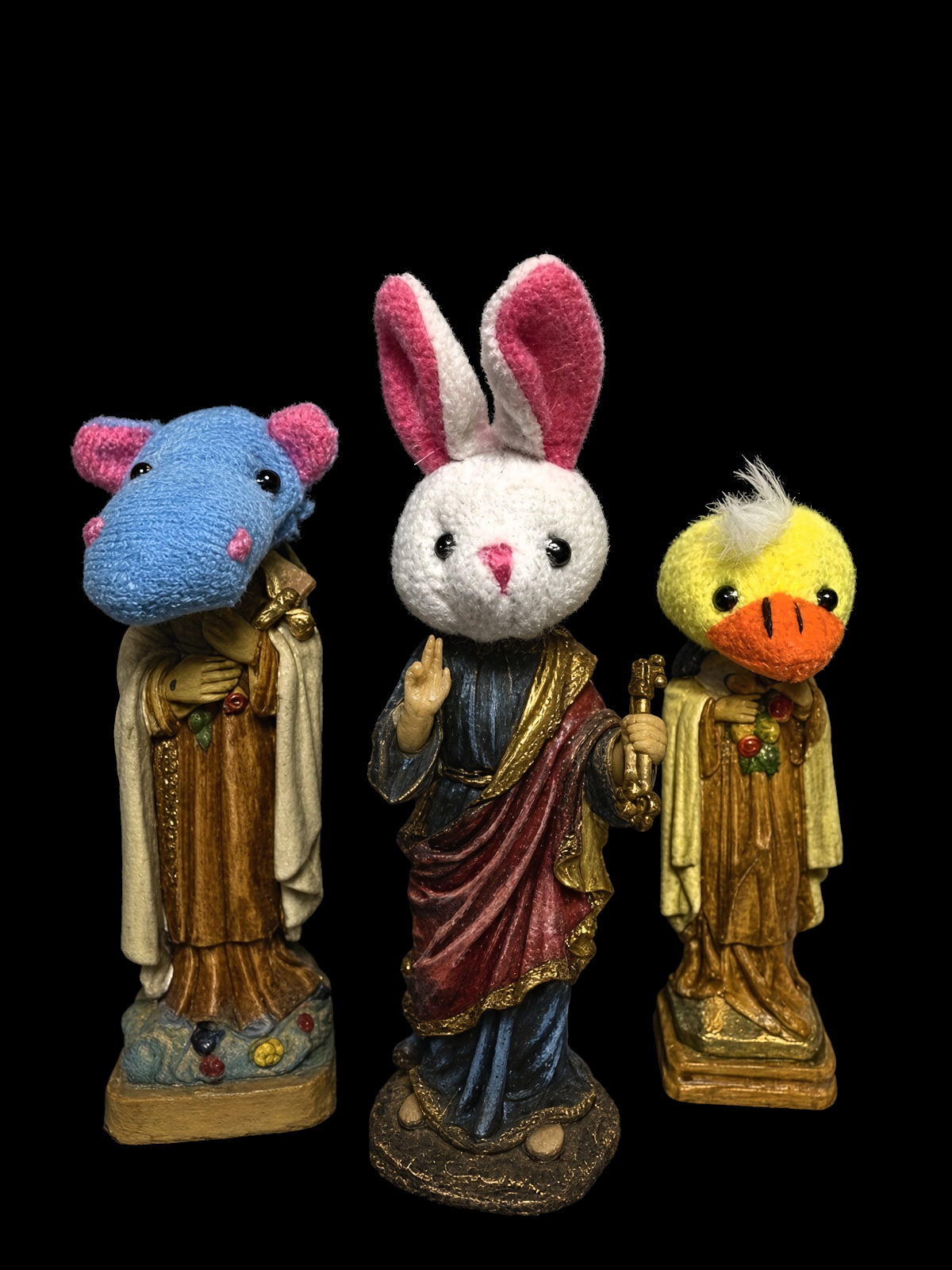
A surviving three-part assemblage from the artist's installation "Waiting for God"

Made in the eighth decade of a fiercely independent practice, this singular three-part assemblage survives from Helen Livingston Broome's larger work "Waiting for God" (c. 2006). Pairing traditional polychrome devotional statuettes with stitched animal heads, a white rabbit, a blue hippo and a bath-time yellow duckling, the work exemplifies Broome's deliberate selection and provocation: a sharp, camp collision of sacred iconography, tripartite form and familiar archetypes that yields more the longer you look, rewarding a second glance and commanding pride of place

Studio and collection of the artist, New York; surviving fragment from "Waiting for God"; thence by descent to the present owner. Accompanied by a letter of authentication from the Estate of Helen Livingston Broome

Characteristic of the Artist's trailblazing sensibility, the piece shares the subversive figurative language of her dioramas, distilling a six-decade command of stitched, wearable and found textiles into an intimate tableau charged with ark-like and apostolic tension; it held pride of place in her New York studio apartment

Price on enquiry
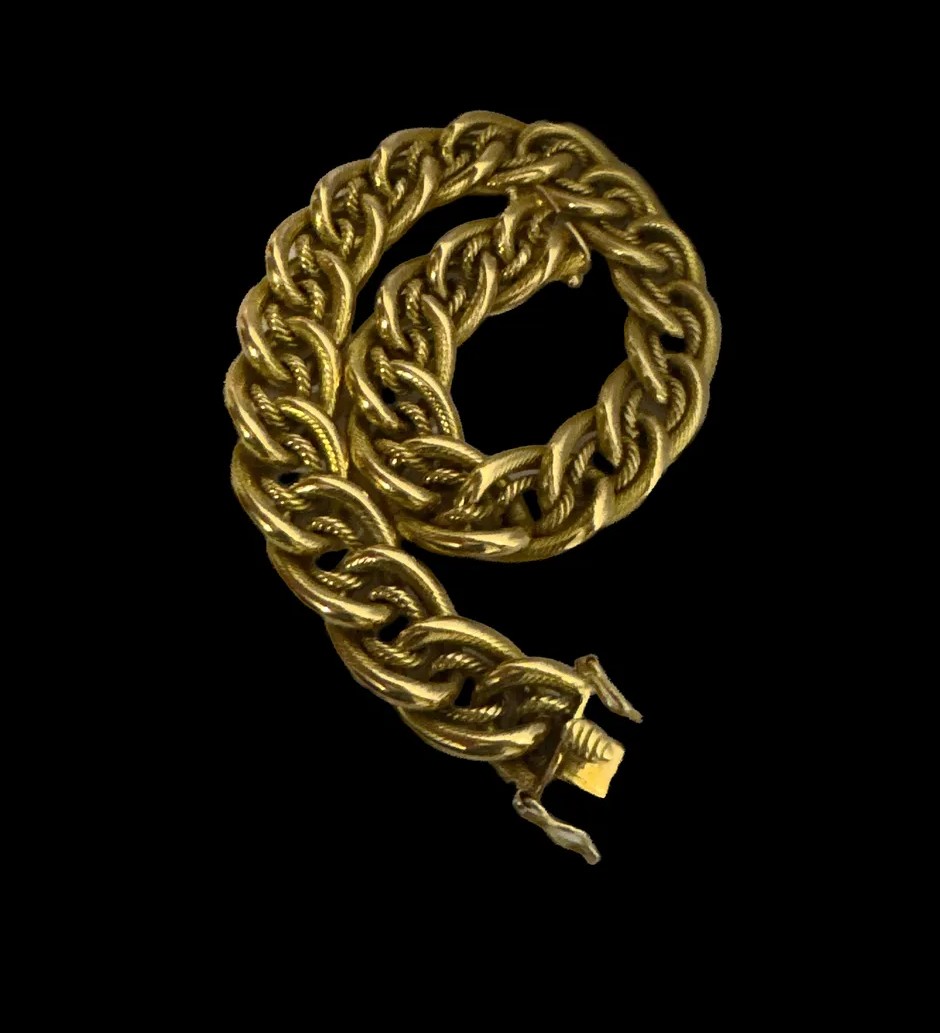
18ct Gold Rope-Edge Gourmette Bracelet
Jewellery

18ct Gold Rope-Edge Gourmette Bracelet

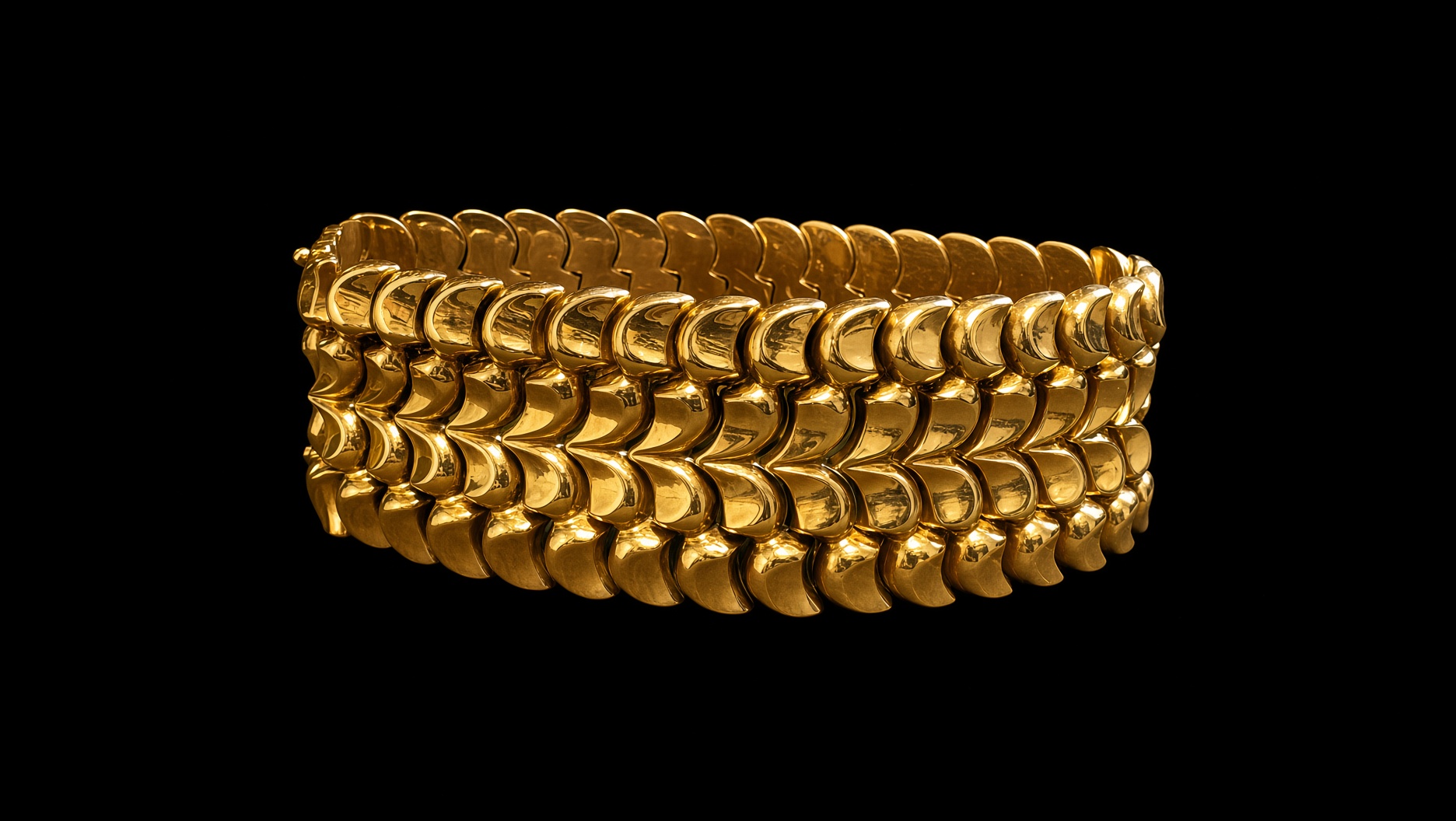
Substantial mid-century gold double-curb link bracelet with twisted-wire accents and dual safety catches

Crafted in richly toned 18ct gold, this Italian heirloom bracelet pairs bold architectural scale with fluid wrist articulation. Alternating smooth outer curb links with finely twisted rope-wire inner links, it fastens via an integrated box clasp flanked by twin figure-eight safety catches and bears official post-1968 Italian workshop assay marks.

Formerly in the personal collection of an Italian Countess.

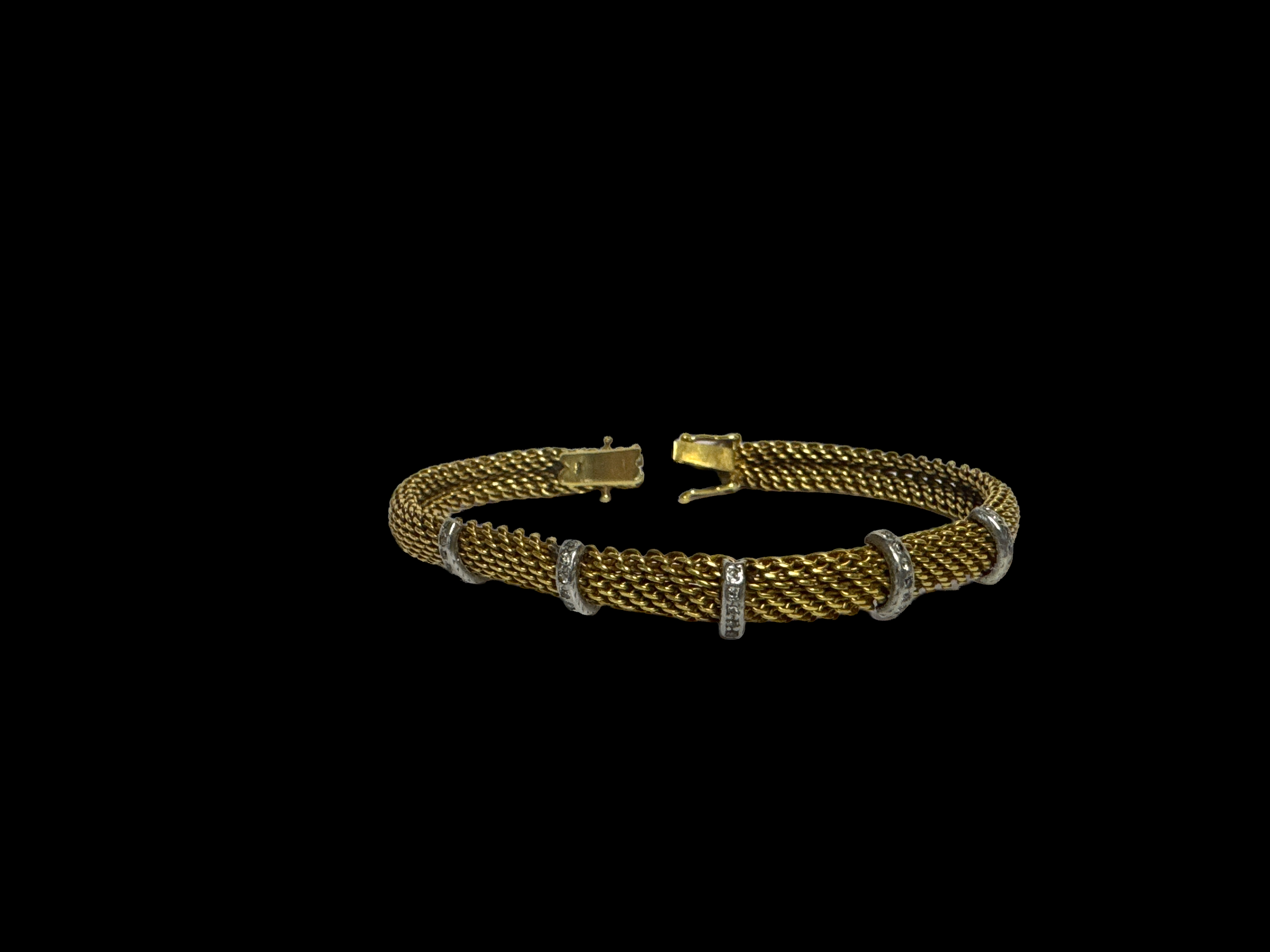
18ct Gold Woven-Mesh & Diamond-Set Platinum Rondelle Bracelet
Jewellery

18ct Gold Woven-Mesh & Diamond-Set Platinum Rondelle Bracelet

Substantial 18ct yellow gold tubular mesh bracelet set with five diamond-pavé platinum bands repurposed from a Cartier ring; New York society provenance

Supple, heavyweight mid-century goldsmithing meets an intimate piece of Park Avenue history. Weighing 26 grams and fitted with a concealed integrated box clasp and figure-eight safety catch, the fluid tubular mesh is punctuated by five graduated platinum spacer rings pavé-set with white diamonds—repurposed directly from the wearer's family Cartier ring. Further documented provenance is available upon private enquiry
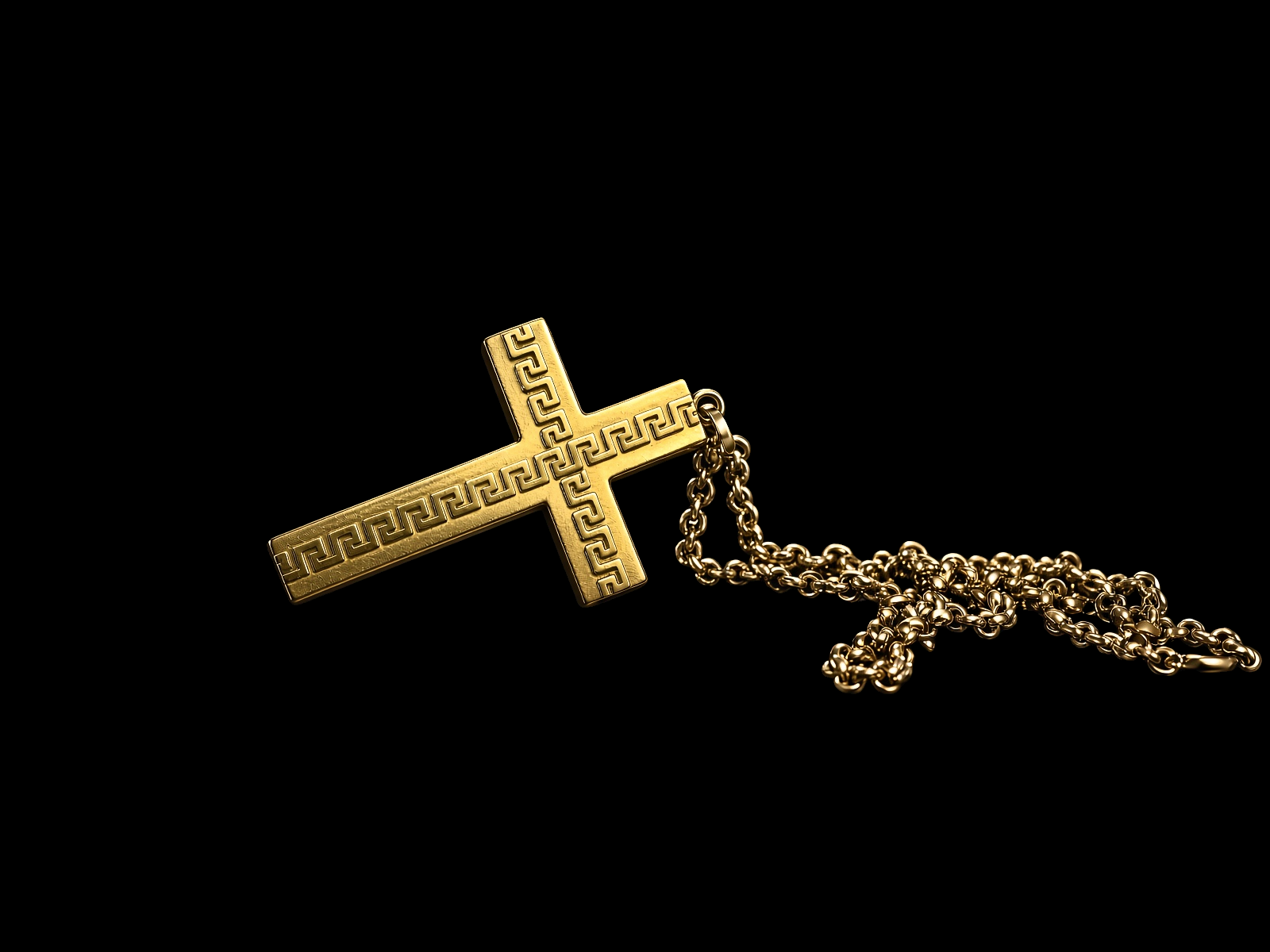
Monumental Gold Greek-Key Cross & Belcher Chain
Jewellery

Monumental 9ct Gold Greek-Key Cross & Belcher Chain

Substantial architectural 9ct gold cross with relief Greek-key border on chain; Anglo-American society provenance

Crafted in mid-century yellow gold, this sculptural cross pendant and belcher-link chain unite commanding scale with crisp architectural restraint. Each arm of the cross is framed by a deeply cast relief Greek-key (meander) border set against a finely textured ground, suspended from a supple, heavyweight link chain that gives the piece an unmistakable presence on the body.

From a private collection; originally gifted within the circle of Her Royal Highness The Princess Margaret, Countess of Snowdon. Further documented provenance available upon private enquiry.

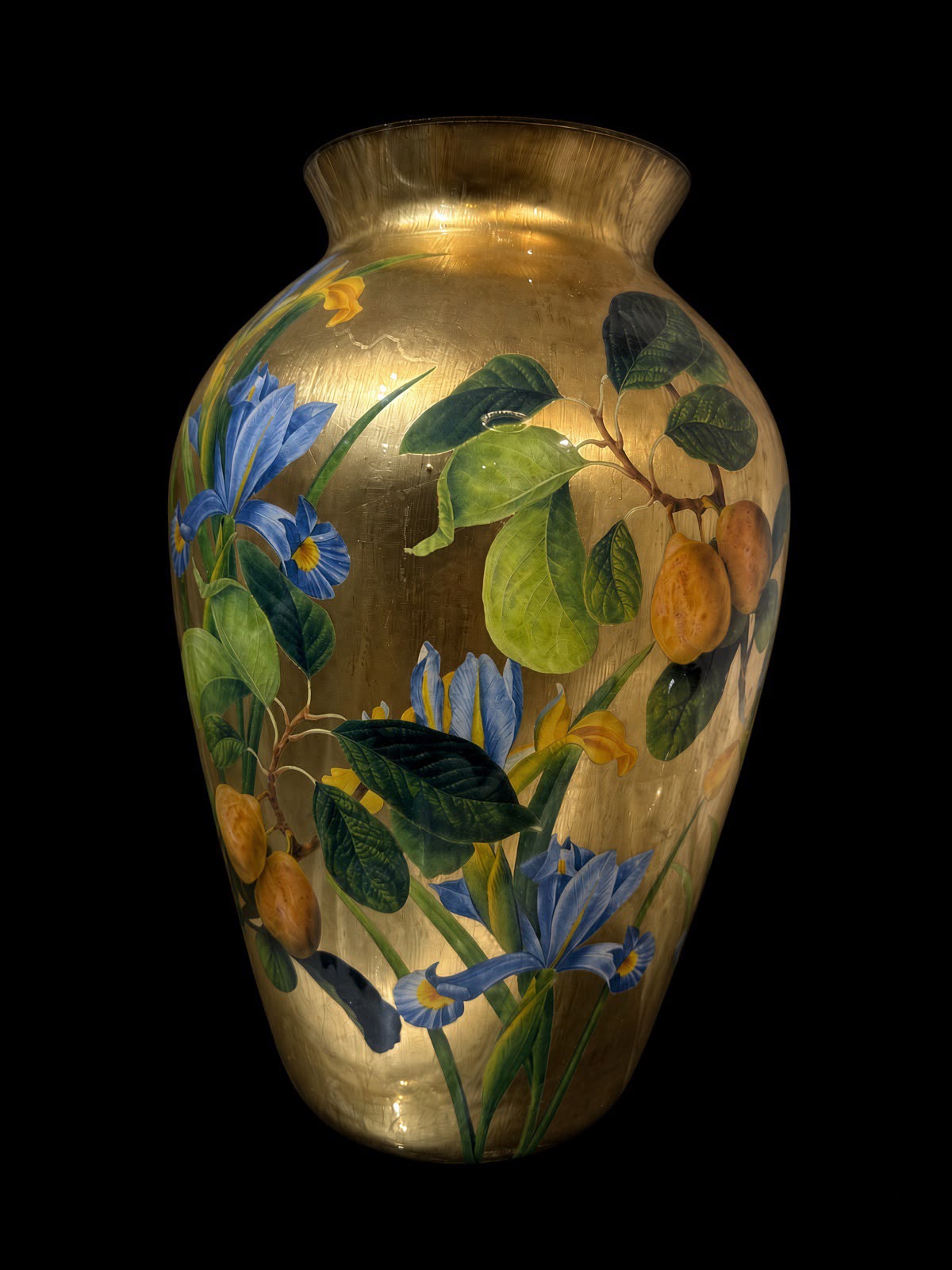
Scott Potter Gilded Reverse-Decoupage Vase for Scully & Scully
Decorative Arts

Scott Potter Gilded Reverse-Decoupage Vase for Scully & Scully

Monumental vessel decorated beneath the surface with blue irises and golden pears, signed and dated 1998

An imposing baluster vessel by the American decorative artist Scott Potter, commissioned exclusively for the Park Avenue luxury house Scully & Scully, New York. Executed in Potter’s celebrated revival of 18th-century potichomania, finely cut botanical studies of bearded irises and ripe pears are applied inside the clear glass against a luminous, hand-brushed gold-leaf ground. Inscribed in script to the underside, 'Scott Potter, 1998 ©, Exclusively for Scully & Scully'. Of commanding console or floor-standing scale. In exceptional condition, retaining a small green auctioneer's lot tag at the shoulder, left undisturbed. For further examples of the artist's reverse-decoupage gilded glasswork, see Scott Potter — The Gilded Home.

For further examples of Scott Potter's distinctive reverse-decoupage and gilded glasswork, see Scott Potter — The Gilded Home.

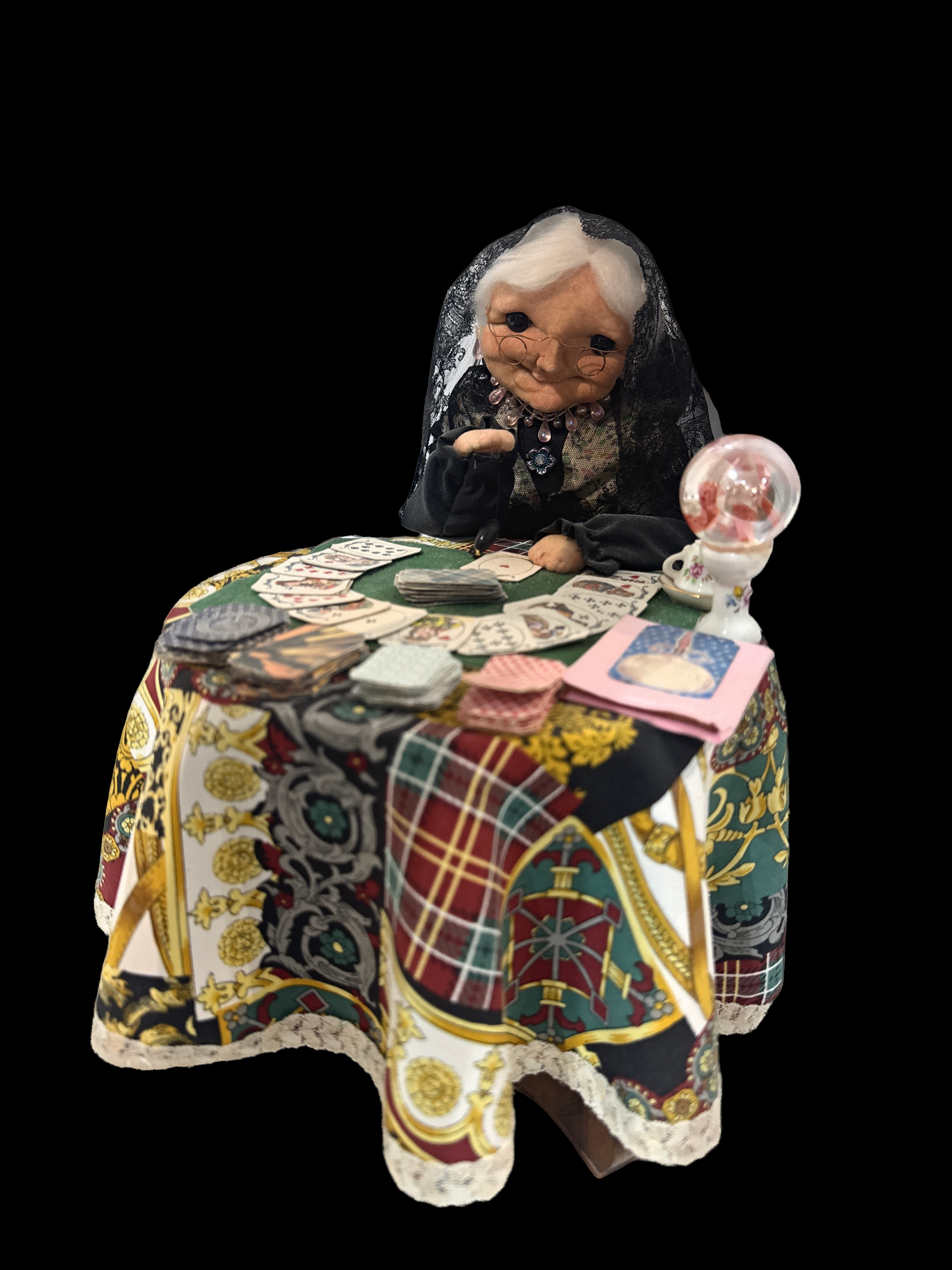
La Sibylle, Artisanal Cloth Tableau
Collectables

La Sibylle, Artisanal Cloth Tableau

Vintage handcrafted soft-sculpted oracle with miniature divination cards and crystal ball, retaining Maryjean label

A singular mid-century patented tableau by Maryjean (Petits Vieux de France), depicting an elderly society oracle poised over her spread of miniature divination cards and crystal ball. Executed in the workshop’s known veil-sculpted fabric technique (Brevet Déposé), her expressive countenance and black lace mantilla carry a quiet theatricality rarely seen in surviving examples. Seated at a table draped in a patterned, lace-edged silk scarf, the piece retains its original gold foil Poupées Artisanales label on the wooden frame Preserved in fine, charmed condition

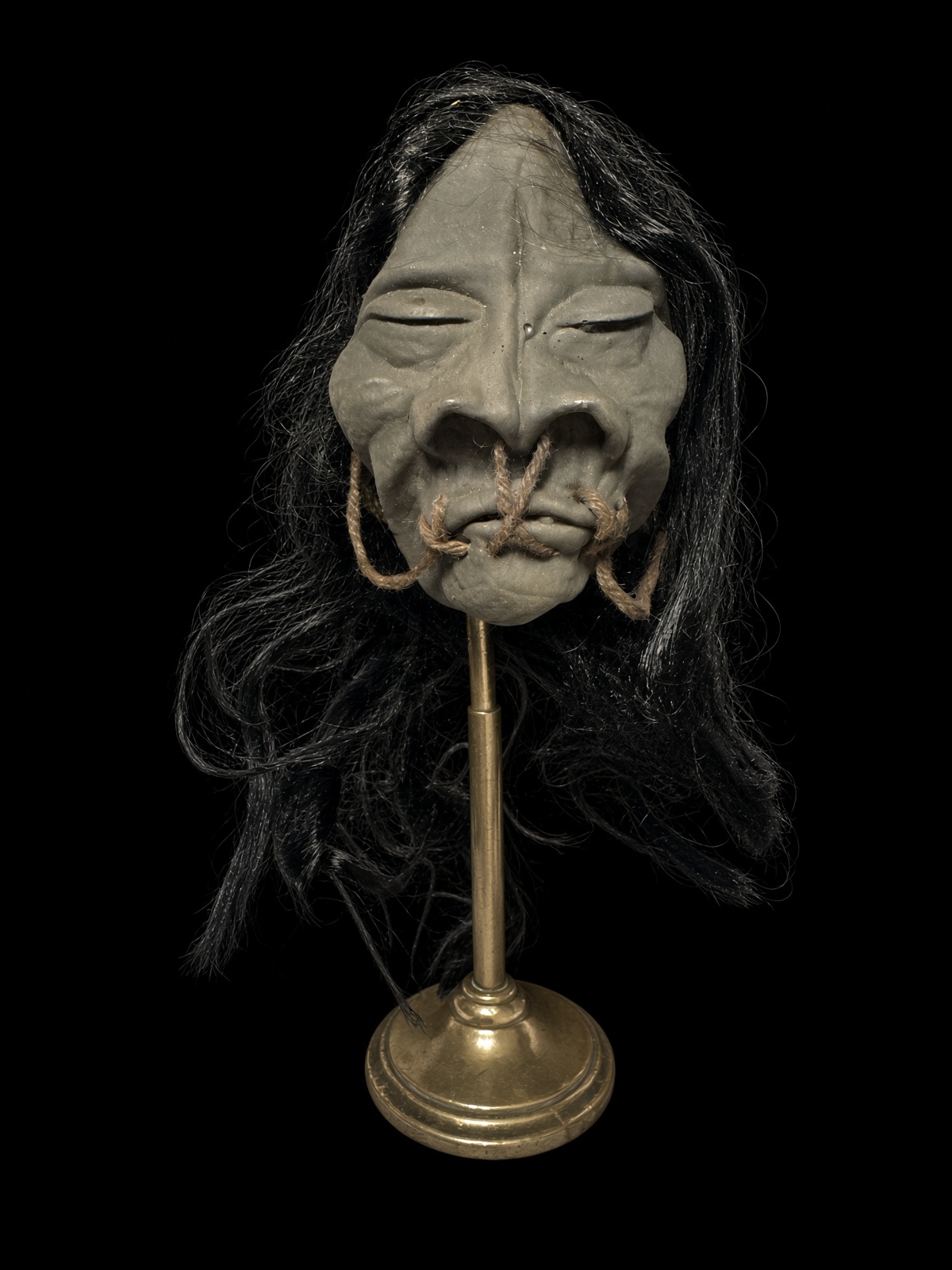
Early 'Tsantsa' Curiosity Shrunken Head, Boxed with Leaflet
Curiosities

Early 'Tsantsa' Curiosity Shrunken Head, Boxed with Leaflet

Composition or hide replica head with natural hair and hemp-stitched lips, in original green carton with leaflet

A scarce mid-20th-century replica of an Upper Amazon tsantsa shrunken head. Unlike later mass-produced rubber joke-shop versions, this earlier example is formed from hand-finished moulded composition or cured hide with natural black hair and hemp cordage stitched through the lips and nostrils. Accompanied by its intact illustrated box and multi-page printed pamphlet, it is an evocative cabinet-of-curiosities survival rather than an ethnographic artefact.Very good vintage condition with light edge wear to the carton. (NB stand shown in the first photograph is not included in this sale.)

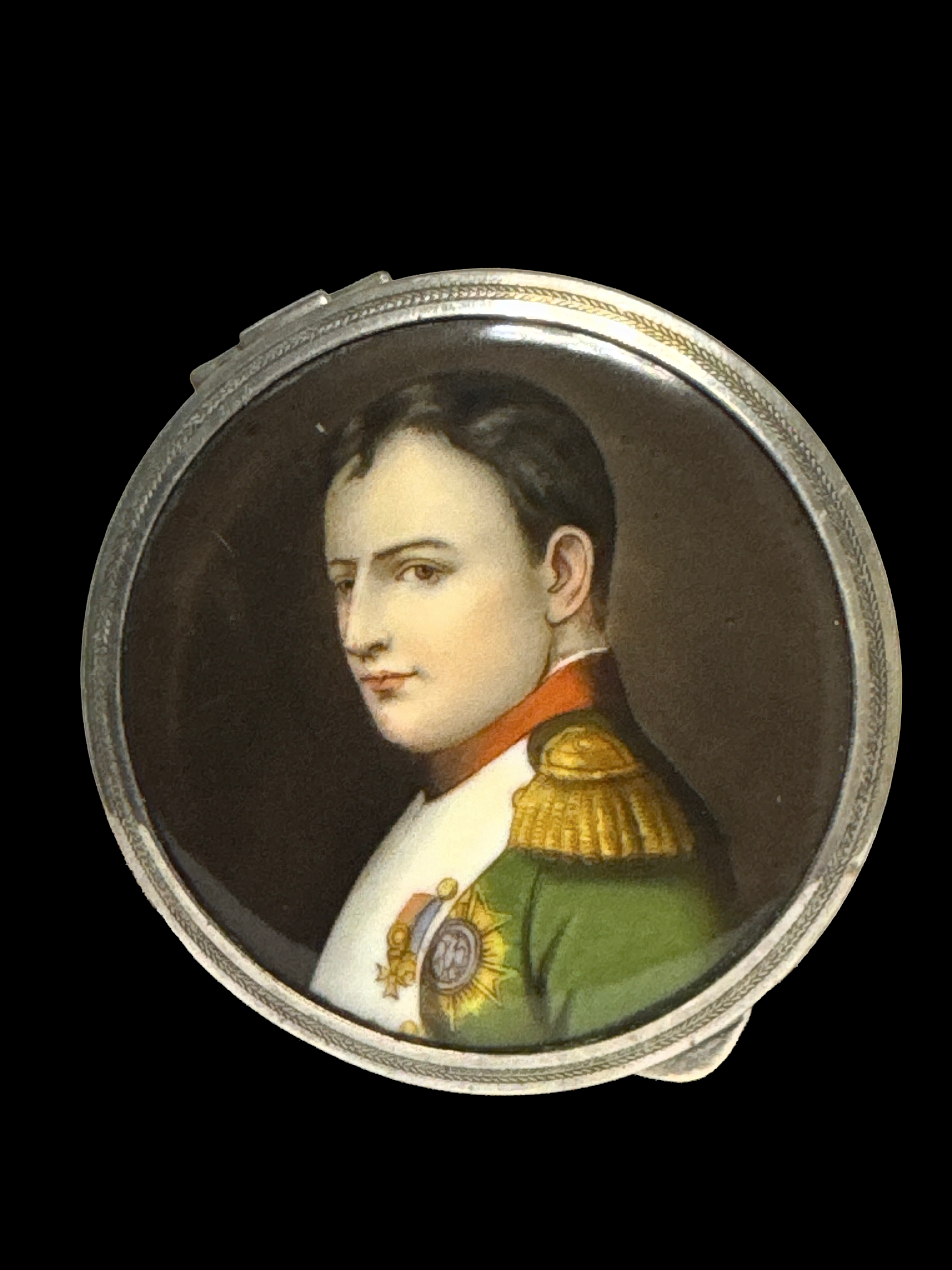
WMF Belle Époque Napoleon Portrait Casket
Decorative Arts

WMF Belle Époque Napoleon Portrait Casket

An early 20th century silver plated casket with a porcelain portrait of Napoleon Bonaparte

A charming Belle Époque jewellery casket by Württembergische Metallwarenfabrik (WMF), its circular lid inset with a finely coloured porcelain portrait of Napoleon Bonaparte in military dress. The silver-plated cylindrical body is ornamented with ribbon-tied floral garlands in the Louis XVI taste, their gilt-toned relief contrasting with the softly aged, oxidised silver finish. The hinged lid opens to reveal a pleated champagne-coloured fabric interior. The underside bears WMF's distinctive ostrich mark, together with the *I/O* silver-plating designation and *OX* oxidised-finish mark.

For further information on WMF's historic silver-plating and manufacturer's marks, see ASCAS — WMF: Hollow Ware and Trays.

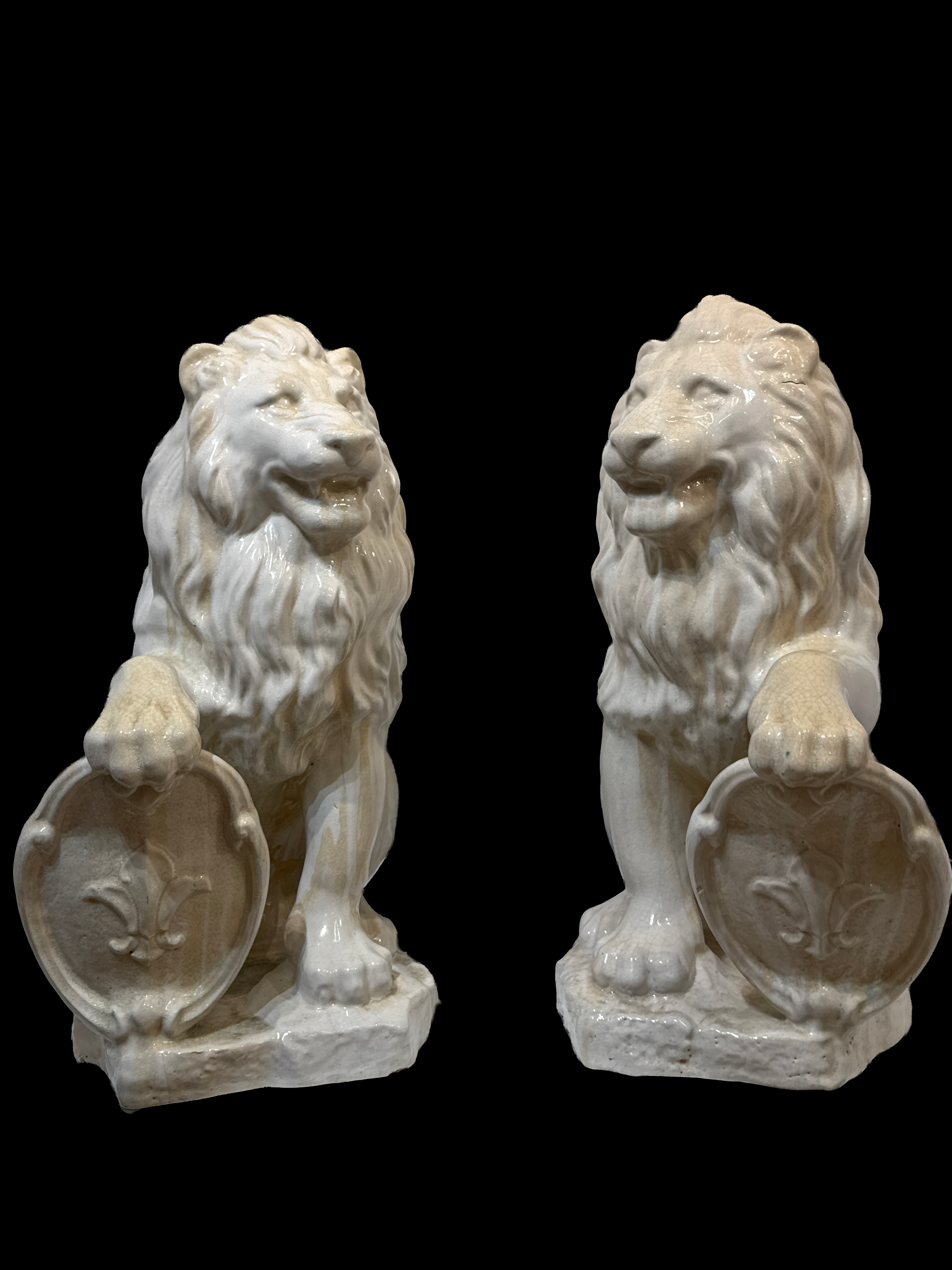
Monumental Florentine Style Heraldic Lions, after Marzocco
Decorative Arts

Monumental Florentine Style Heraldic Lions, after Marzocco

Imposing seated pair, each with paw on a fleur de lis shield; already landed and duty-paid on the Isle of Man with complimentary local white glove placement.

Late 19th to early 20th century, attributed. Each lion sits alert on a rocky base, one forepaw resting on a scrolled cartouche shield. The ivory cream glaze shows a consistent crackle and an antiqued wash that gathers in the folds of the manes and musculature. Substantial in scale, suited to an entryway, gallery landing or conservatory

For centuries, the heraldic lion has stood as an emblem of strength, guardianship and authority, traditionally associated with grand entrances, civic buildings and imposing architectural settings. The Marzocco, the celebrated lion of Florence, became a symbol of the city's independence and power. Its most famous interpretation, sculpted by Donatello in the early 15th century, is preserved in Florence's Bargello Museum. The history and symbolism of the Florentine lion are explored further in The Coronation of the Marzocco.

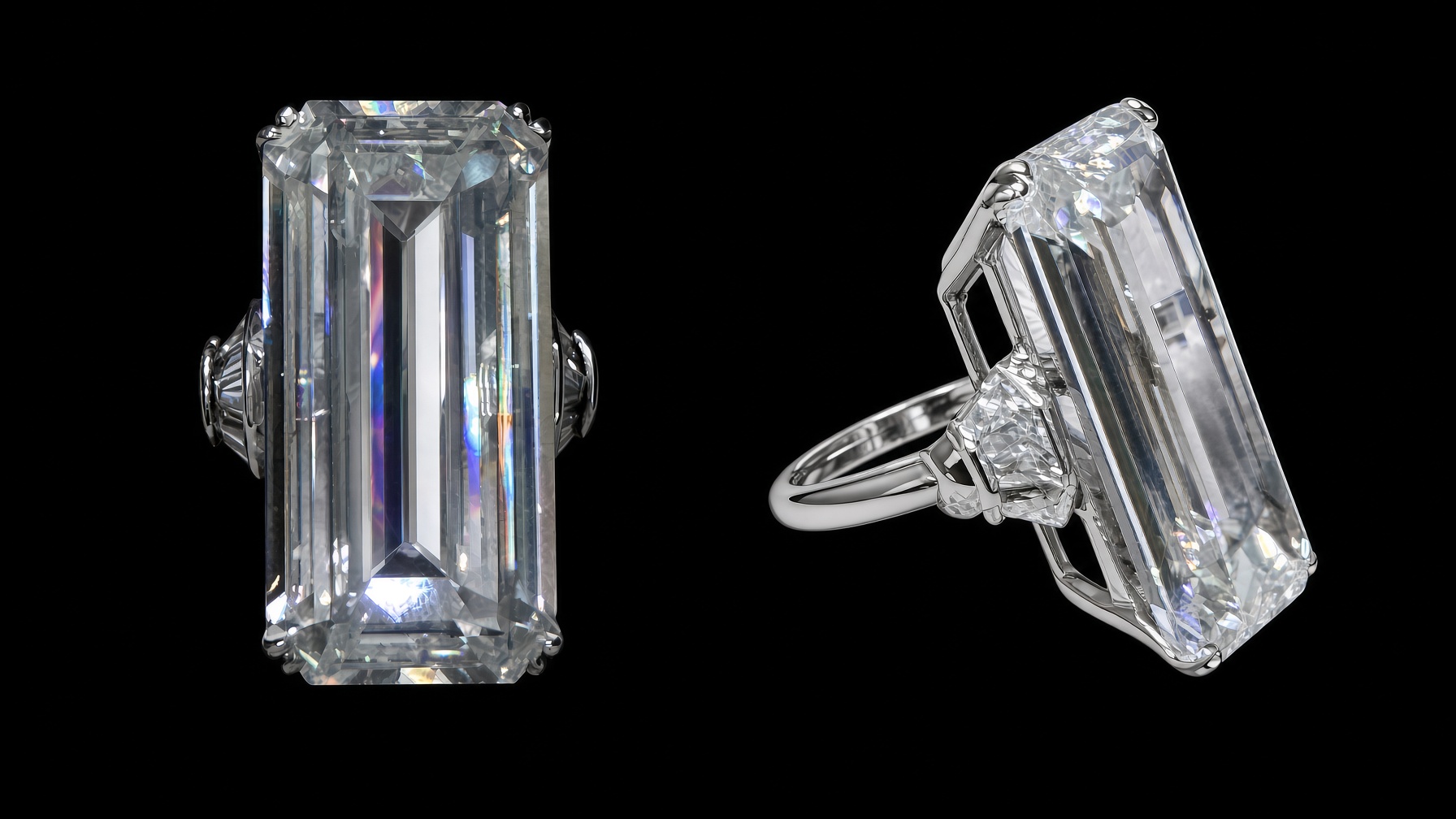
An exceptional 22.1-carat, D-colour Mount
Jewellery

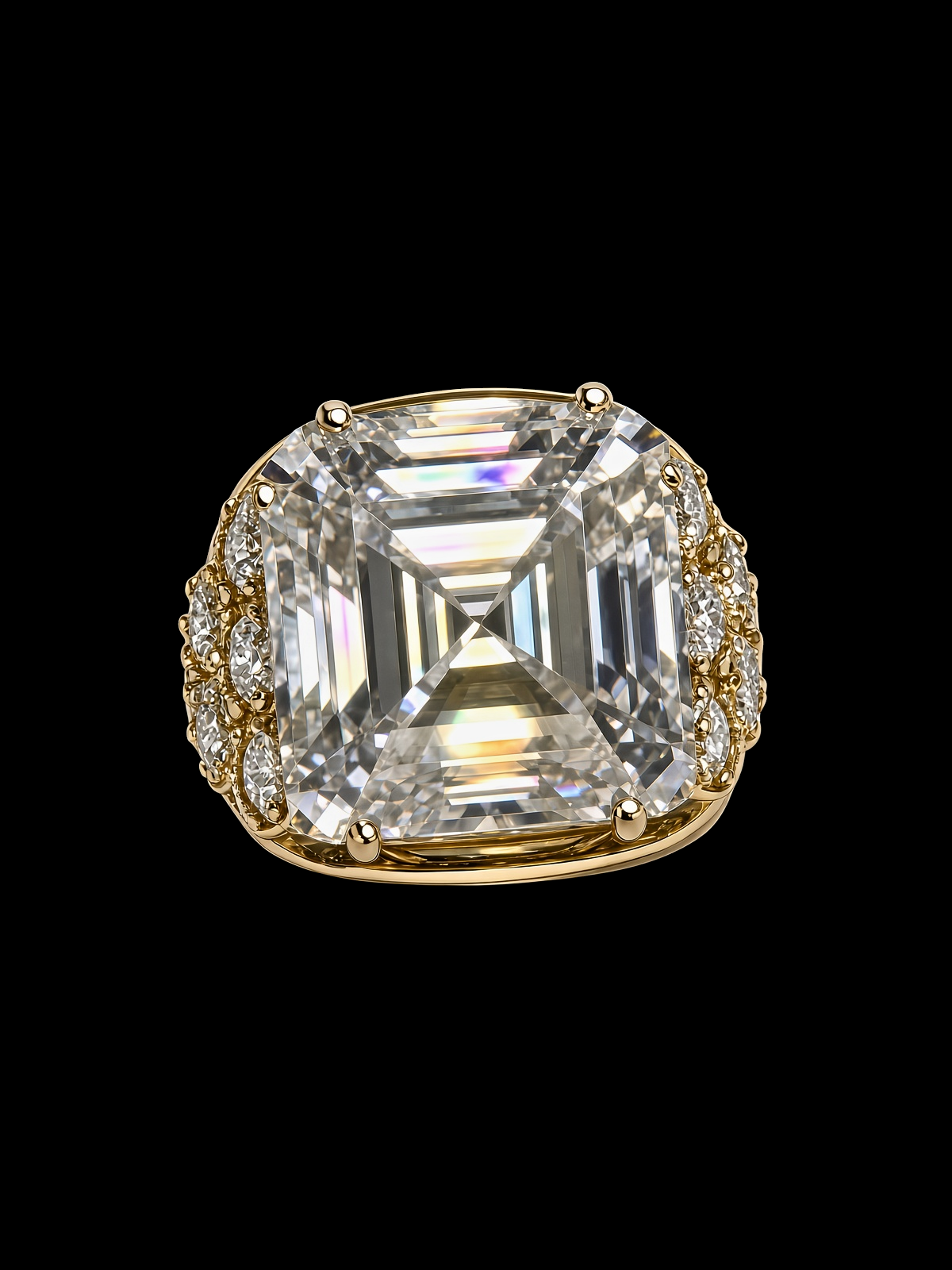
Important 22.1 Carat Diamond Ring

An exceptional rectangular step-cut diamond of 22.1 carats, D colour and VVS2 clarity, set in rich 22ct gold with brilliant-cut diamonds adorning either shoulder. The commanding proportions of the principal stone are complemented by a finely worked mount, set by Adi Al Fardan Jewellery, Dubai. Grading certificate and further particulars available upon enquiry.

Price on enquiry
Blue Enamel Rose-Cut Cross Ring
Jewellery

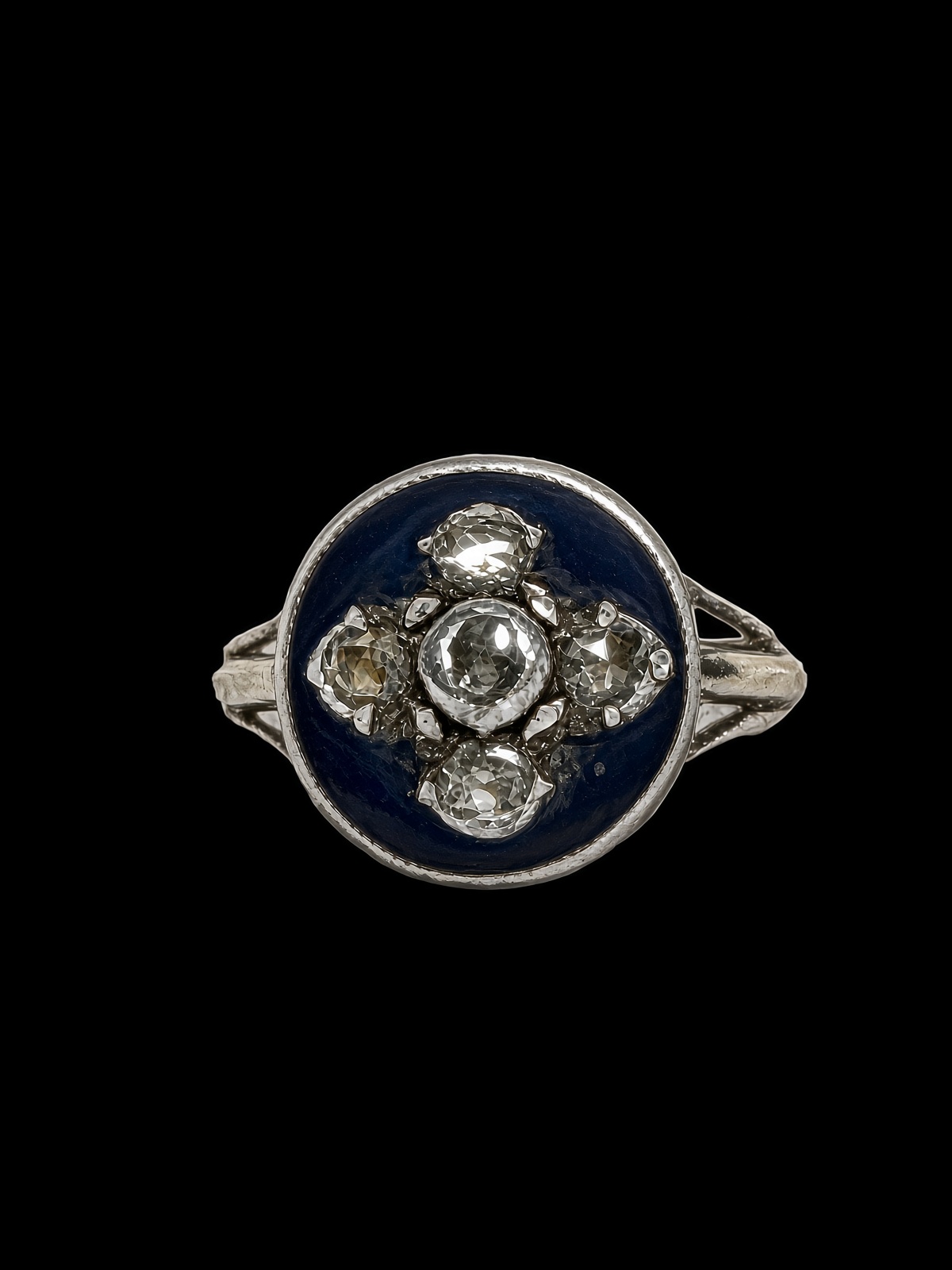
Blue Enamel Rose-Cut Cross Ring

A circular midnight-blue enamel face set with five old rose-cut stones in a cross, above a slender split-shoulder band

A particularly charming antique ring, its deep blue enamel forming a rich backdrop to five rose-cut stones arranged in a simple cross. The gentle sparkle of the old cuts and the restrained proportions give it a quiet elegance. The circular setting has a distinctly historic character, with a slender split-shoulder band and contrasting white and yellow metals. The open reverse reveals a small central collet.Probably nineteenth century. Acquired at Marché Biron, Paris, approximately thirty years ago; formerly the property of a a prominent New York socialite and a collector of Napoleonic memorabilia. Unhallmarked, as seen in jewellery of this period. The precise metal composition and whether the head and shank are original to one another have not been established. Ring size approximately UK P, US size 8.

For a related example of late-18th- and early-19th-century blue enamel and diamond jewellery, see the Walters Art Museum's Ring with Celestial Motif.

Geometric Diamond Dress Ring
Jewellery

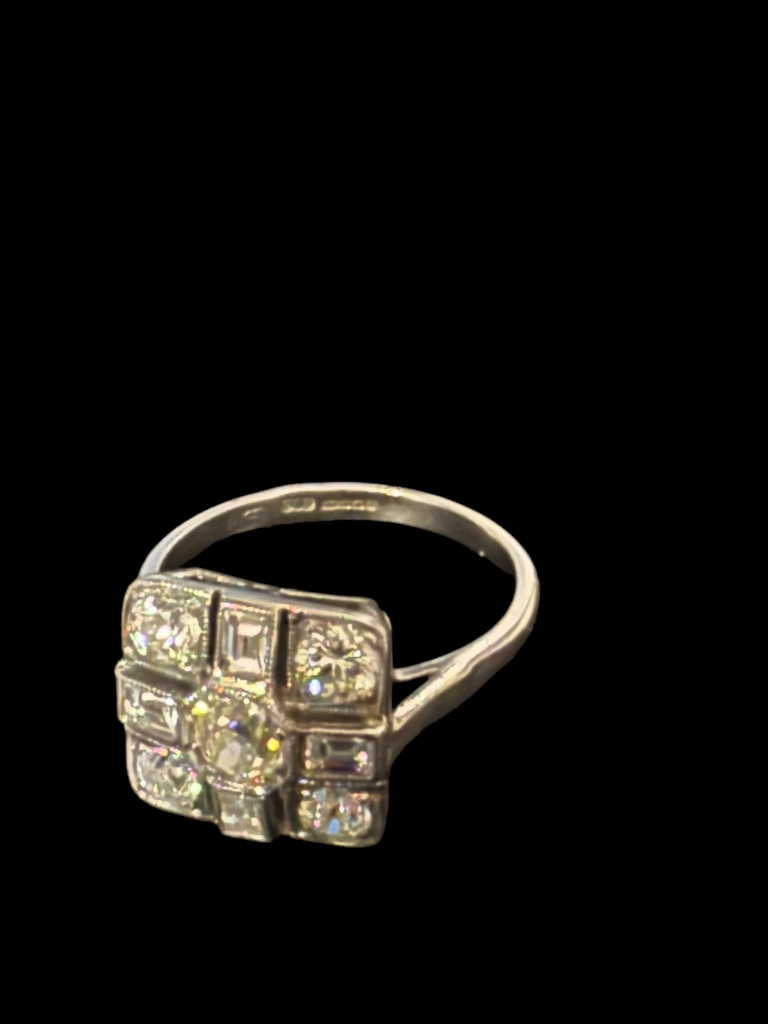
Geometric Diamond Dress Ring

A distinctive nine-diamond dress ring in 18ct gold, combining the brilliance of round-cut stones with the clean lines of baguettes

An unusually attractive diamond dress ring, distinguished by its precise geometric design and the remarkable play of light across its stones. Five round-cut diamonds and four baguettes form a carefully composed square, their contrasting cuts creating an almost architectural arrangement. The finely detailed settings and restrained 18ct gold mount give the diamonds prominence without unnecessary ornament. Particularly lively in natural light, the ring has a brilliance and presence that belies its delicate proportions. The square face measures approximately 13 × 13 mm, with a total weight of 3 g. Diamond weight approximately 1.7 ct. Colour appears D–J as viewed under loupe. The band is stamped 18 CARAT, 750 and CAS, together with additional hallmarks. The setting and claws are in good condition. Ring size approximately UK P, US size 8

Red Deer Stag Shoulder Mount

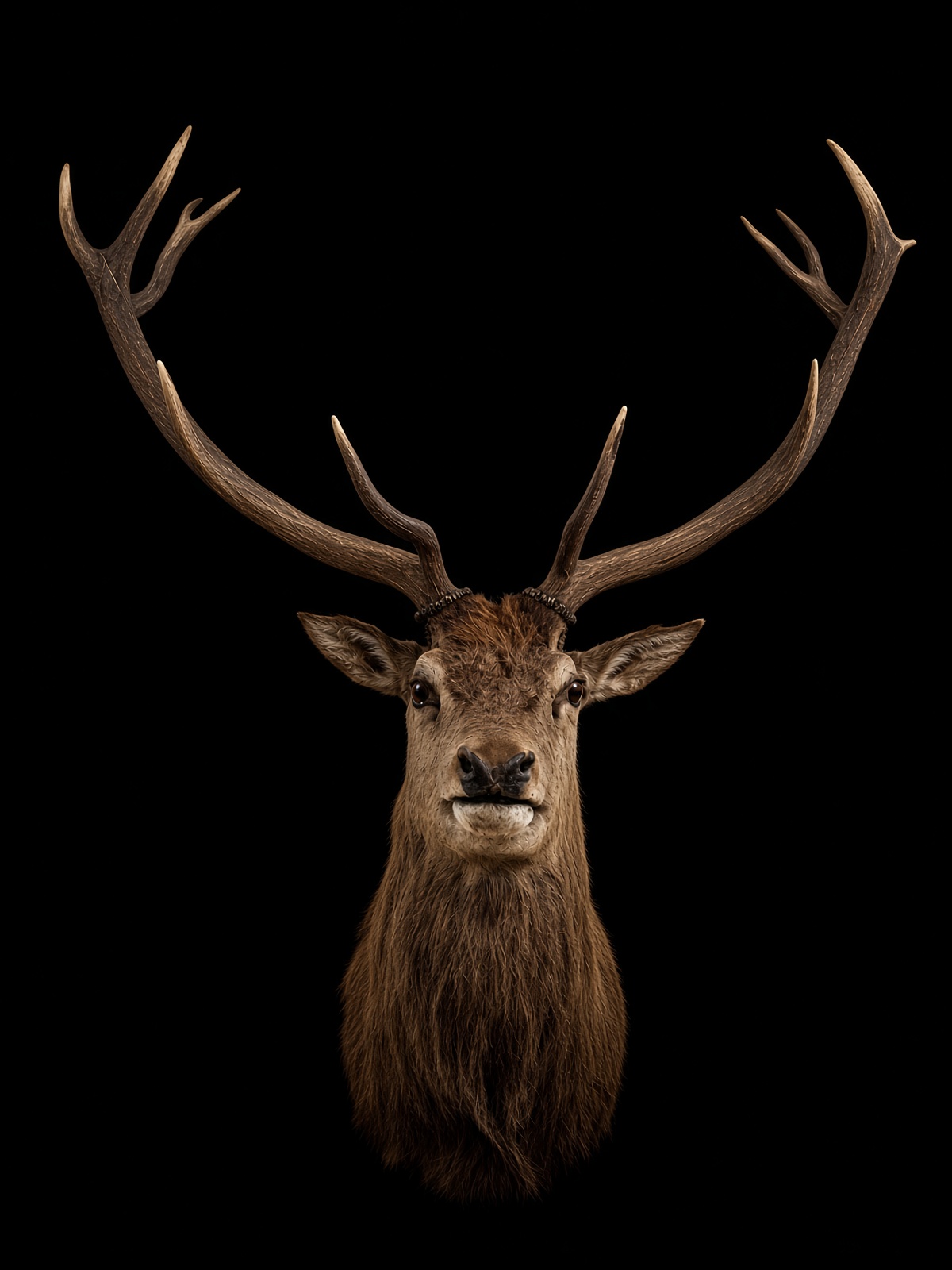
Red Deer Stag Shoulder Mount

P. Spicer & Sons, Leamington

An impressive early 20th century red deer stag shoulder mount by P. Spicer & Sons of Leamington, the head presented frontally beneath a broad spread of richly coloured antlers. The finely modelled features, naturalistic glass eyes and warm brown cape give the mount considerable decorative presence. The original oval wooden backboard retains the maker's stamp and an aged iron hanging bracket. The Spicer workshop was among England's distinguished taxidermy establishments, particularly celebrated for sporting trophies and natural history specimens. Good overall antique condition, with minor age-related wear to the fur, muzzle and wooden backboard. Collection from 1AB, Isle of Man. Delivery by arrangement.

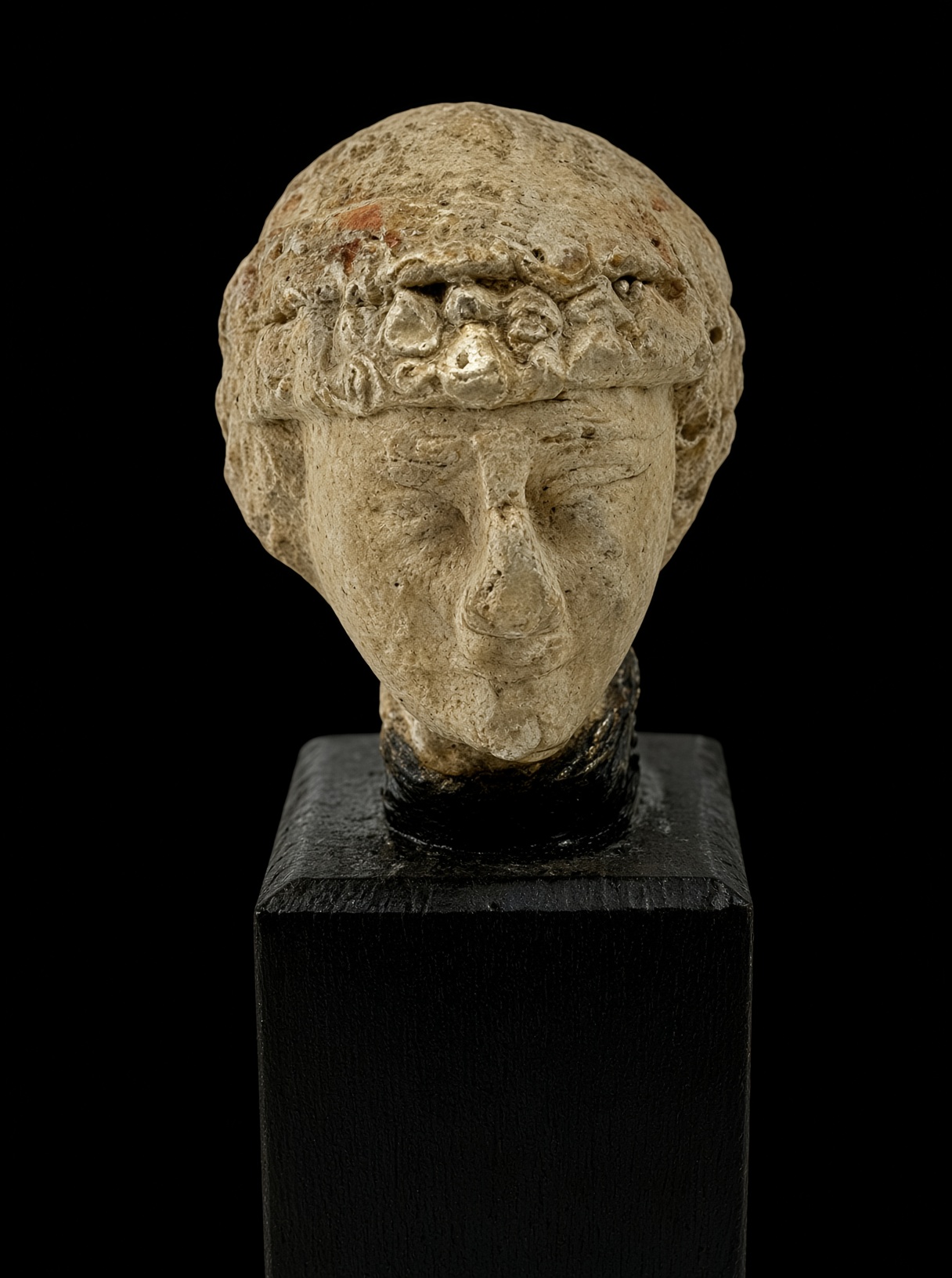
Head of a Ptolemaic Prince
Art

Head of a Ptolemaic Prince

Egyptian, 1st century BC

A small sculptural portrait head, catalogued by Los Angeles Estate Auction as a Ptolemaic prince of the 1st century BC. The elongated, tapering face has softly indicated eyes, a prominent nose and a small mouth. A raised band of ornamental detail crosses the forehead beneath a rounded headdress, with further carving extending around the sides. Mounted on a contrasting black plinth, the head has a striking sculptural presence.

For examples of Ptolemaic royal portraiture, see the Metropolitan Museum of Art, New York, *Head of a King with a Nemes Headdress* view museum collection, and *King's Head with Egyptian Headdress but Greek Hair and Features* view museum collection.

Catalogued at auction as Ptolemaic Prince, 1st century BC, and carved limestone.

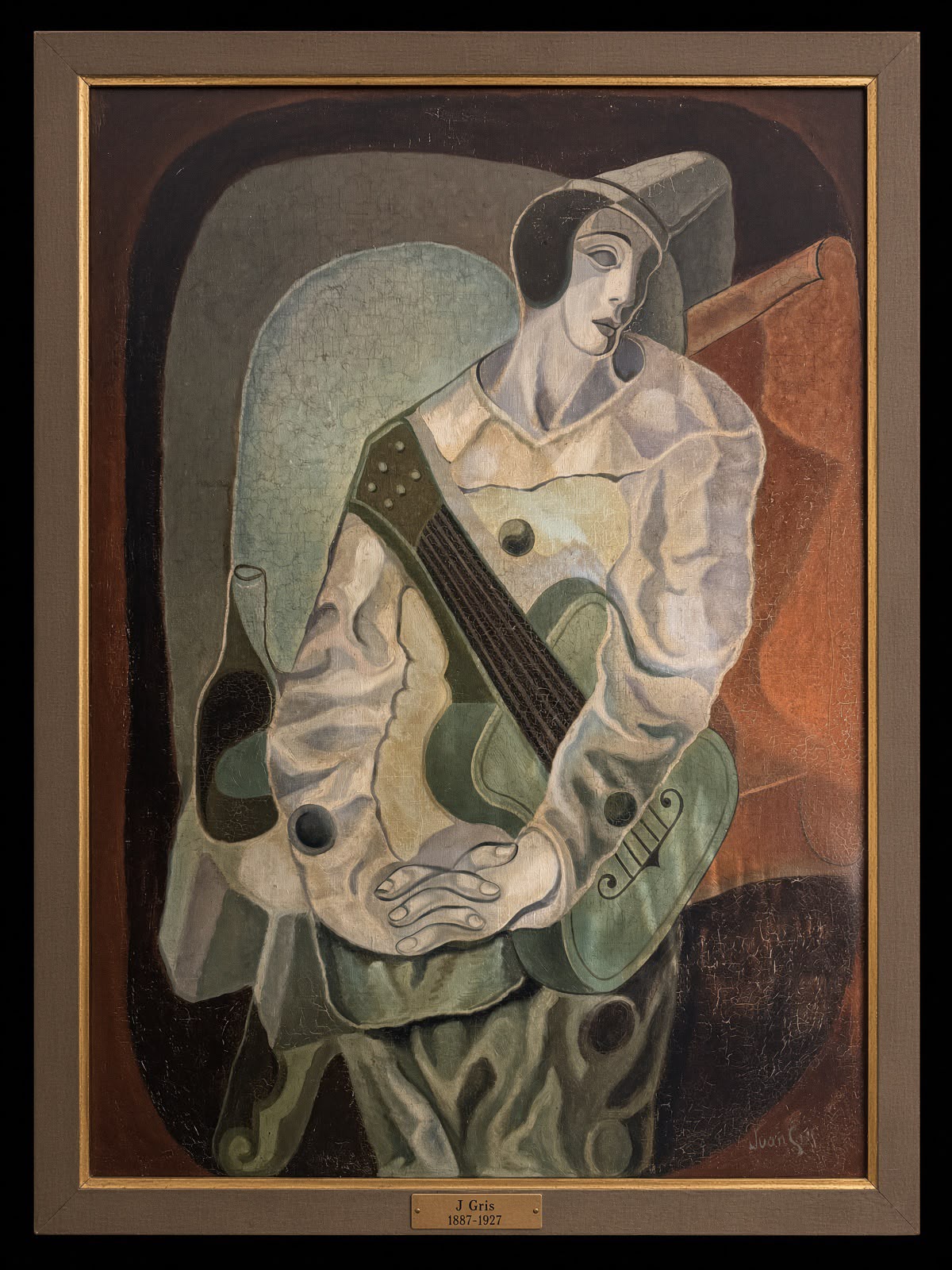
Le Saltimbanque
Art

Le Saltimbanque

Studio of Miguel Canals (Spanish, 1925‑1995) — After Juan Gris

An exceptional, large-scale Cubist composition of a Pierrot with guitar, executed in the Barcelona studio of Miguel Canals after Juan Gris. It is faithful to the spirit of Gris's celebrated Pierrot and Harlequin paintings of the early 1920s: bold geometric planes, the melancholy, mask-like face and an elegantly muted palette of sage green, warm ochre, soft grey and deep black. A mature craquelured surface gives the canvas strong period presence. It is one of the larger and more ambitious works to come from the studio.

Bonhams London, The Contents of a Belgravia Residence, 23 September 2002, lot 492, where acquired by the present owner.

Works from the Studio of Miguel Canals appear regularly at international auction, including Bonhams and Dominic Winter, and are valued for their fidelity to the European modern masters. Most examples are smaller in scale or simpler in composition. The present work stands out for its size, its ambitious figural subject after Gris, its documented Bonhams provenance and its studio-stamped stretcher.

Price on enquiry
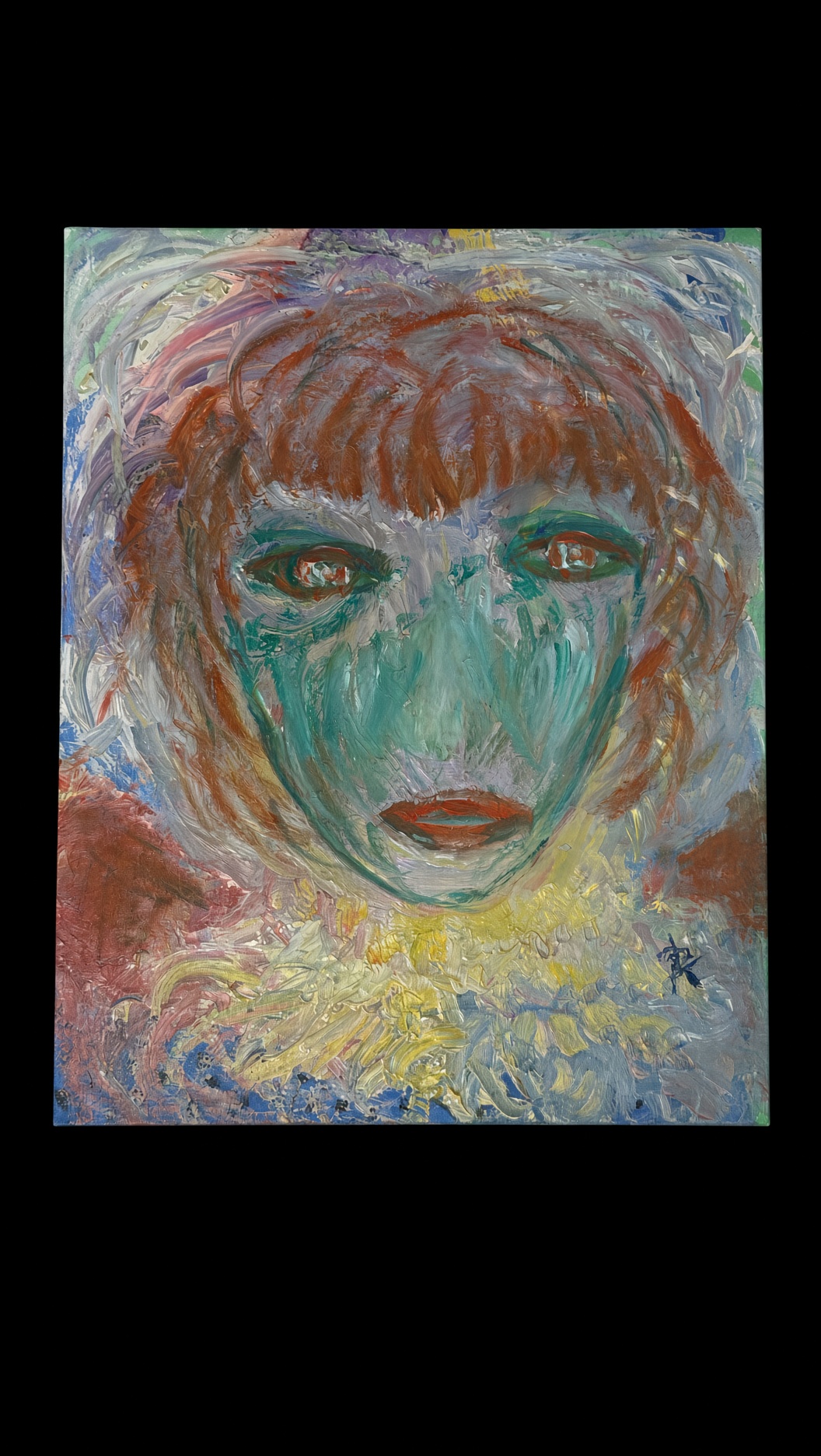
Joan Collins

Joan Collins

Dorothy Lee Roberts, 1995

An expressive portrait of Joan Collins, painted in vigorous passages of turquoise, copper, violet and yellow. The sitter's direct gaze emerges from a richly worked surface, reflecting Roberts's instinctive handling of colour and her distinctive approach to portraiture. Painted in 1995, during a period of international recognition for the artist. Signed and inscribed on the reverse with a personal dedication to Dame Joan Sutherland, referring to the subject as “The other Joan”. An NY ’95 label is also retained on the reverse.

Gift from Dorothy Lee Roberts to Dame Joan Sutherland; subsequently gifted to the present owner at Dame Joan's request, through the artist.

An accomplished concert pianist and painter, Dorothy Lee Roberts was described as a grand-pupil of Clara Schumann. Her expressive approach to painting attracted the admiration of Ferdinand Eckhardt, former director of the Winnipeg Art Gallery and a friend of Marc Chagall, who encouraged her exploration of colour and abstract form. Her exhibitions included Page's Yard Studio, London (1990); Lincoln Fine Art (1991); Wragby Moor Gallery (1993); Bradford (1995); and Gallery Fifty Four, SoHo, New York (1995). She was a prize-winner at Art ’95 New York International with "Manhattan Winter" For further biographical and exhibition history, see Unique Auctions, Dorothy Lee Roberts Paintings Highlight Art Auction, 2015.

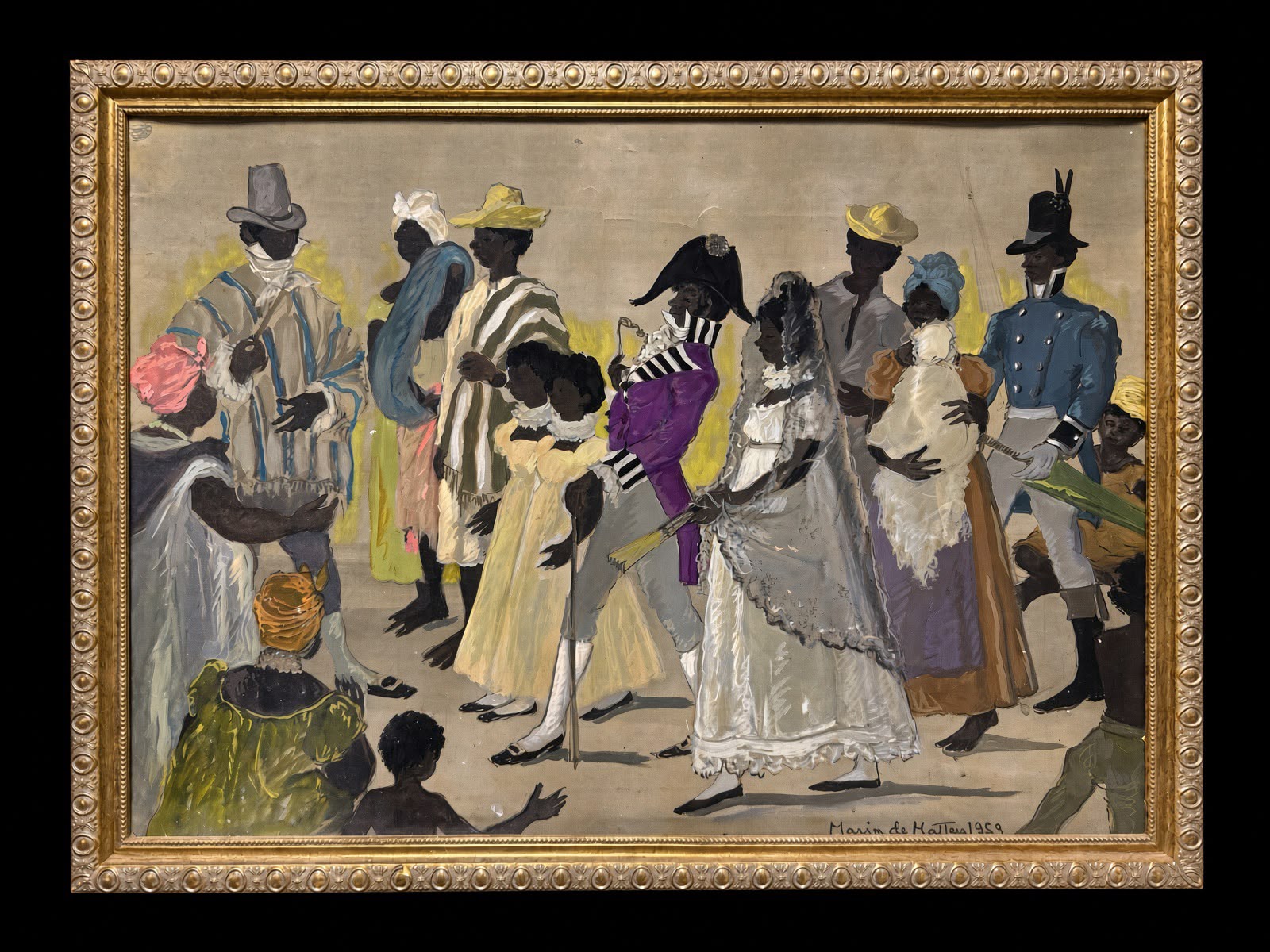
Impressione, Strade Haiti
Art

Impressione, Strade Haiti

Maria De Matteis (Italian, 1898‑1988), 1959

A large and vividly coloured figurative composition depicting a Haitian street gathering, observed with the eye of one of twentieth-century Italy's distinguished costume and set designers. The densely arranged group of figures — in formal dress, military-style uniform, elaborate hats and richly varied costume — is rendered with particular attention to silhouette, colour and theatrical character.

Collection of Helen Livingston Broome (1926‑2022), New York artist and collector; by bequest to the present owner.

Signed and dated 1959 lower right. Signed and inscribed verso 'Preparazione S. Bolivar Aprile Maggio 1959' and 'Impressione Strade Haiti', with circular stamp to the reverse.

Price on enquiry
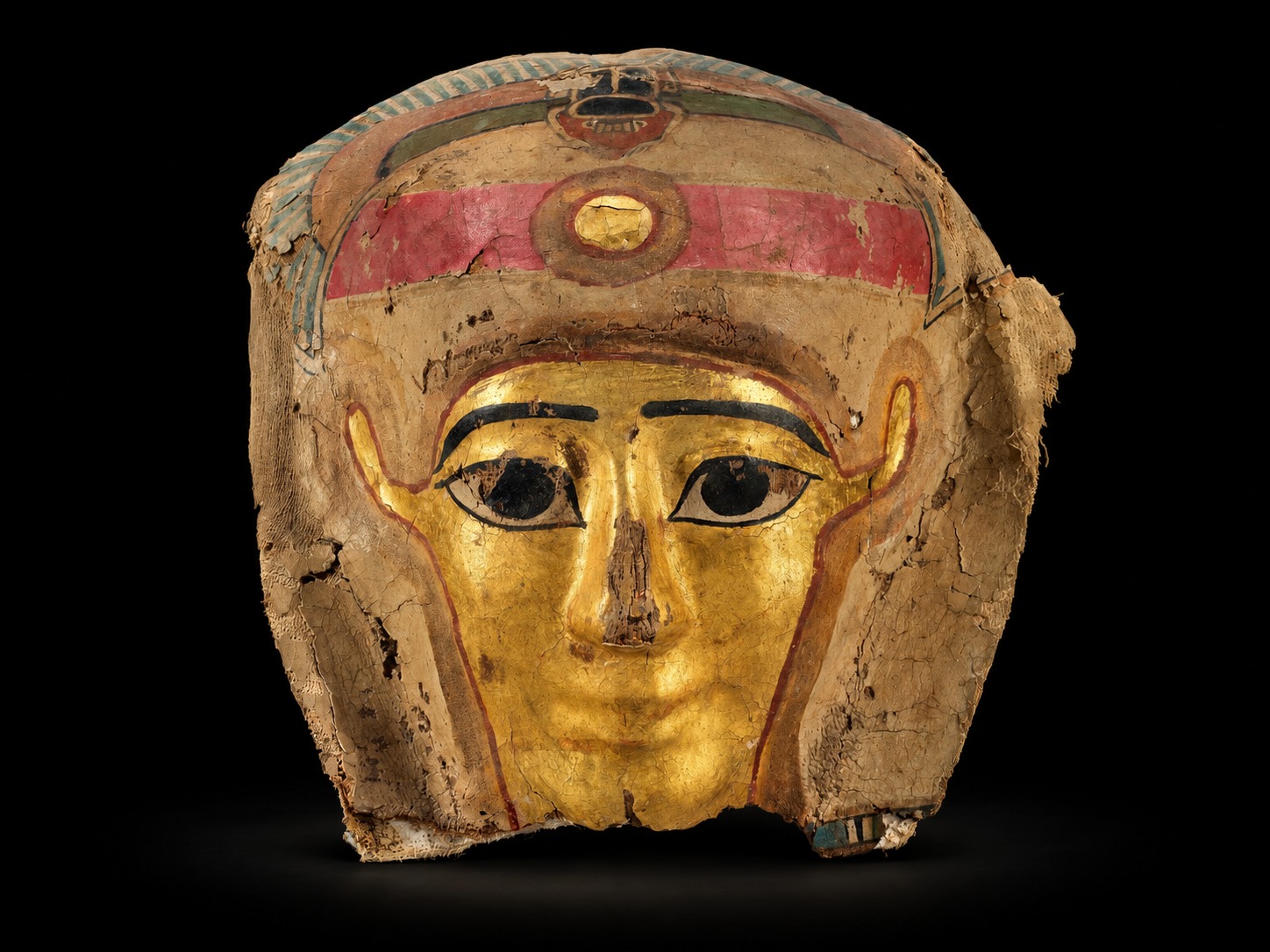
Egyptian gilded and polychrome cartonnage mummy mask
Antiquities

Egyptian Gilded and Polychrome Cartonnage Mummy Mask

Late Ptolemaic Period–Early Roman Period

A gilded and polychrome painted cartonnage mummy mask dating to the Late Ptolemaic–Early Roman Period, circa 1st Century B.C.–1st Century A.D.

Private collection, Switzerland, acquired in the late 1960s; thence by descent. Anonymous sale; Bonhams, London, Antiquities, 6 July 2017, lot 69.

For a similar example with complete lappets, see the Museum of Fine Arts, Budapest, inv. no. 51.247 view the museum's 3D model.

Price on enquiry
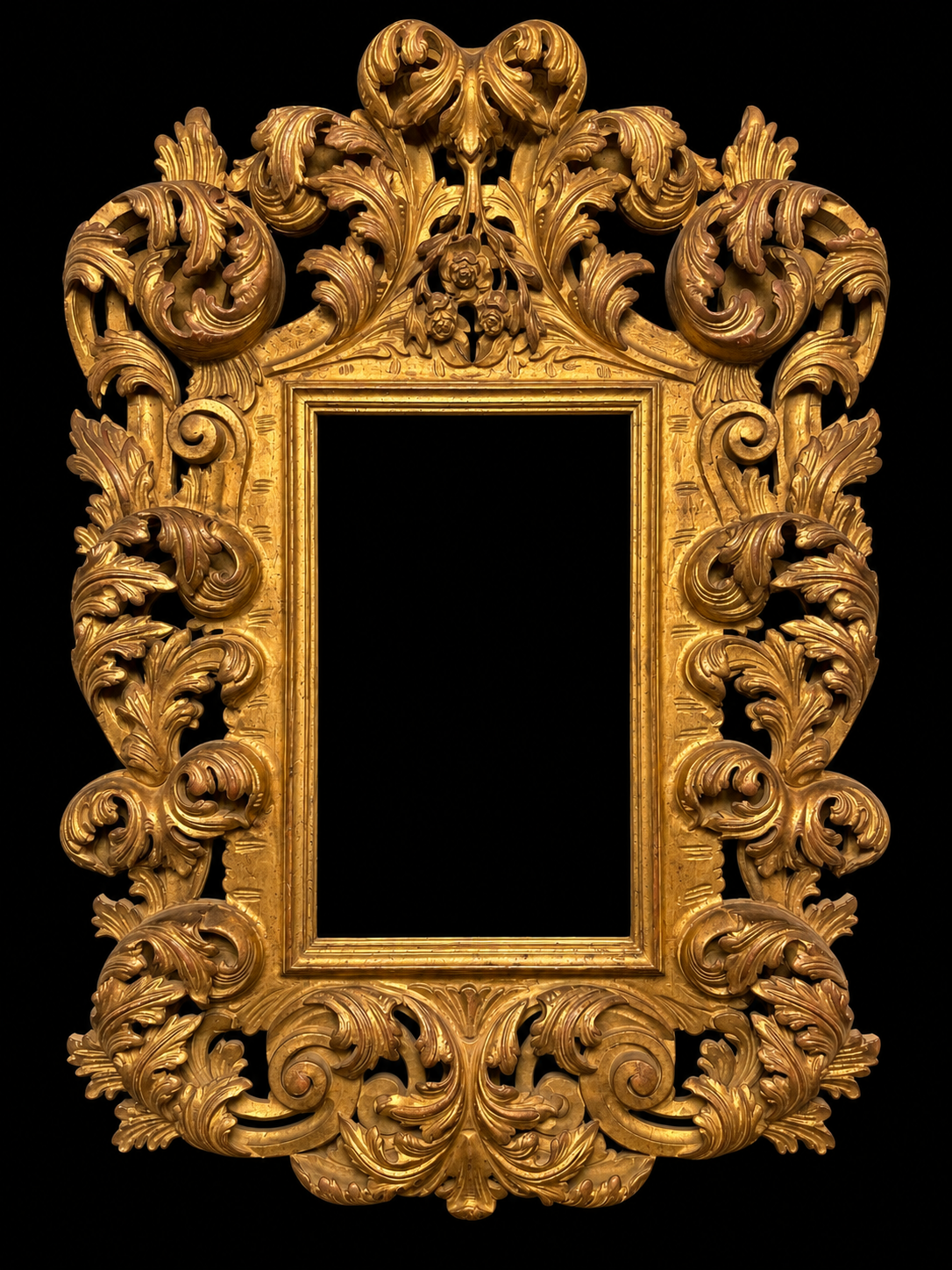
Large Florentine Baroque Style Giltwood Mirror
Decorative Arts

Large Florentine Baroque Style Giltwood Mirror

Continental, 20th century

A large and exuberantly modelled mirror in the Florentine Baroque manner, the pierced frame composed of deeply scrolling acanthus leaves. The stippled inner frame is surmounted by a crest centred by a spray of three roses, framed by vigorous scrolling foliage, with further pierced acanthus extending around the sides and base. Made in the grand tradition of 17th century Italian frame making, it combines great scale, depth of relief and a warm, softly aged gilded surface, and makes a commanding focal point above a chimneypiece or console.

Acanthus frames of this kind descend from the great carved frames of 20th century Italy, in which the frame itself became a piece of sculpture. An Italian example of c. 1640, The Metropolitan Museum of Art

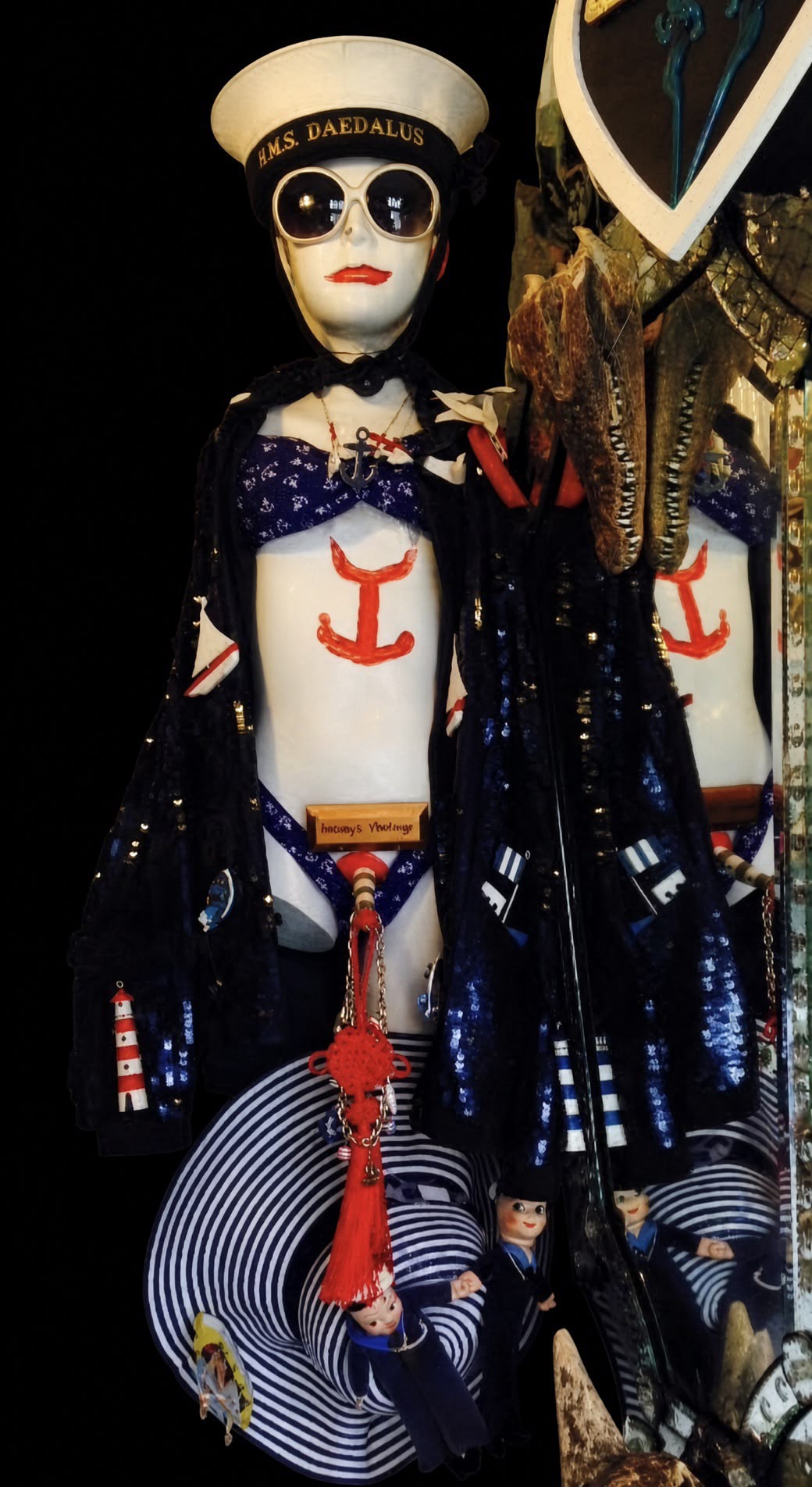
Anchors Aweigh
Art

Anchors Aweigh

Helen Livingston Broome (American, 1926‑2022), 1992

A unique mixed-media assemblage sculpture conceived by Helen Livingston Broome as a transgender sailor figure. Combining naval imagery with a stylised mannequin, make-up, jewellery, pearls, textiles, rope, metal ornaments and found objects, the work playfully disrupts conventional ideas of gender and presentation. Created in 1992, its exploration of gender identity gives the work a particularly striking context within Broome's highly individual practice. Both sculptural and theatrical, Anchors Aweigh exemplifies the artist's transformation of collected and everyday materials into richly layered figurative constructions.

The artist's collection and studio/gallery, United Nations Plaza, New York, where the work occupied a prominent position; by bequest to the present owner.

Lady Livingston, dir. Cassandre Hornez, France, 2014, 52 min. Documentary portrait of the Artist and her artistic practice; Anchors Aweigh appears in the film. The documentary was presented at a launch screening in Paris in 2014.

Hand-signed by the artist. Accompanied by a letter of authentication from the Estate of Helen Livingston Broome.

Price on enquiry
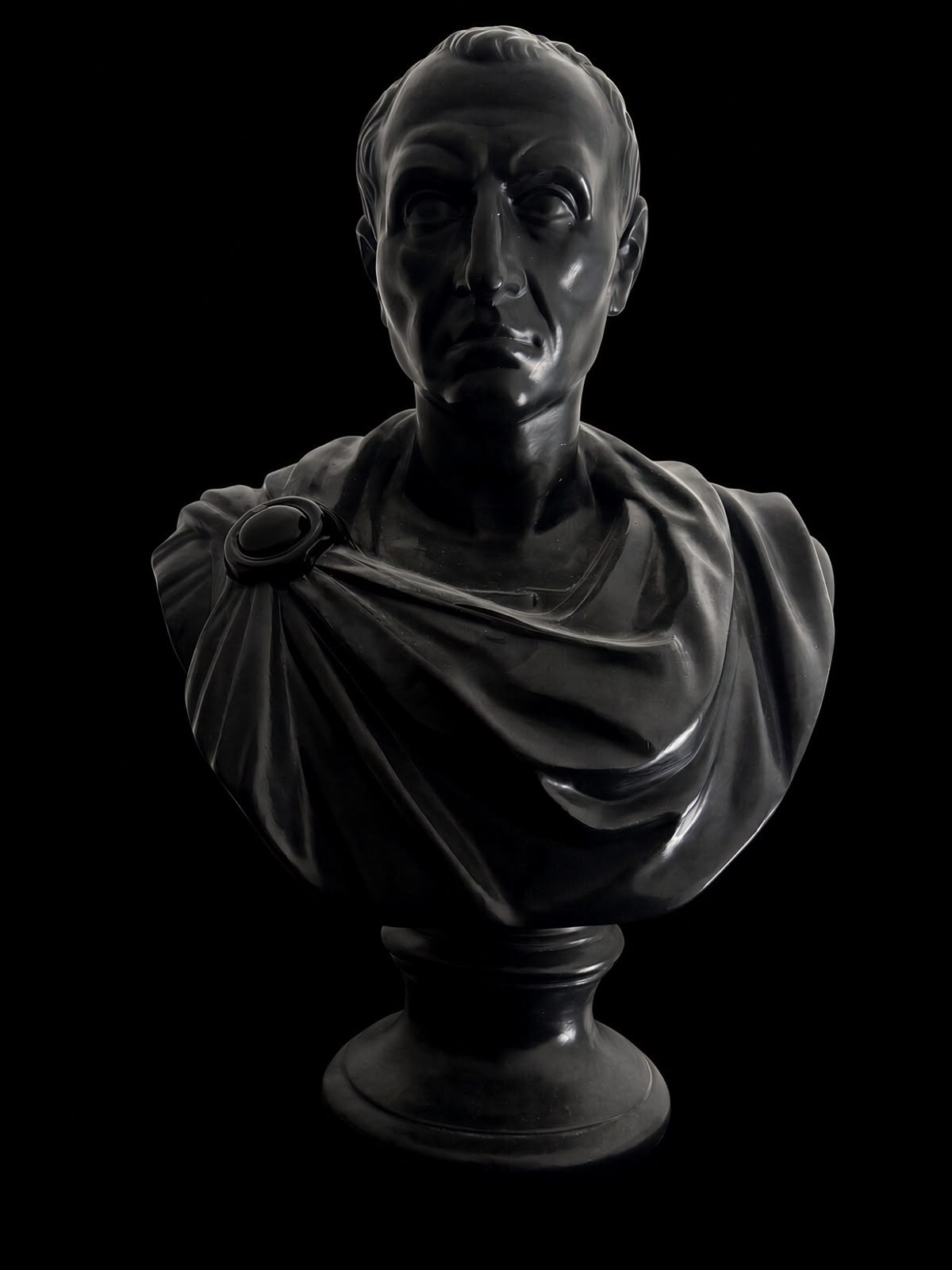
Classical Roman Portrait Bust

Classical Roman Portrait Bust

Traditionally identified as Julius Caesar

A substantial classical portrait bust traditionally identified as Julius Caesar. The head is turned slightly, with a high forehead, deeply modelled brows, pronounced facial features and closely arranged hair. The shoulders are draped in a Roman cloak, gathered at the proper right shoulder by a circular fibula, the whole raised on a turned socle. Cast in plaster with a black-painted, ebonised finish. The hair is fully modelled to the reverse, and the substantial construction gives the sculpture considerable weight and presence. At approximately 62 cm high, this is an imposing architectural and decorative sculpture, well suited to a library, hall or collector's interior.

Acquired from an antiques dealer circa 1991; thence in the present private collection.

Classical portrait busts of this kind were produced for libraries, entrance halls and private interiors during the nineteenth and twentieth centuries, drawing upon the sculptural traditions of ancient Rome. The identification as Julius Caesar is traditional rather than confirmed. The precise antique prototype and casting workshop have not been established. Unsigned. Minor surface wear consistent with age and handling. A small loss to the fibula has been retouched in black. Collection from 1AB, Isle of Man. Delivery by arrangement.
The Thracian Cravat
Jewellery

The Thracian Cravat

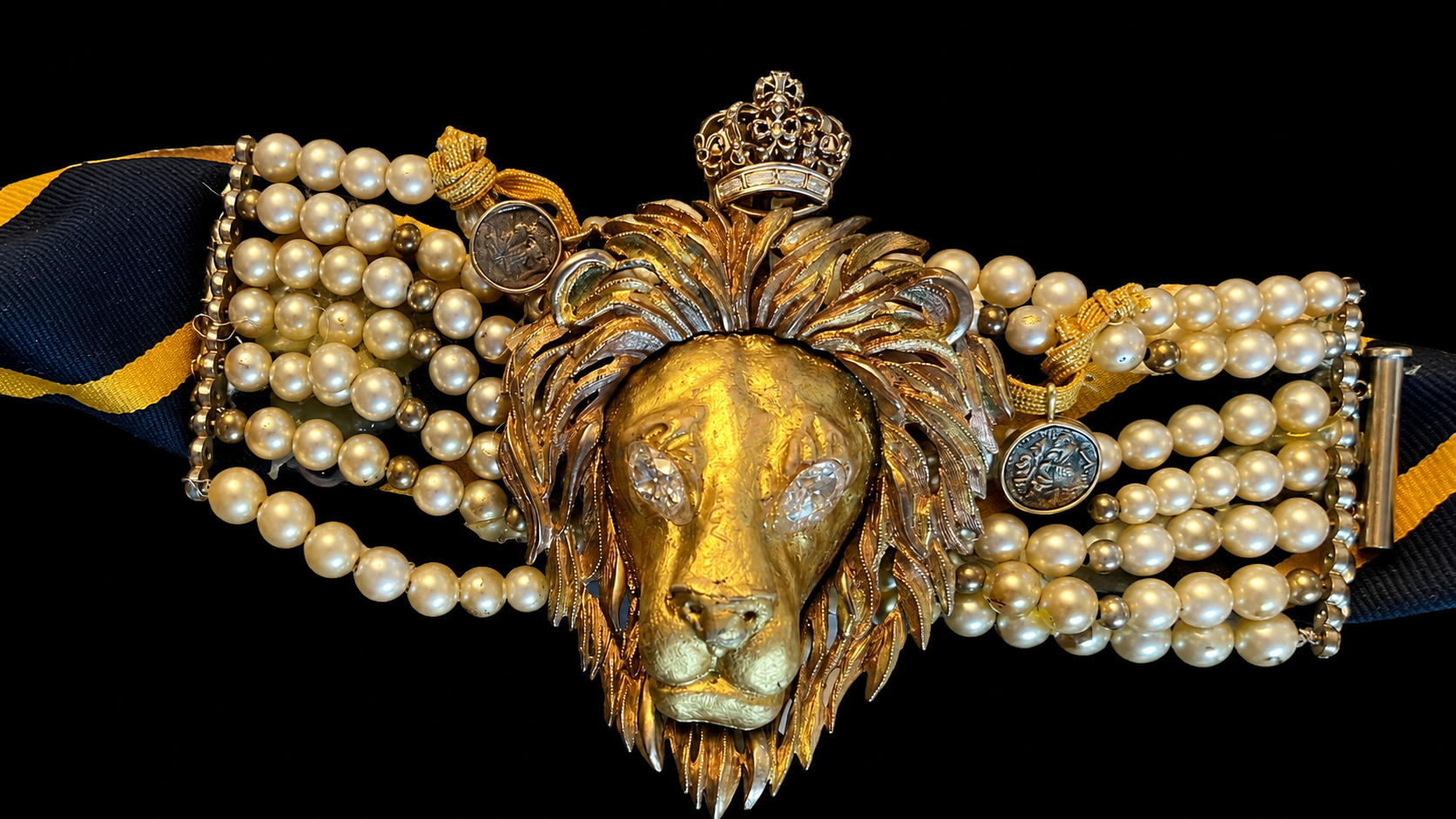
Unique pearl, Roman coin and diamond lion collar

A unique and theatrical statement collar centred by Helen Livingston-Broome. A signed vintage Razza lion head, subsequently altered and reimagined as the focal point of an elaborate multi-strand pearl composition. The lion is set with two substantial diamond eyes, graded D colour and VVS2 clarity, and surmounted by a signed Trifari crown. Ancient Roman coins, mounted in gold and formerly worn as earrings, are incorporated among the pearls and vintage jewellery elements. The dark striped textile ties form an integral part of the neckpiece. Combining ancient, mid-century and precious components, The Thracian Cravat is conceived as a singular piece of wearable assemblage, and is signed by the Artist.

Private collection, New York.

Price on enquiry
Juvenile Bengal Tiger Skin Rug
Curiosities

Juvenile Bengal Tiger Skin Rug

Attributed to Theobald Bros, Mysore

An unusually decorative juvenile Bengal tiger skin rug, attributed to Theobald Bros of Mysore, India. The finely modelled head is presented with glass eyes and open jaw, retaining the teeth and claws. The skin displays particularly attractive pale golden and cream colouring with strongly defined black striping, and is mounted on a brown pinked felt border. Collection from 1AB, Isle of Man. Delivery outside the Isle of Man may be possible subject to applicable CITES permits and import requirements.

Comparable tiger skin rugs by Theobald Bros of Mysore are recorded with full head mounts, glass eyes, outstretched limbs and characteristic pinked fabric borders. The firm was among the established taxidermists working in Mysore during the late nineteenth and early twentieth centuries.

Price on enquiry
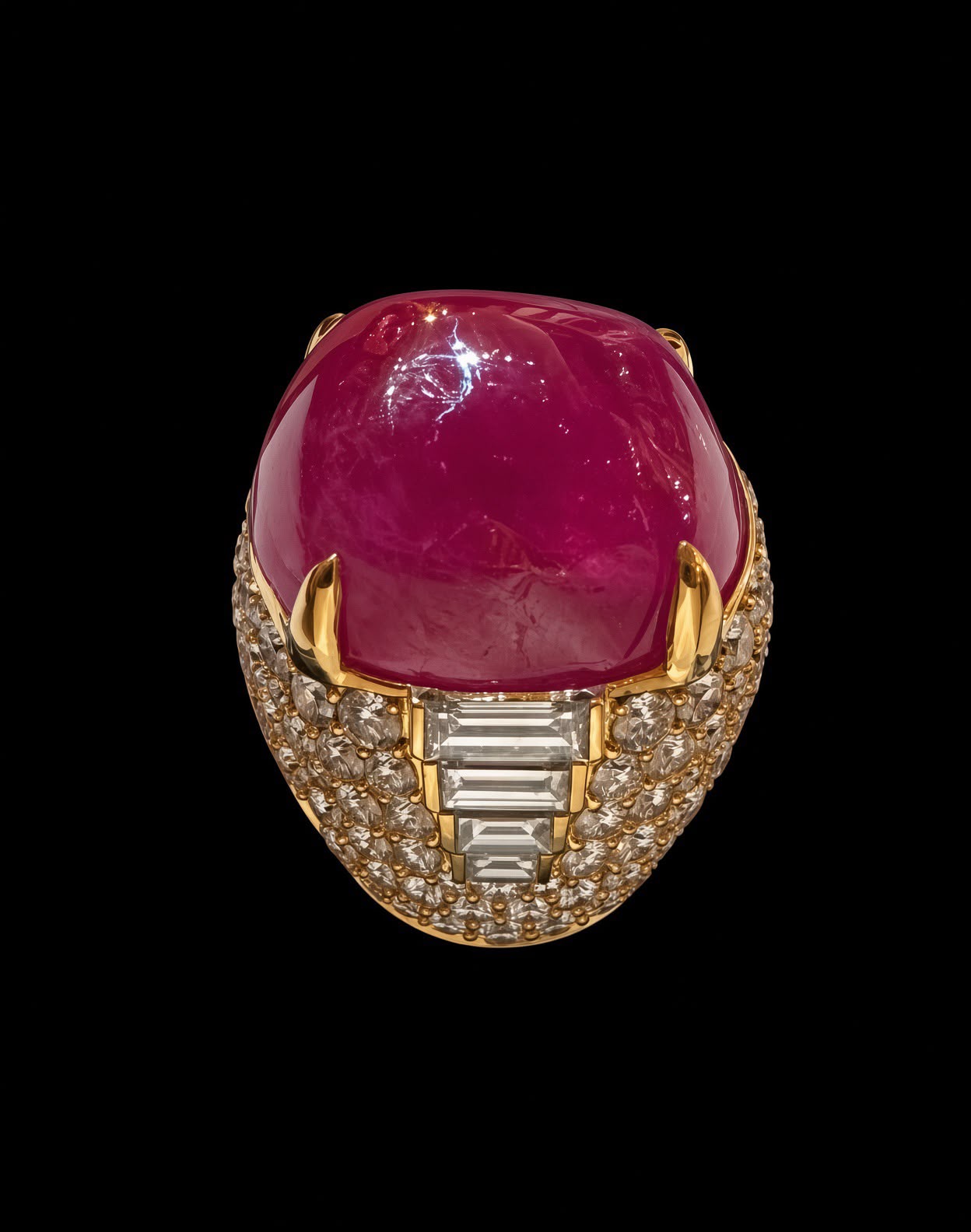
Bulgari Ruby and Diamond Ring
Jewellery

Bulgari Ruby and Diamond Ring

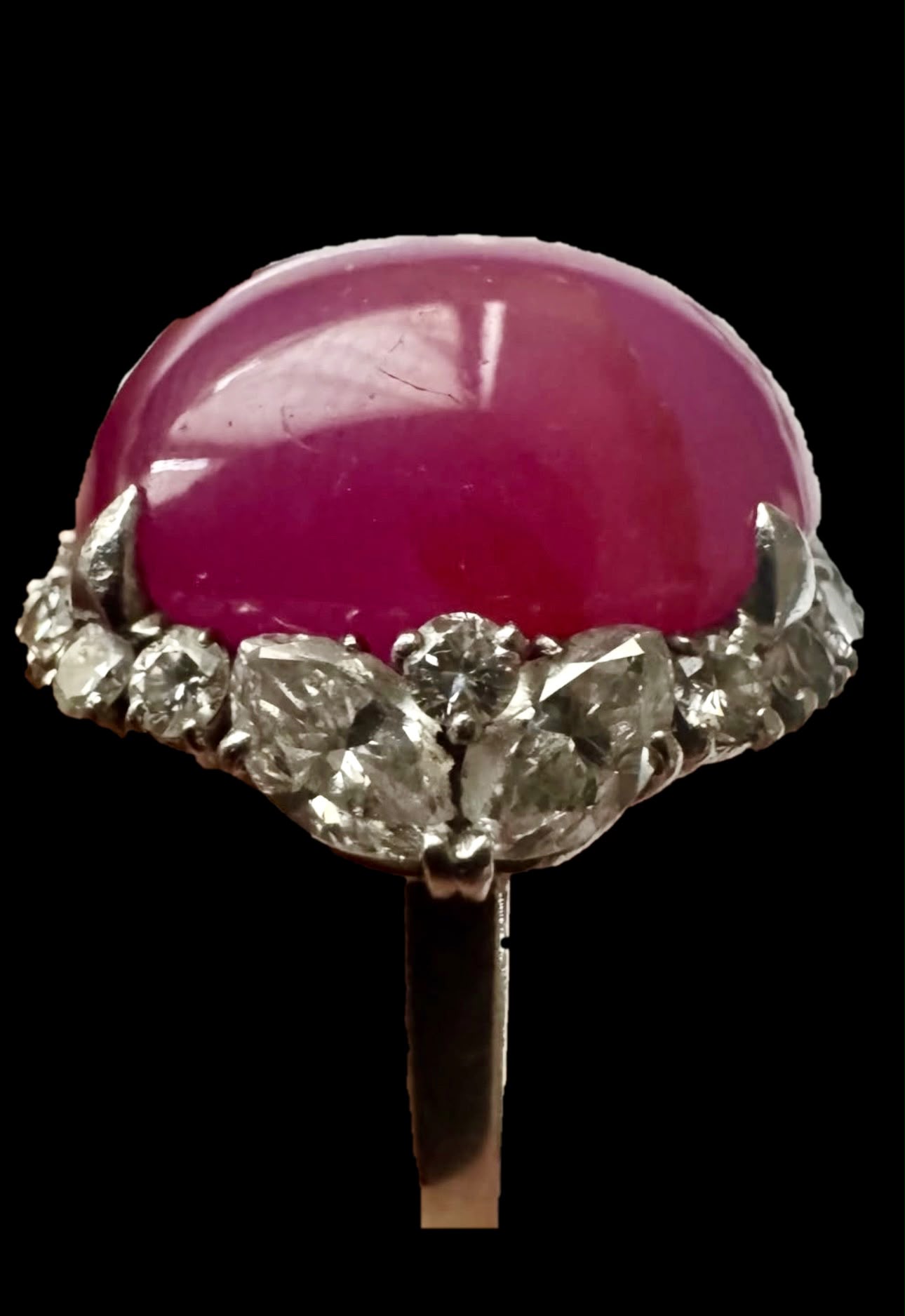
A substantial cabochon ruby and diamond ring in platinum

A striking Bulgari ring centred by a large oval cabochon ruby of rich red colour, raised above a substantial surround of brilliant-cut diamonds. The ruby is held by prominent platinum claws, the diamond-set shoulders continuing into a plain platinum shank. Signed BVLGARI. The mount bears a French import assay mark for platinum, 850/1000.

Gübelin Gem Lab report, 2026, n°26060029: 26.60 carats, accompanying the ring; ruby reported with no indications of heating.
Price on enquiry
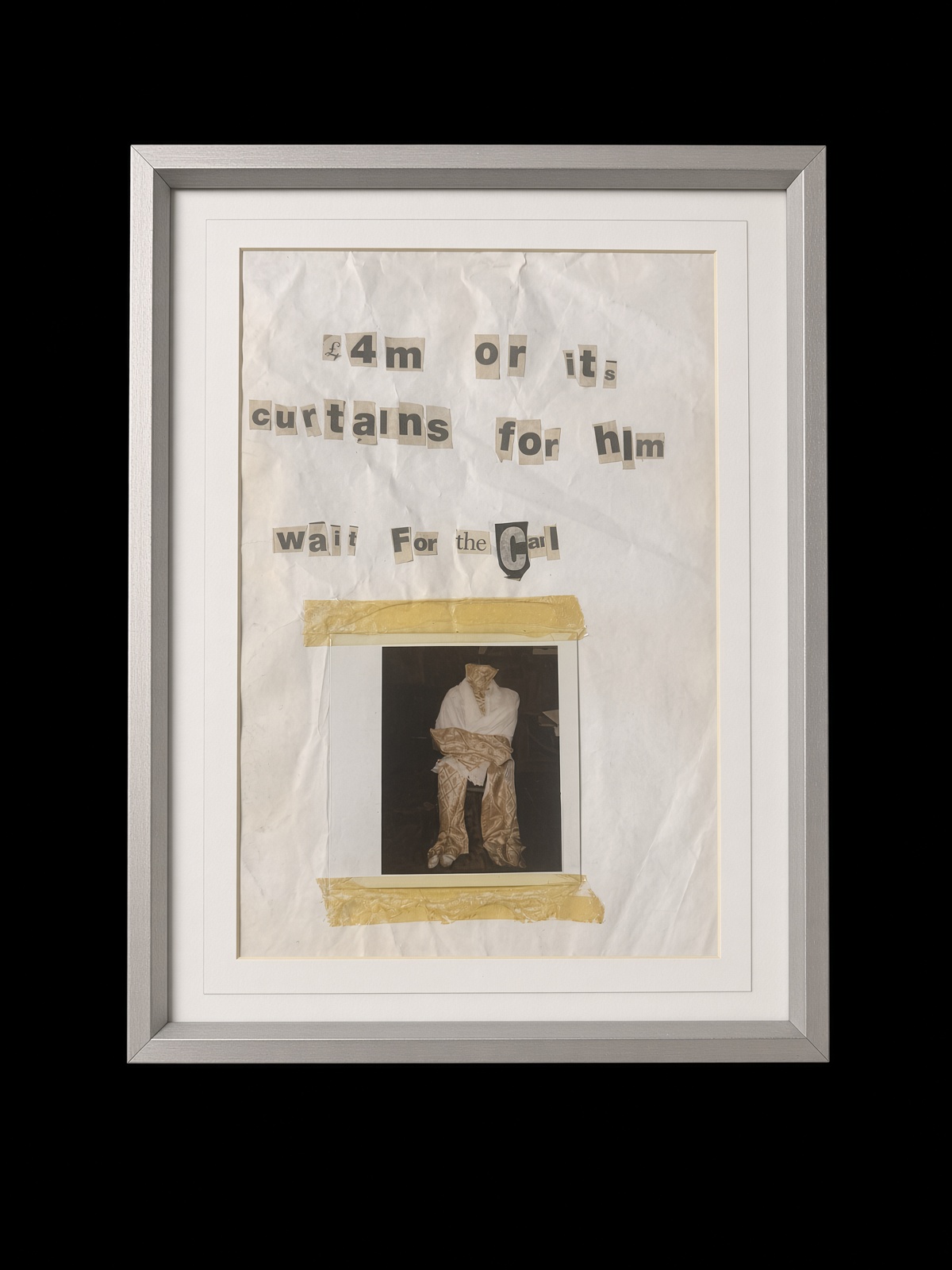
4 Million or It's Curtains for Him

4 Million or It's Curtains for Him

John Shapter, 2002

A signed, original collage of cut-out lettering, a small photograph and yellow adhesive tape arranged upon crumpled paper. Its ransom-note typography and enigmatic central image combine dark humour with an instinctive, irreverent approach to composition. Created in Lincoln during an active period of Shapter's visual practice, within the city's independent artistic community. A practising dentist as well as an artist, Shapter subsequently explored experimental sound and ambient music under the name Headzic. Signed by the artist. Original frame and mount retained.
Gift from the artist to the present owner.

For an account of John Shapter's later experimental music and sound-art practice as Headzic, see Headzic: The Accidental Musician.

Abbey of Thelema wall fragment, painted plaster
Curiosities

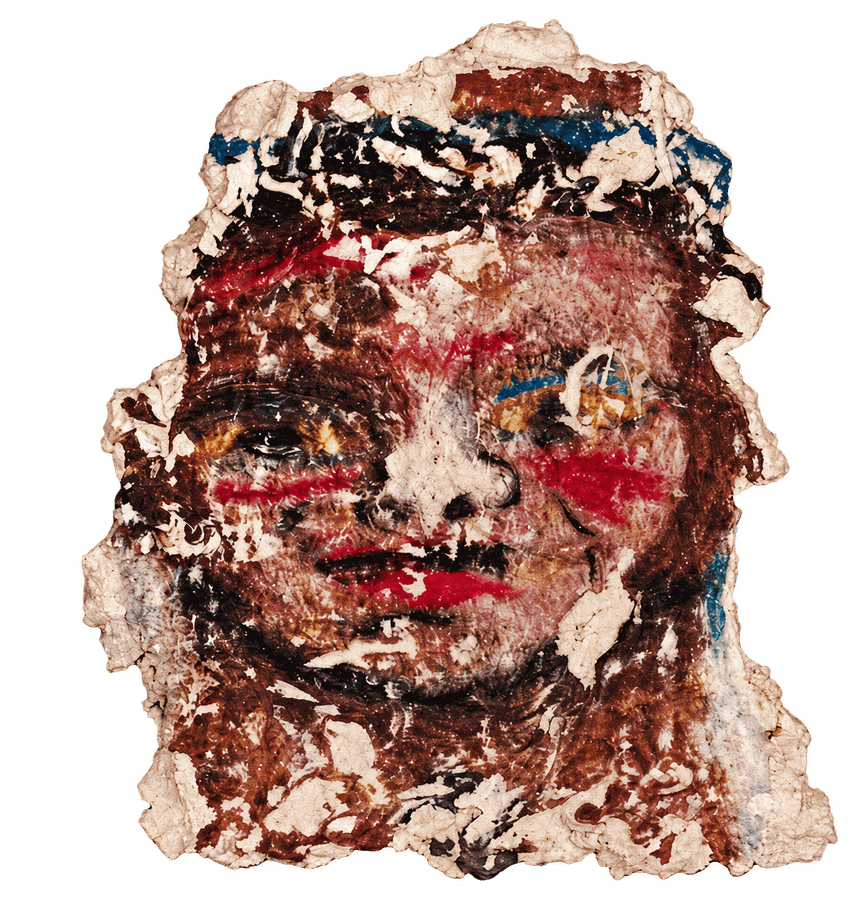
Painted wall fragment with a face

Said to be associated with the Abbey of Thelema, Cefalù, with a letter from Kenneth Anger

A painted gesso fragment said to be associated with the Abbey of Thelema at Cefalù, the house occupied by Aleister Crowley from 1920 until his expulsion from Italy in 1923. It preserves part of a face: dark eyes, red lips, red marks across the cheeks and brow, and bands of red and blue above. The edges are broken and irregular. After 1923 the Abbey’s murals were whitewashed. In 1955 Kenneth Anger uncovered and filmed surviving decoration. This fragment is accompanied by a personal letter from Anger to a former owner concerning the piece. It is not identified with any picture titled by Crowley. The association rests on that letter.

By repute, the Abbey of Thelema, Cefalù, Sicily. Private collection, accompanied by a personal letter from Kenneth Anger to the then owner concerning the fragment; thence to the present owner.

Surviving painted fragments from the Abbey of Thelema are exceptionally uncommon. The Yorke Collection finding aids record photographs of paintings in the Chambre des Cauchemars (NS74, p. 220) and further photographs of paintings at Cefalù (pp. 221–222), but do not identify this fragment. Since December 1990 the villa has been under a Sicilian protection order, so painted plaster still on the walls cannot lawfully be removed For the villa and its protection, see Villa Santa Barbara, Abbazia di Thelema, FAI.

Price on enquiry
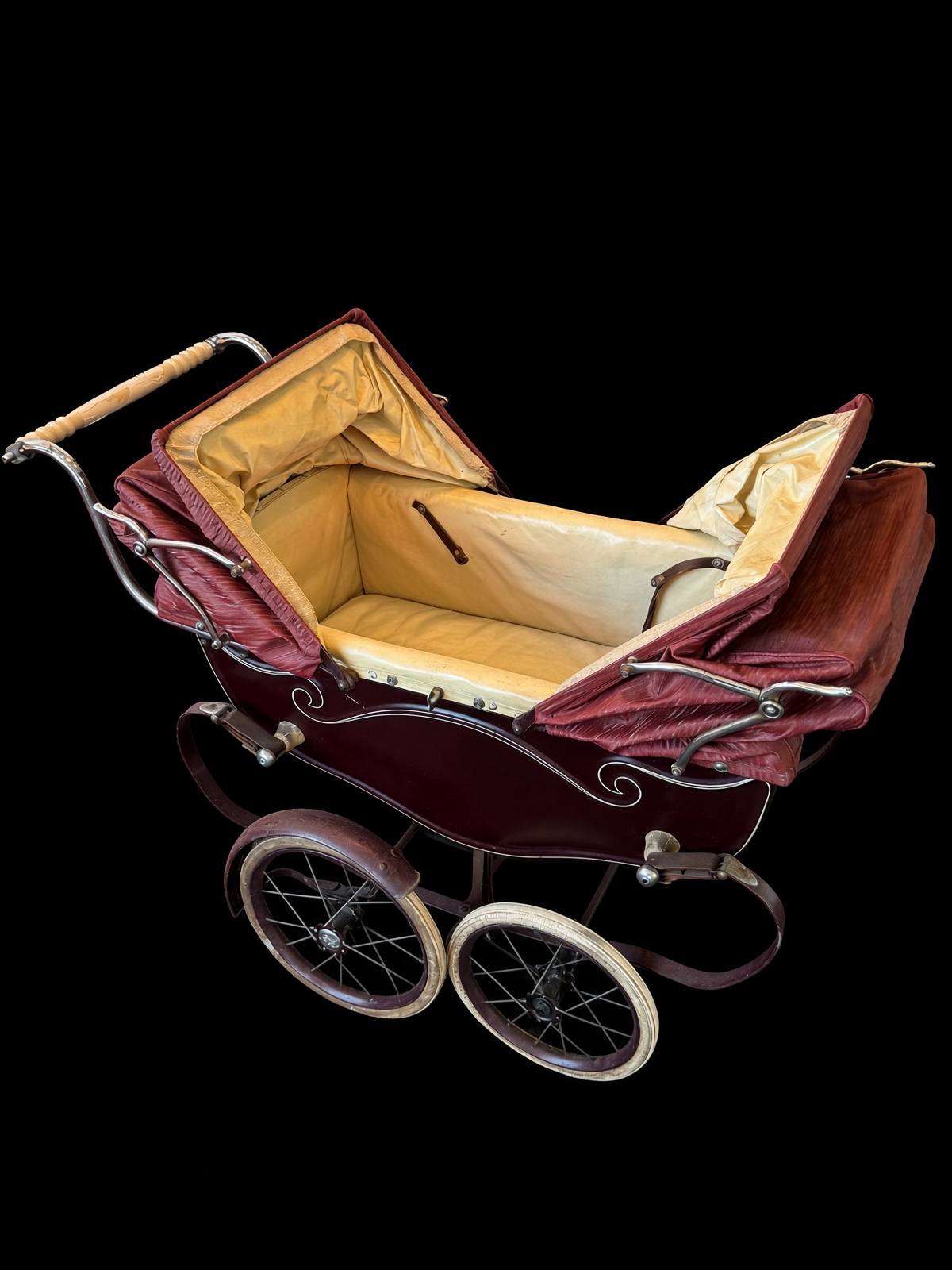
Silver Cross Twin Model Doll's Pram
Collectables

Silver Cross Twin Model Doll's Pram

A coach-built double-hooded model in burgundy

A particularly attractive vintage Silver Cross twin model doll's pram, of coach-built form with opposing double hoods. The deep burgundy body is decorated with fine contrasting coach lines and scrollwork, with pleated burgundy hood coverings and a cream-lined interior. The traditional chassis is fitted with spoked wheels, pale rubber tyres, mudguards, suspension and a chromed handle with moulded grip. The unusual double-ended arrangement gives the pram a distinctive and highly decorative profile. A charming surviving example of British nursery design, suitable both for a collection of vintage dolls and as a decorative interior piece. Delivery or collection by arrangement. Please enquire for delivery costs.

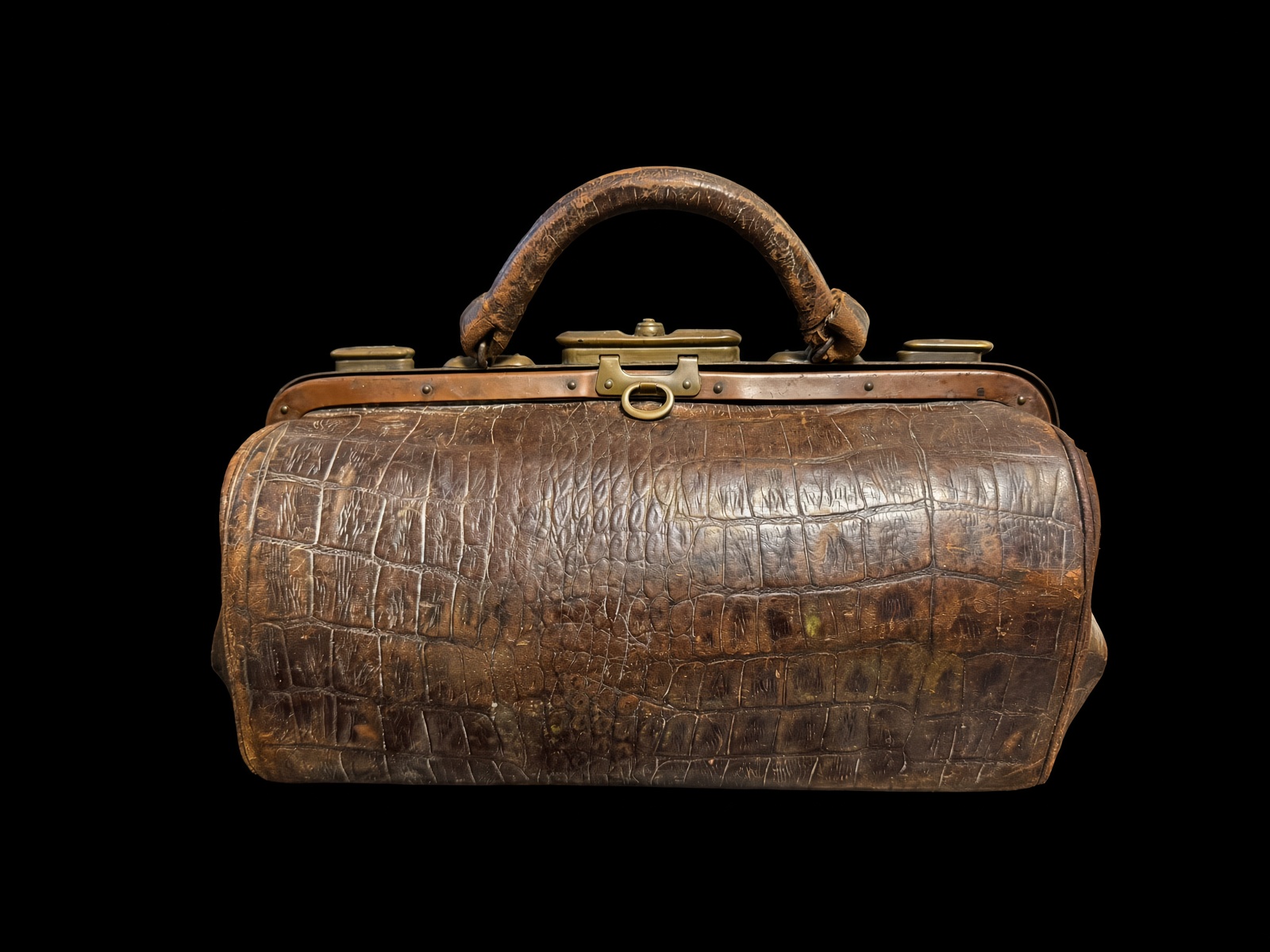
The Gladstone bag takes its name from William Gladstone, four times Prime Minister, and was first made by J. G. Beard at his leather shop in Westminster; its hinged frame, opening into two equal halves, was patented in 1854. By the end of the century it had become the bag of choice for doctors carrying their instruments.

Silver Cross was founded by William Wilson in Leeds in 1877, and by the mid-twentieth century was known as "the Rolls-Royce of prams", supplying the family of George VI. Its doll's prams were built in the same coach-built manner as the full-size models, in miniature. Silver Cross at the Brighton Toy Museum index

The Diary of a Drug Fiend
Curiosities

The Diary of a Drug Fiend

Aleister Crowley, first American edition, New York, 1923

Crowley's only published novel, a story of cocaine and heroin addiction and recovery set partly in an "Abbey of Thelema" modelled on his own community at Cefalù, Sicily. First published in London by Collins in 1922; this is the first American edition, New York: E. P. Dutton & Company, 1923, reset with some corrections. About 2,025 copies were printed, and part of the edition was later destroyed by water damage after a fire. Publisher's black cloth lettered in red. Fragments from the walls of the Abbey at Cefalù are also offered by 1AB.

Estate of Helen Livingston Broome (1926‑2022).

See the bibliographic entry, The Diary of a Drug Fiend, 1923, 100th Monkey Press; and The Diary of a Drug Fiend, Wikipedia.

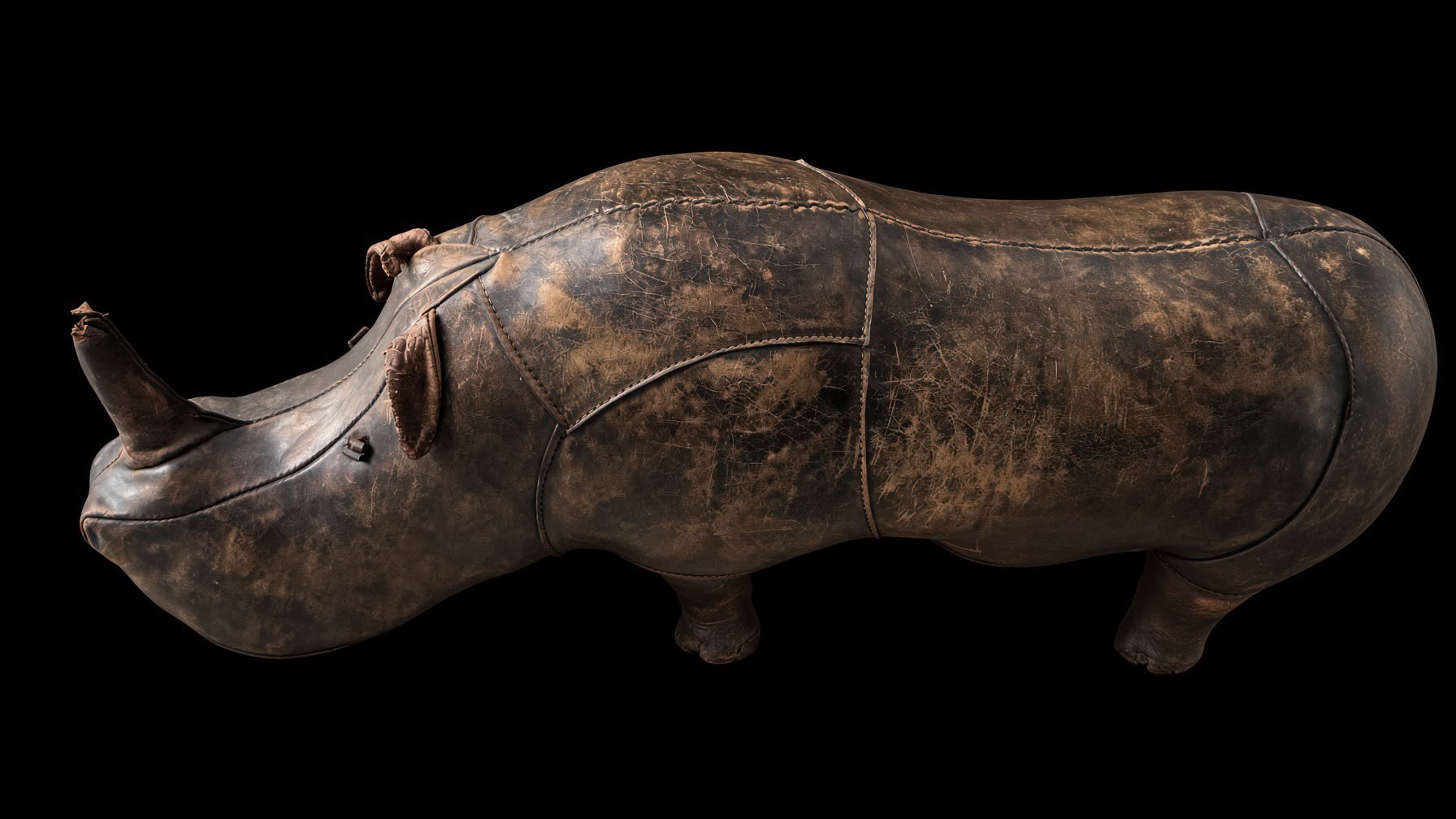
Leather Rhinoceros
Furniture & Lighting

Leather Rhinoceros

Dimitri Omersa for Liberty of London, England, circa 1960s

A wonderfully characterful leather rhinoceros by Dimitri Omersa, made in England for Liberty of London. Hand-stitched in shaped leather panels and retaining a rich, deeply developed patina. The rhinoceros became Omersa’s defining design and an enduring example of eccentric British interiors.

Property of a Lady, acquired in the 1960s.

Omersa's leather animals have been sold by Liberty since 1927, and the rhinoceros remains in production today. The present example is an original 1960s piece, with the depth of patina only decades of use can give.

Price on enquiry
Crocodile-Embossed Gladstone Bag
Collectables

Crocodile-Embossed Gladstone Bag

Early twentieth century

A Gladstone bag in deeply patinated crocodile-embossed leather, retaining its brass frame, ring-pull clasp, side catches and wrapped handle. The original cloth lining is intact, darkened and worn through use. The clasp closes and holds; the key is lacking, so the bag cannot be locked.

Acquired by the present owner at the Marché aux Puces de Saint-Ouen, Paris, in 2003.

Reserved
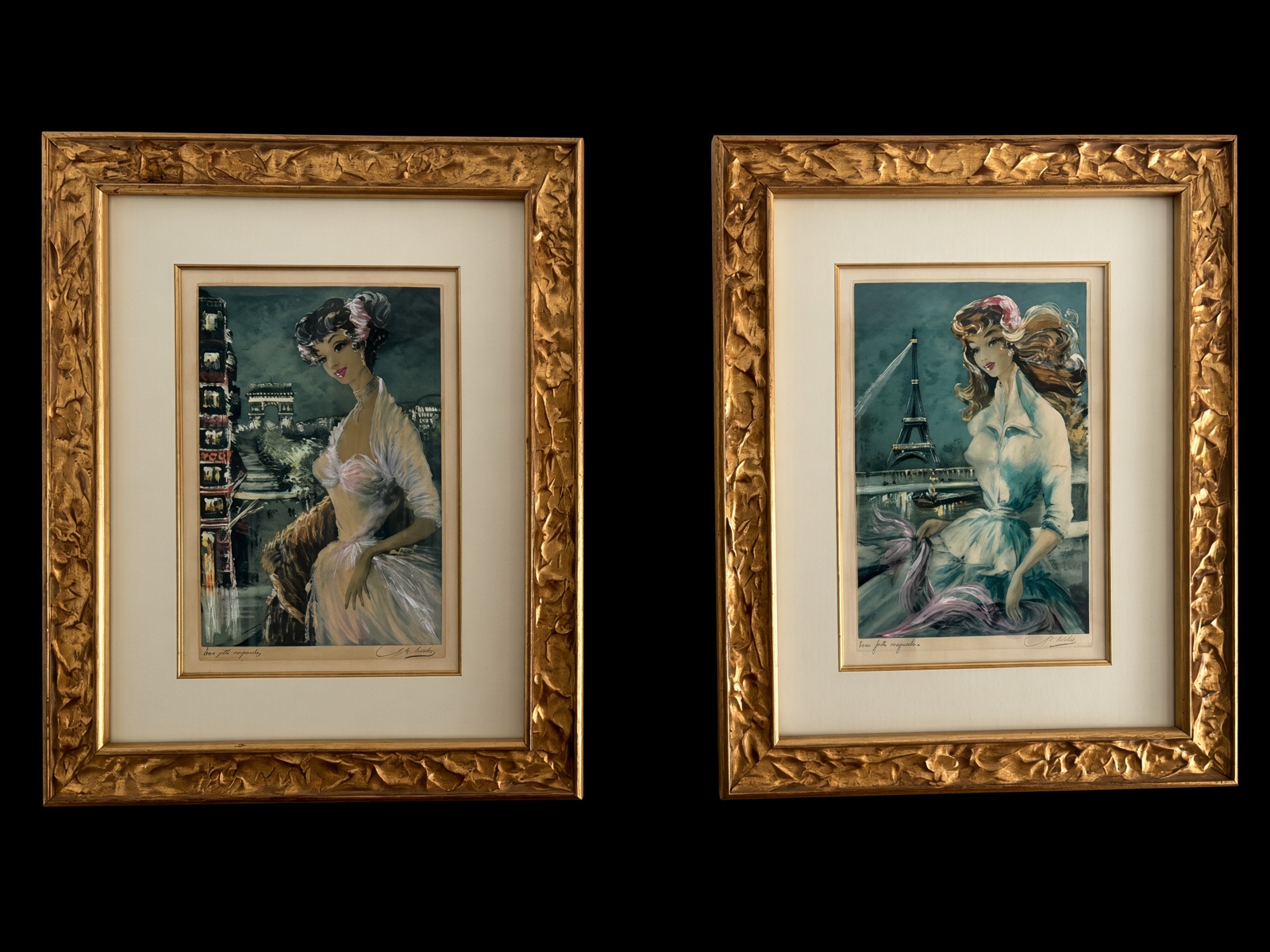
Pair of French Fashion Etchings
Art

Pair of French Fashion Etchings

A matching pair of hand-coloured Parisian fashion prints

A stylish matching pair of mid-twentieth-century French hand-coloured etchings depicting fashionable Parisiennes against two of the city's defining landmarks: the Arc de Triomphe and the Eiffel Tower. Each work is inscribed 'Eau forte originale' lower left and signed in pencil lower right. The printed image has been enhanced with hand-applied colour, visible beneath the glass, giving the pair a particularly rich and painterly appearance. Presented in substantial giltwood and composition frames with broad cream mounts and gilt fillets. Their scale, matching presentation and documented family provenance give the pair considerably greater presence than ordinary decorative fashion prints.

Lady Ernestyne Daphne Middleton-Trimm, Grove Court, Kensington High Street, London; acquired in Paris, 1952; by family descent to the present owner.

The pair belongs to the tradition of mid-century French decorative fashion prints combining original etching with hand-applied colour, produced for the domestic and decorative market in post-war Paris.

Price on enquiry
Brutalist Gilt Geometric Mirror
Decorative Arts

Brutalist Gilt Geometric Mirror

Attributed to Syroco

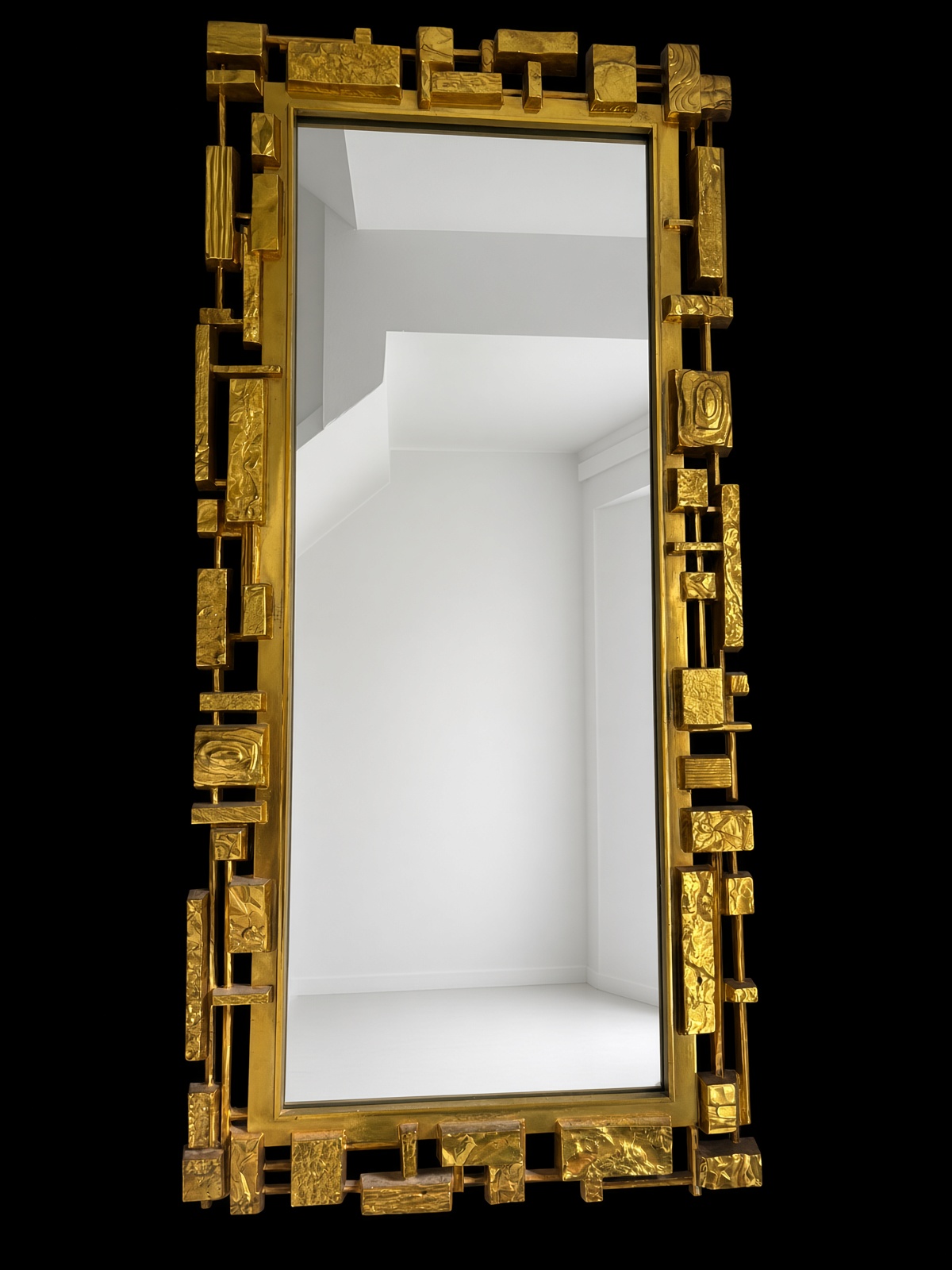
A striking large rectangular mirror in the Brutalist manner, attributed to Syroco and dating from circa 1970. The central mirror plate is surrounded by an architectural openwork frame composed of irregular geometric blocks, bars and textured relief elements in a rich gilt finish. Contrasting smooth, rippled and heavily textured surfaces create a sculptural rhythm around the otherwise restrained rectangular plate. The bold asymmetric construction and warm gold surface are characteristic of the decorative Brutalist vocabulary of the period, giving the mirror considerable presence as both a functional object and a piece of wall sculpture. Delivery or collection by arrangement. Please enquire for delivery costs.

Syroco, the Syracuse Ornamental Company of Syracuse, New York, was founded in 1890 and began by hand-carving wooden ornament, before becoming known for moulded decorative work that gave the look of carving at a fraction of the cost. By the 1960s and 1970s its mirrors, clocks and wall pieces had become a staple of American interiors. Syroco collection, Syracuse University Libraries

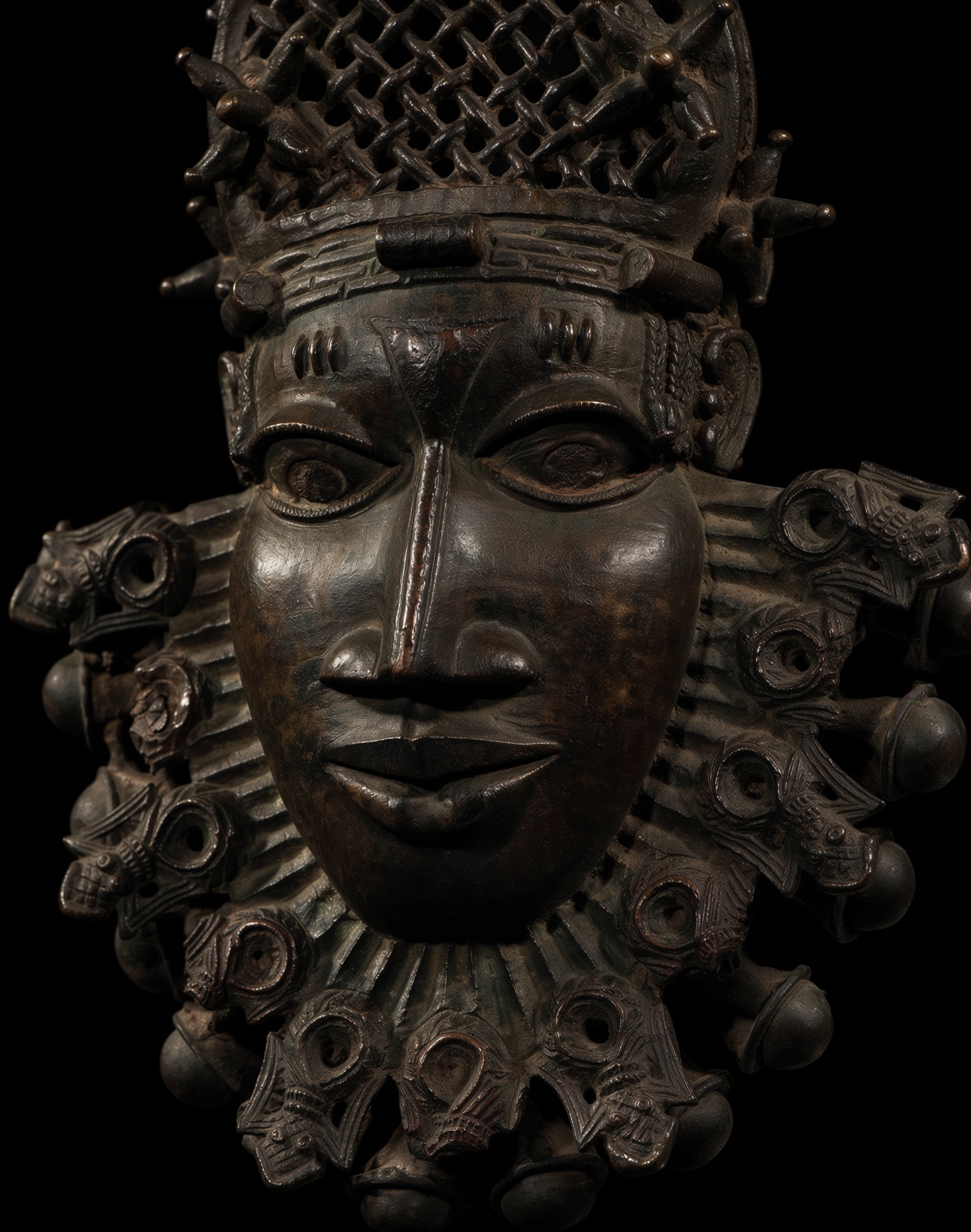
Benin Belt Mask, Kingdom of Benin, Nigeria
Art

Belt Mask

Kingdom of Benin, Nigeria

Pierre et Claude Vérité Collection.

Exhibited: Neuflize OBC, Paris, 2008.

Price on enquiry
German Polychrome Guardian Angel Figure
Curiosities

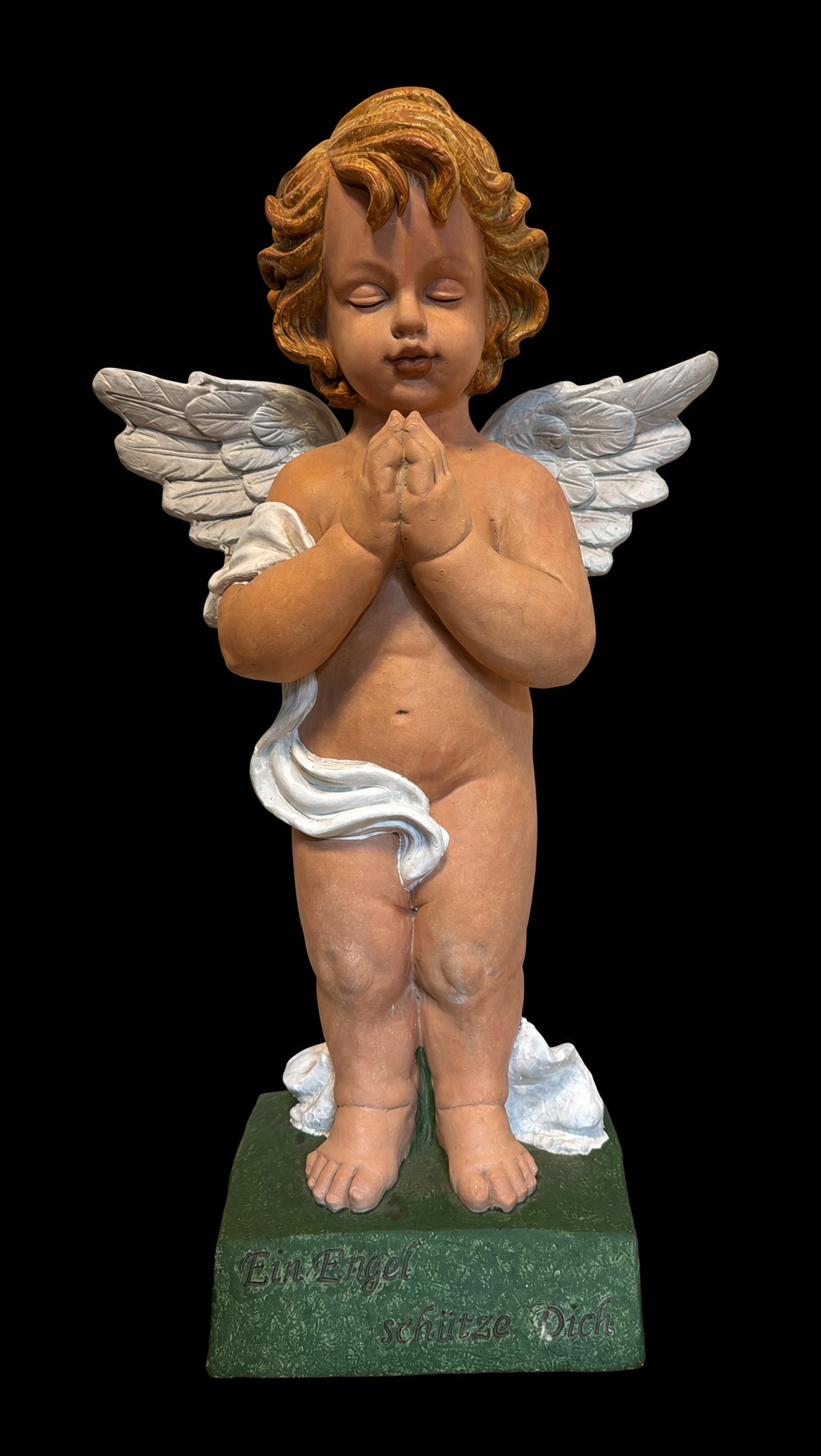
German Polychrome Guardian Angel Figure

"Ein Engel schütze Dich" — May an angel protect you

A large polychrome guardian angel figure depicting a standing cherub with hands joined in prayer and white feathered wings. The figure stands on a green rectangular base inscribed in German, 'Ein Engel schütze Dich' — 'May an angel protect you'. The painted finish combines warm flesh tones, gilt hair and white wings, giving the piece a distinctly continental devotional character. Originally intended as a decorative or memorial figure, its scale and expressive appearance also make it an unusual interior or garden object. Delivery or collection by arrangement. Please enquire for delivery costs.

Acquired from a brocante in Cannes, France

Henri II Revival Wall Mirror, c. 1880
Decorative Arts

Henri II Revival Wall Mirror, c. 1880

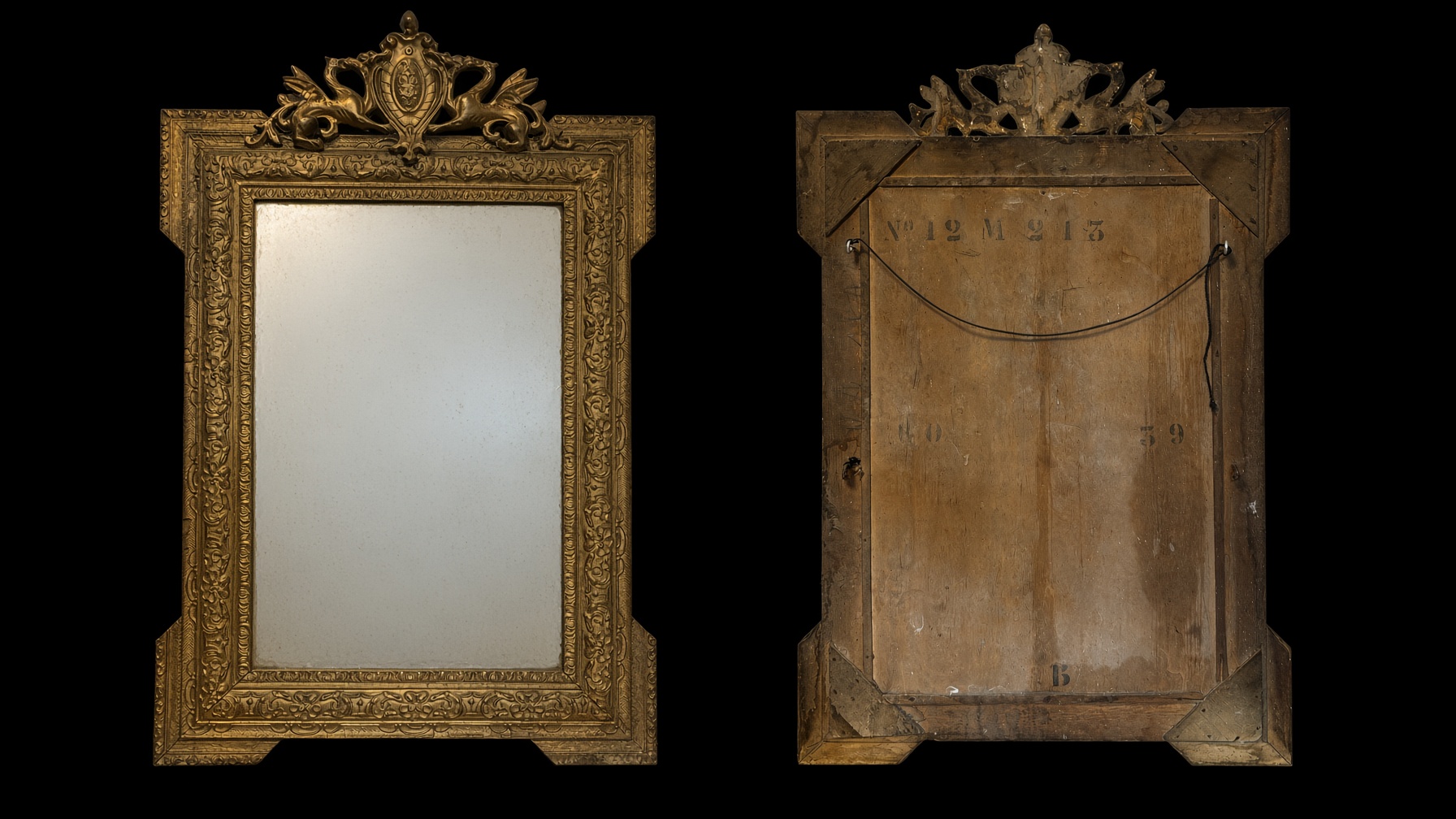
With winged gryphon crest and period foxed glass

A richly ornamented French Renaissance Revival mirror of the late nineteenth century, conceived in the Henry II taste. The rectangular gilt frame is densely modelled with repeating foliate and geometric ornament and surmounted by an openwork crest centred by an oval cartouche flanked by opposing winged gryphons or dragons. The period mirror plate displays extensive atmospheric foxing and clouding, giving the surface considerable age and character. The reverse retains its old pine backboard with stencilled inventory and size markings, including 'No. 12 M 213', together with further numerals. The combination of elaborate cresting, deeply worked gilt ornament and aged glass gives the mirror a distinctly architectural and theatrical presence.

Mirrors of this type were made in France in the later nineteenth century in the revived taste of the court of Henri II (r. 1547‑1559), whose Renaissance ornament enjoyed a strong revival under the Second Empire and Third Republic.

Pair of Burmese Kneeling Buddhist Disciples
Art

Pair of Burmese Kneeling Buddhist Disciples

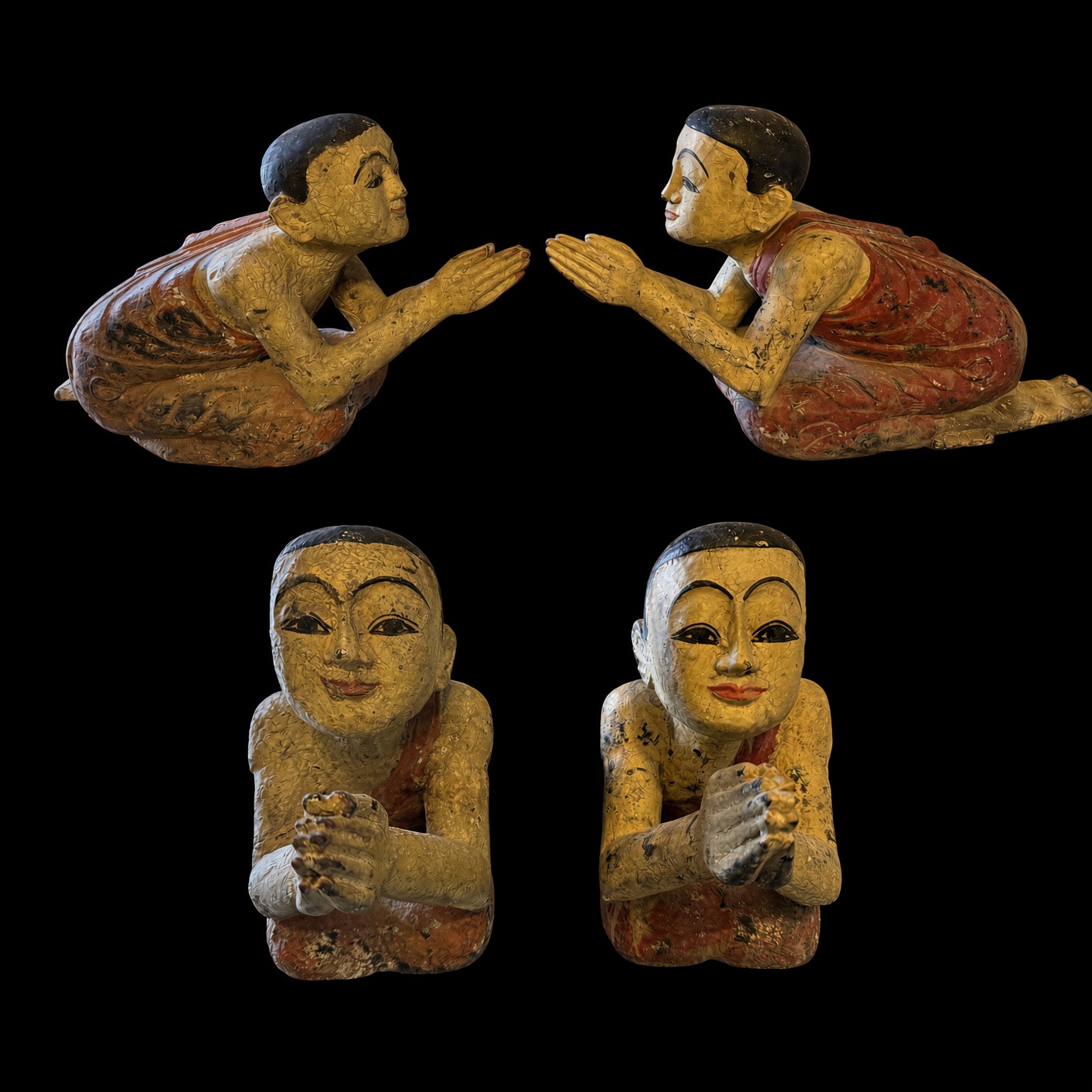
Traditionally identified as Sariputta and Moggallana c.1890-1920

A substantial pair of Burmese carved wood Buddhist figures, traditionally identified as Sariputta and Moggallana, the two chief disciples of the Buddha. Each monk is shown kneeling in a posture of reverence, with shaven head, expressive painted features and hands extended in devotion. The figures retain extensive old polychrome decoration, with warm ochre and red robes, black-painted hair and details, and surviving traces of gilding and lacquer. Pairs of attendant disciples traditionally formed part of Burmese Buddhist shrine arrangements, positioned in relation to a central image of the Buddha. Their low kneeling form, mirrored composition and strongly frontal expressions give the pair considerable sculptural presence. The richly worn surfaces, craquelure and areas of exposed underlying decoration contribute substantially to their character and sense of age.

Carved and lacquered figures of the Buddha's two chief disciples, Sariputta and Moggallana, were placed before images of the Buddha in Burmese temples and monasteries as part of a shrine, kneeling as worshippers with their feet turned away from the object of veneration. A related 19th century pair, Michael Backman Ltd

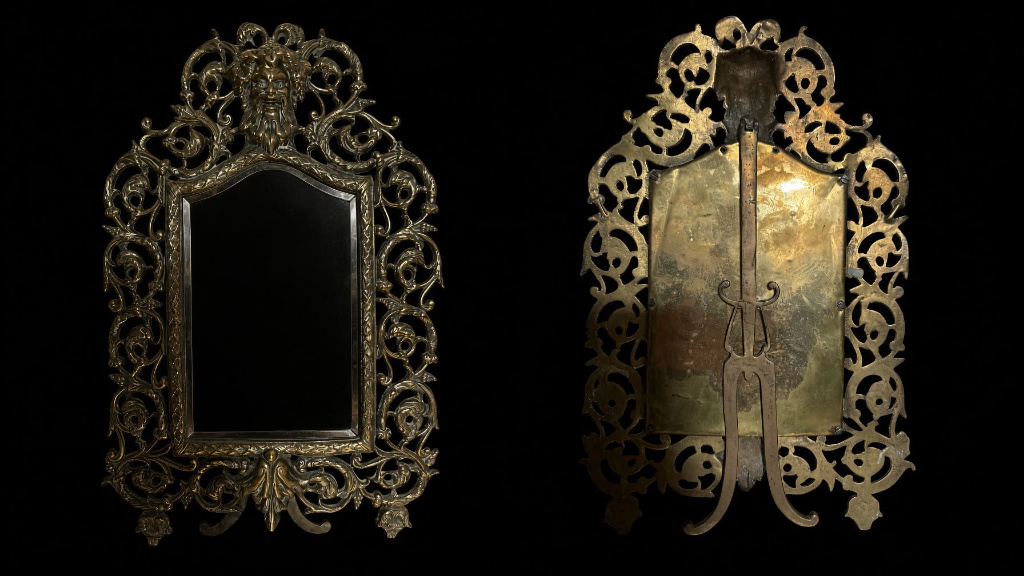
French Renaissance Revival Cast Brass Easel Mirror
Decorative Arts

French Renaissance Revival Cast Brass Easel Mirror

With mascaron crest and folding easel stand

A richly cast French easel mirror of the late nineteenth century, designed in the Renaissance Revival taste. The openwork brass frame is decorated throughout with scrolling foliage and pierced ornament, centred at the crest by a prominent bearded mascaron. A bevelled rectangular mirror plate is enclosed by a moulded inner border, while the reverse retains an elaborate folding metal easel stand. Compact in scale but strongly architectural in form, the mirror has the character of a late nineteenth-century dressing-table or cabinet object and retains an attractive aged brass surface.

Comparable late 19th century French cast-brass easel mirrors are known with pierced revival ornament, mascaron crests, bevelled plates and folding rear stands.

Fabergé Jewelled Smoky Quartz Bunny Rabbit
Decorative Arts

Fabergé Jewelled Smoky Quartz Bunny Rabbit

St Petersburg, circa 1900

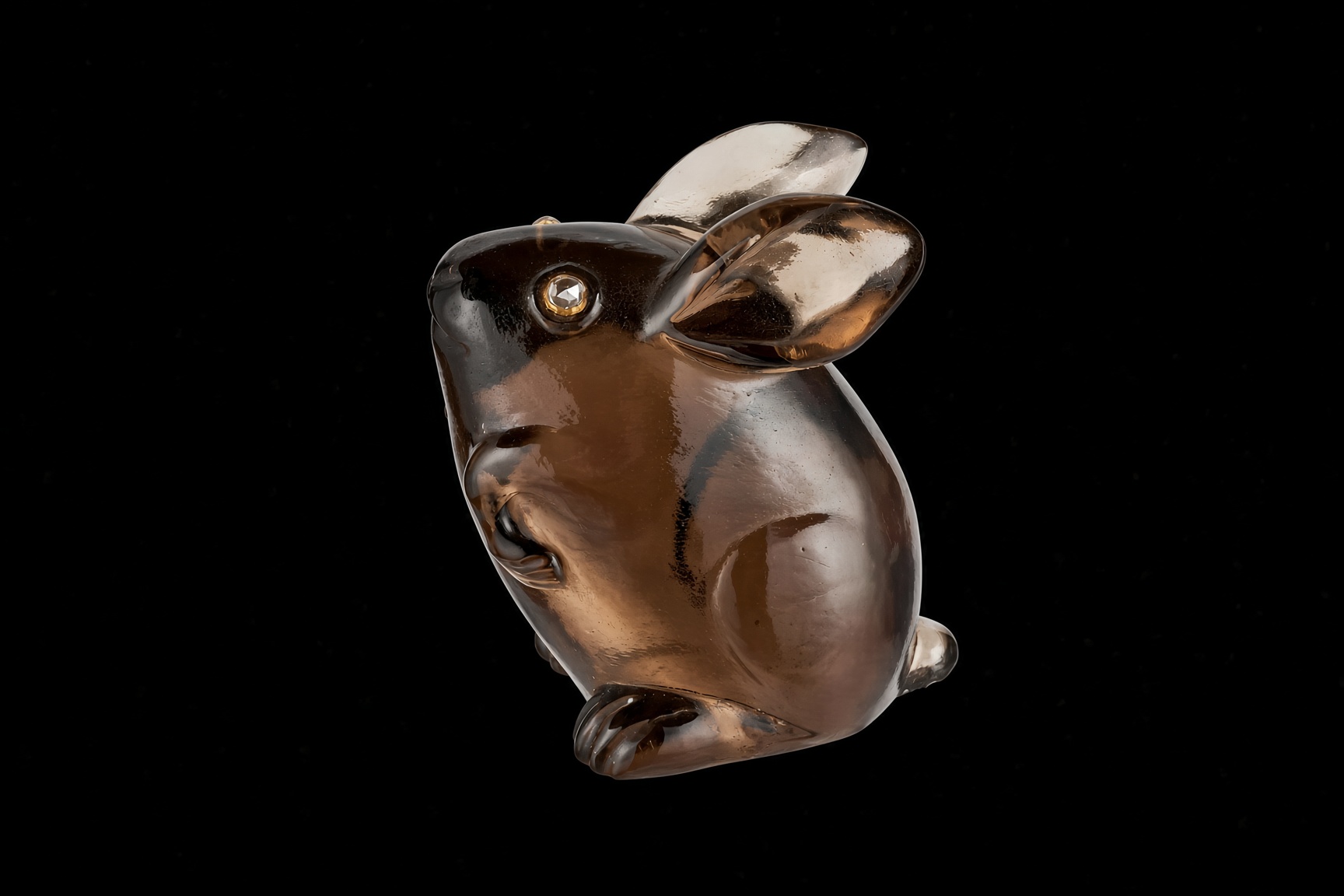
A rare smoky quartz model of a rabbit by Fabergé, carved with humour in the Japanese taste after a netsuke. The bunny stands on its hind legs, nose raised to the air, its eyes set with rose-cut diamonds in gold. Apparently unmarked, and contained in its original Fabergé burr-wood case. A small carving with a distinguished royal provenance, passing through Wartski and the collections of King Paul of the Hellenes, Robert Strauss and Lord Thomson of Fleet.

With the Antikvariat, 1920s; Wartski, London, 1920s; King Paul of the Hellenes; Sotheby's, London, 25 November 1957, lot 103; Robert Strauss; his sale, Christie's, London, The Robert Strauss Collection of Works of Art by Carl Fabergé, 9 March 1976, lot 34; Lord Thomson of Fleet; Wartski, London; private UK collection; André Ruzhnikov, from whom acquired by the present owners, August 2020.

G. Munn, Wartski: The First Hundred and Fifty Years, 2015, p. 81, illustrated.

Fabergé's hardstone animals were particularly prized by the British royal family, whose collection at Sandringham remains the largest. Royal provenance of this calibre is uncommon among them.

Reserved
"Mirror of Paradise" Bespoke Tribute Ring
Jewellery

"Mirror of Paradise" Bespoke Tribute Ring

White gold, after the 52.58-carat Golconda diamond.

A bespoke white-gold ring conceived at the scale and proportions of the "Mirror of Paradise", the celebrated 52.58-carat Golconda diamond sold by Christie's in 2019. The centre is a custom-grown, colourless moissanite, cut as a rectangular step-cut to the dimensions and proportions of the original stone. Its scale required a purpose-built mount: a raised white-gold gallery with tapered baguettes to either side, following the original three-stone arrangement. A contemporary jewel that recovers the physical presence of the original. A colourless moissanite of this size, cut to these specifications, is exceptionally rare.

Commissioned at the request of a prominent American technology entrepreneur; not delivered, and thence retained by the present owner. Contemporary; no provenance connection to the original jewel.

After the "Mirror of Paradise": Christie's New York, Maharajas & Mughal Magnificence, 19 June 2019, lot 229 view lot. See also the legendary diamonds of Golconda.

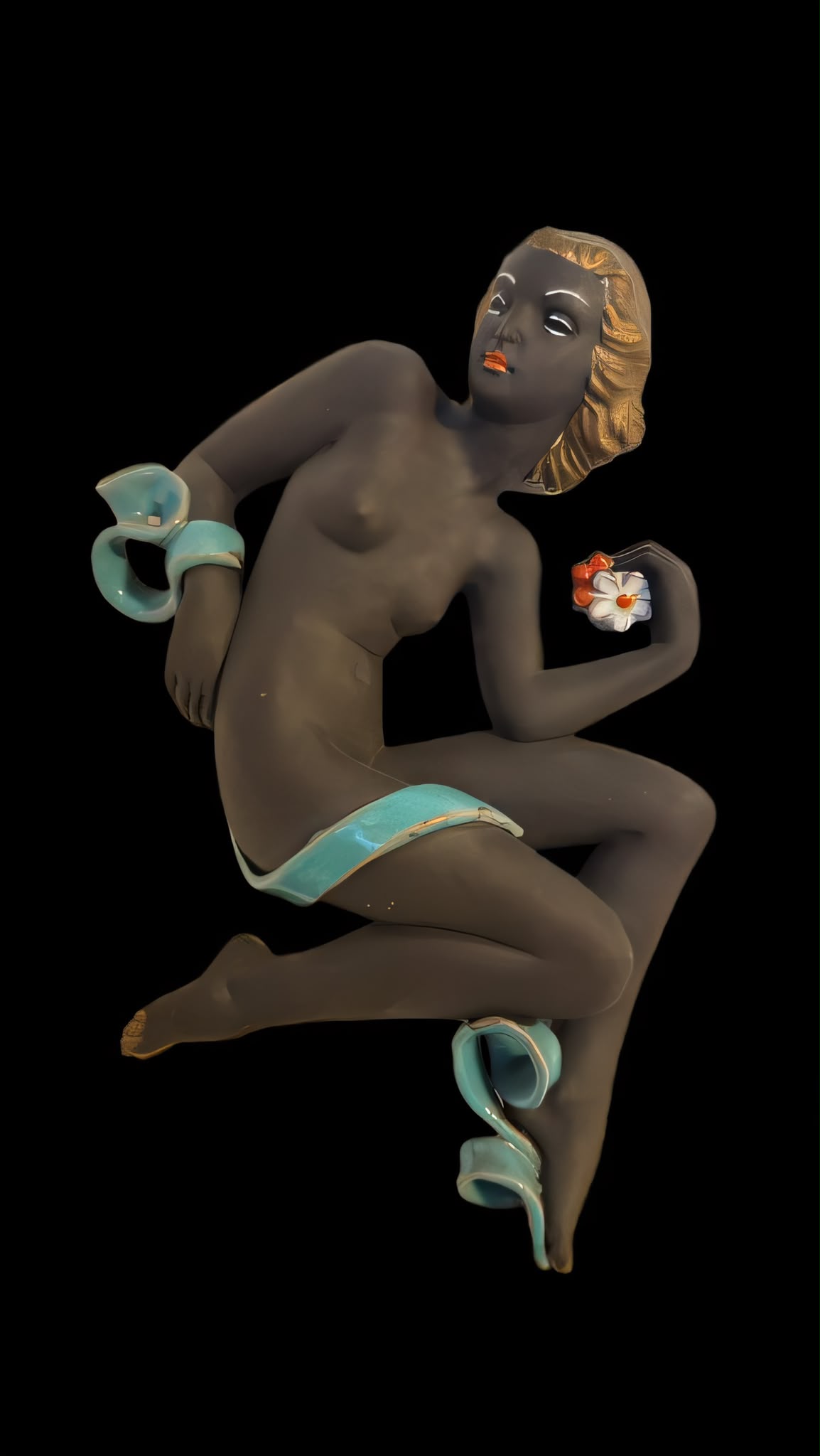
Keramia Art Deco Terracotta Nude Wall Plaque
Decorative Arts

Keramia Art Deco Terracotta Nude Wall Plaque

A polychrome female figure with turquoise ribbon

A striking Art Deco terracotta wall plaque by Keramia, modelled as a stylised semi-nude female figure in a fluid reclining pose. The figure is finished in a dark matte glaze with gilt-highlighted hair and is entwined by a sculptural turquoise ribbon, while one raised hand holds a small polychrome flower. The elongated pose, simplified modelling and strong contrast of black, turquoise and gilt are characteristic of Central European decorative ceramics of the interwar period. Impressed to the reverse with the Keramia factory mark, comprising a stylised tower above 'KERAMIA', together with 'FOREIGN', and retaining its original hanging aperture. An unusually large and visually assured example of Art Deco wall ceramics, with particularly strong decorative presence.

By family descent from the present owner's great-grandmother.

Bulgari ruby and diamond ring
Jewellery

Bulgari Ruby and Diamond Ring

Italy, circa 1980s

A cabochon ruby and diamond ring mounted in 18ct yellow gold, signed Bulgari.

No indication of heat treatment to the ruby.

Price on enquiry
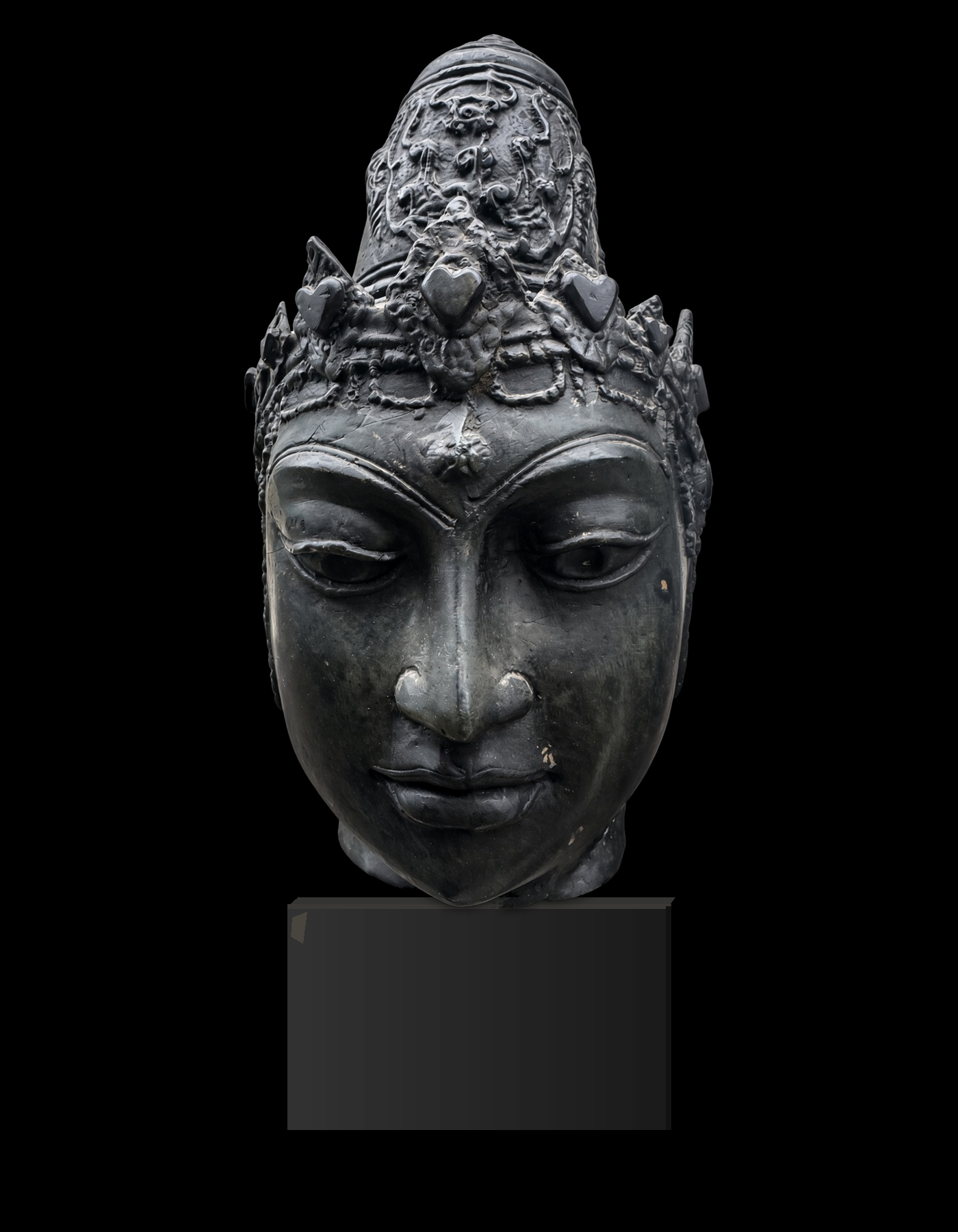
Bronze Head of a Crowned Buddha
Art

Bronze Head of a Crowned Buddha

Thailand, Ayutthaya style, 19th/20th century

Cast with a serene face, downcast eyes beneath gently arched, conjoined brows, and full lips in a contemplative smile. He wears a diadem of heart-shaped bodhi-leaf motifs, flanked by elaborate ear ornaments, below a tall, tiered conical crown. Dark patina with areas of green corrosion. Hollow-cast, the neck with an irregular break, from a larger figure.

Private collection, United Kingdom; acquired on the King's Road, London, in the 1980s.

For the type, compare a head of a crowned Buddha, Thailand, Ayutthaya, approx. 1500‑1600, brass, 27.9 cm, Asian Art Museum, San Francisco (B60S13). The present head is 32 cm and is catalogued as Ayutthaya style, 19th/20th century.

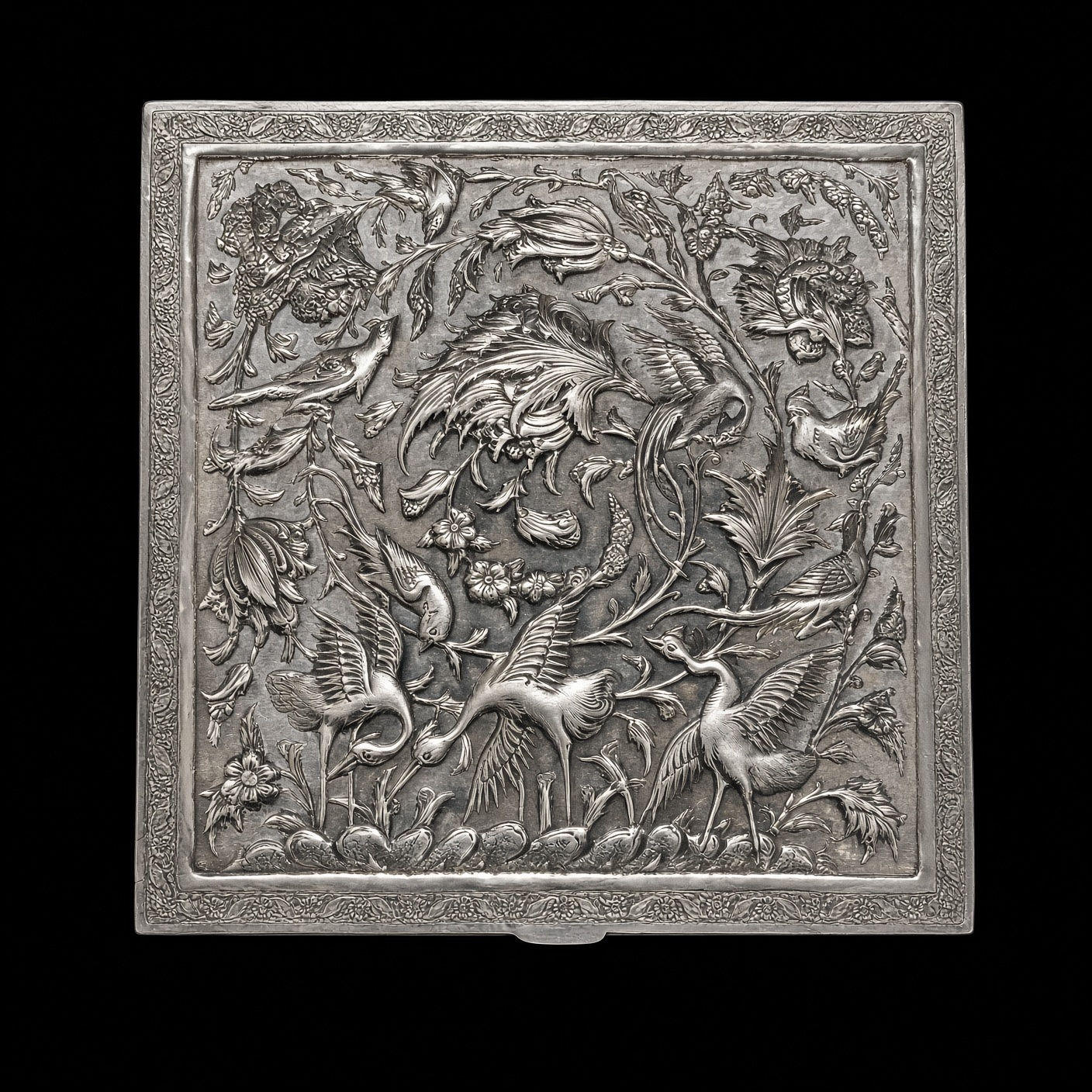
Imperial Presentation Silver Box
Decorative Arts

Imperial Presentation Silver Box

Persia (Iran), Isfahan, mid-20th century

Of square form, the hinged lid finely chased in high relief with a gol-o-morgh composition of herons wading among flowering plants, with birds and a central bird of paradise on a ring-matted ground, within a border of flowerheads. The sides chased with a continuous band of floral cartouches, on four bracket feet. With small stamped marks to the lid border.

Presented by the Court of Mohammad Reza Shah Pahlavi to Dean Bacher, of the Waldorf Astoria, New York, furrier by royal appointment, on the occasion of the royal wedding, 1959; a private American collection; by whom given to the present owner. Accompanied by a copy of a letter from a subsequent owner recording the gift.

Dein-Bacher of the Waldorf Astoria were New York furriers of the 1940s and 1950s, with salons at the hotel and on Lincoln Road, Miami Beach; their seasonal showings at the Waldorf were reported in The New York Times. By family account, the firm's clients included Elizabeth Taylor and Princess Grace of Monaco, as well as members of the Imperial Court of Iran.

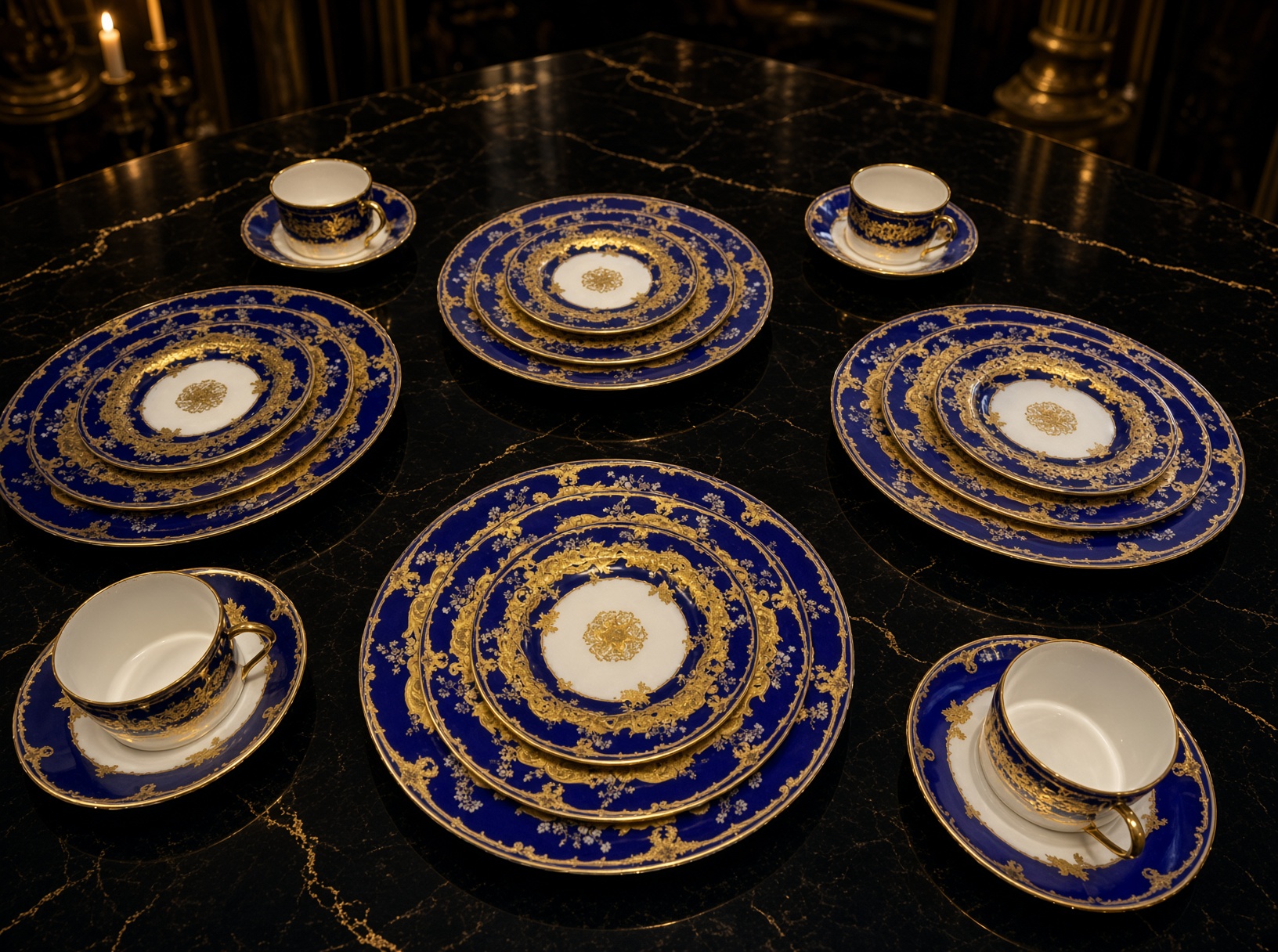
Haviland Limoges “Tsar” Grand Siècle Twenty-Piece Service
Decorative Arts

Haviland Limoges “Tsar” Grand Siècle Twenty-Piece Service

Four five-piece place settings in cobalt blue and hand-applied 24-carat pure gold

A complete twenty-piece service in Haviland’s discontinued “Tsar” pattern from the prestigious Grand Siècle collection. Brilliant white Limoges porcelain is framed by broad cobalt-blue borders, richly worked with scrolling foliage, elegant cartouches and floral ornament in hand-applied 24-carat pure gold. The cups are distinguished by fully gilt handles, while the plates carry broad cobalt borders densely articulated with the characteristic Tsar gilt decoration. Comprising four complete five-piece place settings, the service has the formal presence of grand European tableware, with cobalt blue, white porcelain and gold combining to striking effect. Each piece bears the official Haviland Grand Siècle Limoges backstamp, recording its manufacture at Limoges, hand-decoration in France and the use of 24-carat gold.

Purchased from the Daum-Haviland boutique, 499 Park Avenue, New York, 15 February 2014; subsequently by descent. Accompanied by the original invoice, No. 30600.

Thomas Goode & Co, Mayfair confirmed official pattern reference no. 14872.

The “Tsar” pattern is now discontinued. Complete services are encountered far less frequently than individual replacement pieces, giving this twenty-piece set particular presence and rarity. Its dense gold scrollwork against saturated cobalt-blue borders gives the pattern an unusually opulent and ceremonial character within Haviland’s Grand Siècle collection.

Fragment from The Rape of Fräulein
Art

Fragment from The Rape of Fräulein

Helen Livingston Broome (1926‑2022) — National Socialist armband formerly incorporated into the assemblage

A surviving element from Broom's large-scale assemblage The Rape of Fräulein, a work considering the rise of National Socialism and its consequences through original historical material, found objects and figurative imagery. The assemblage was subsequently damaged in a storm in France. This armband is one of a number of surviving elements retained from the work. Offered here is the armband fragment only. The accompanying archival images are included for documentary and art-historical context and do not form part of the present sale. Presented for its art-historical and documentary context.

Helen Livingston Broome, New York; incorporated into The Rape of Fräulein; retained following damage to the assemblage in France; the artist's estate; thence to the present owner.

Mark Clark, “Helen Livingston-Broome,” Art Papers, May 1989, review of Smithsonian Icons, Wake Forest Fine Arts Gallery, Winston-Salem. The review discusses The Rape of Fräulein and records the use of original Nazi material, including armbands.

From the surviving fragments of The Rape of Fräulein. Sale comprises the armband fragment only; archival images of the larger assemblage and of Helen Livingston Broome are included for context.

Price on enquiry
Not what you are looking for?

The most
interesting objects
rarely appear here.

We are always interested in the exceptional, the unexpected and the difficult to classify. If you are seeking something specific, or have an object to place, please write.

Begin a private conversation