1AB Isle of Man

Browse the Collection

A changing selection. Much passes through 1AB unseen; particular enquiries are always welcome.

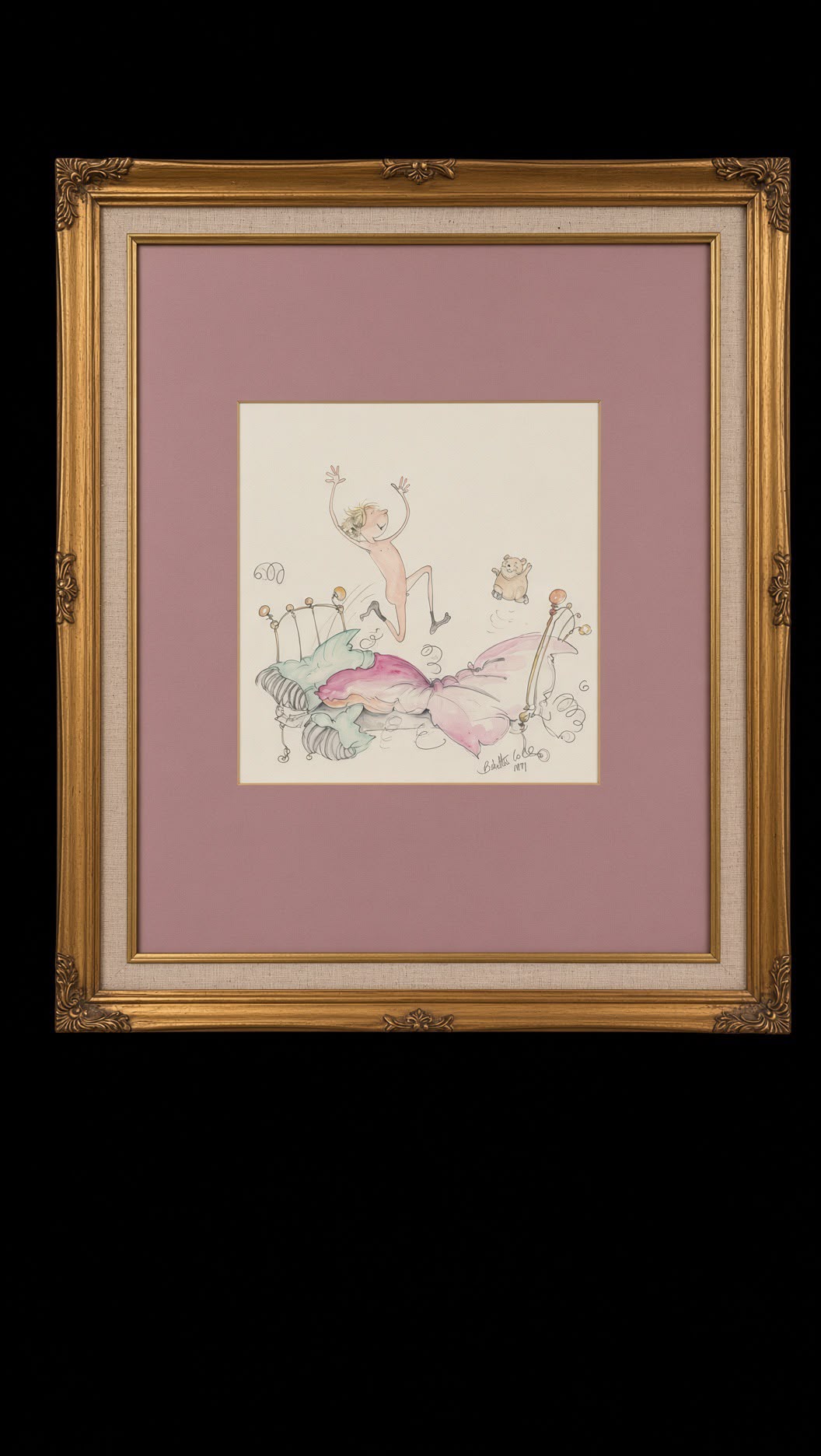
Babette Cole — Pair of Original Illustrations for Hair in Funny Places
Art

Babette Cole — Pair of Original Illustrations for Hair in Funny Places

Two framed original works relating to the celebrated 1999 publication

The companion frame contains an original published page together with two contemporary promotional postcards carrying the lines “Do you have hair in funny places?” and “You will have soon!”, preserving the work within its original publishing and publicity context. Together, the two frames form an unusually complete small archival group: original signed artwork, published material and contemporary promotional ephemera from one of Cole’s most distinctive books. Offered together as a single lot.

Babette Cole, Hair in Funny Places, Jonathan Cape, London, 1999.

Original illustrations by Babette Cole from Hair in Funny Places and other major publications are represented on the artist's estate website. Sotheby's has also offered signed original illustration artwork by Cole, demonstrating an established secondary market for her published work.
Painted plaster fragment with a red hand
Curiosities

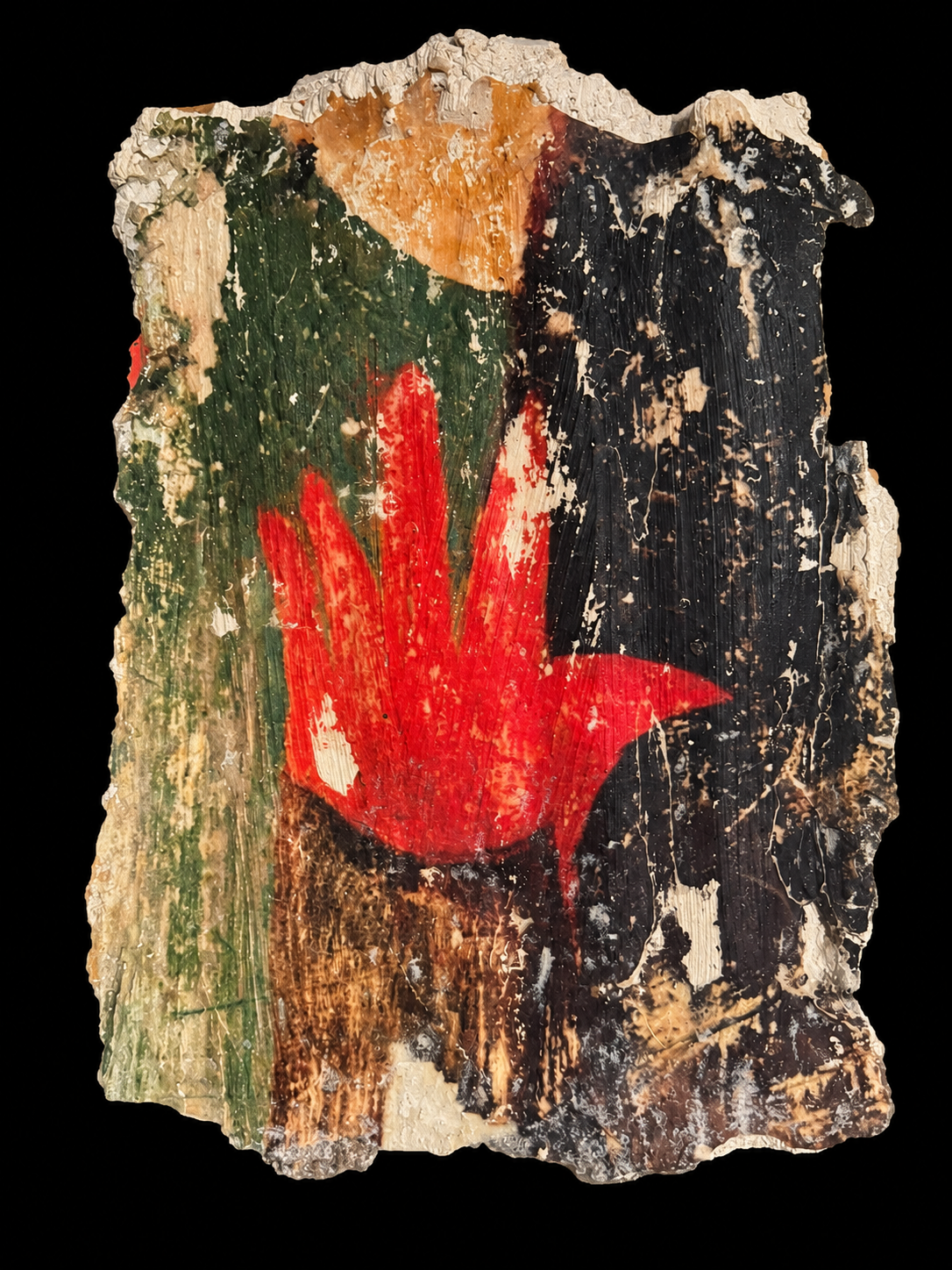
Painted plaster fragment with a red hand

Said to be associated with the Abbey of Thelema, Cefalù, with a letter from Kenneth Anger

A painted plaster fragment said to be associated with the Abbey of Thelema at Cefalù, the house occupied by Aleister Crowley from 1920 until his expulsion from Italy in 1923. A splayed red hand is painted across bands of green, ochre and black. The edges are broken and irregular. Crowley called his bedroom La Chambre des Cauchemars, the Chamber of Nightmares, and its walls were covered with grotesque and esoteric imagery. After 1923 the murals were whitewashed. In 1955 Kenneth Anger uncovered and filmed surviving decoration. This fragment is accompanied by a personal letter from Anger to a former owner concerning the piece. It is not identified with any picture titled by Crowley. The association rests on that letter.

By repute, the Abbey of Thelema, Cefalù, Sicily. Private collection, accompanied by a personal letter from Kenneth Anger to the then owner concerning the fragment; thence to the present owner.

Yorke Collection, Warburg Institute, NS74: p. 220, three photographs of paintings in the Chambre des Cauchemars; pp. 221–222, further photographs of paintings at Cefalù. This fragment is not identified among them. NS52: photograph of Kenneth Anger and Dr Alfred Kinsey at Cefalù, 1955. Villa Santa Barbara, Abbazia di Thelema, FAI, on the protection order of December 1990.

Surviving painted fragments from the Abbey of Thelema are exceptionally uncommon; much of the decoration was whitewashed after 1923. The association with the Chambre des Cauchemars rests on the fragment's provenance and the accompanying letter from Kenneth Anger, which together give this example its documentary interest. For the villa and its protection, see Villa Santa Barbara, Abbazia di Thelema, FAI.

Price on enquiry
Graff emerald and diamond ring
Jewellery

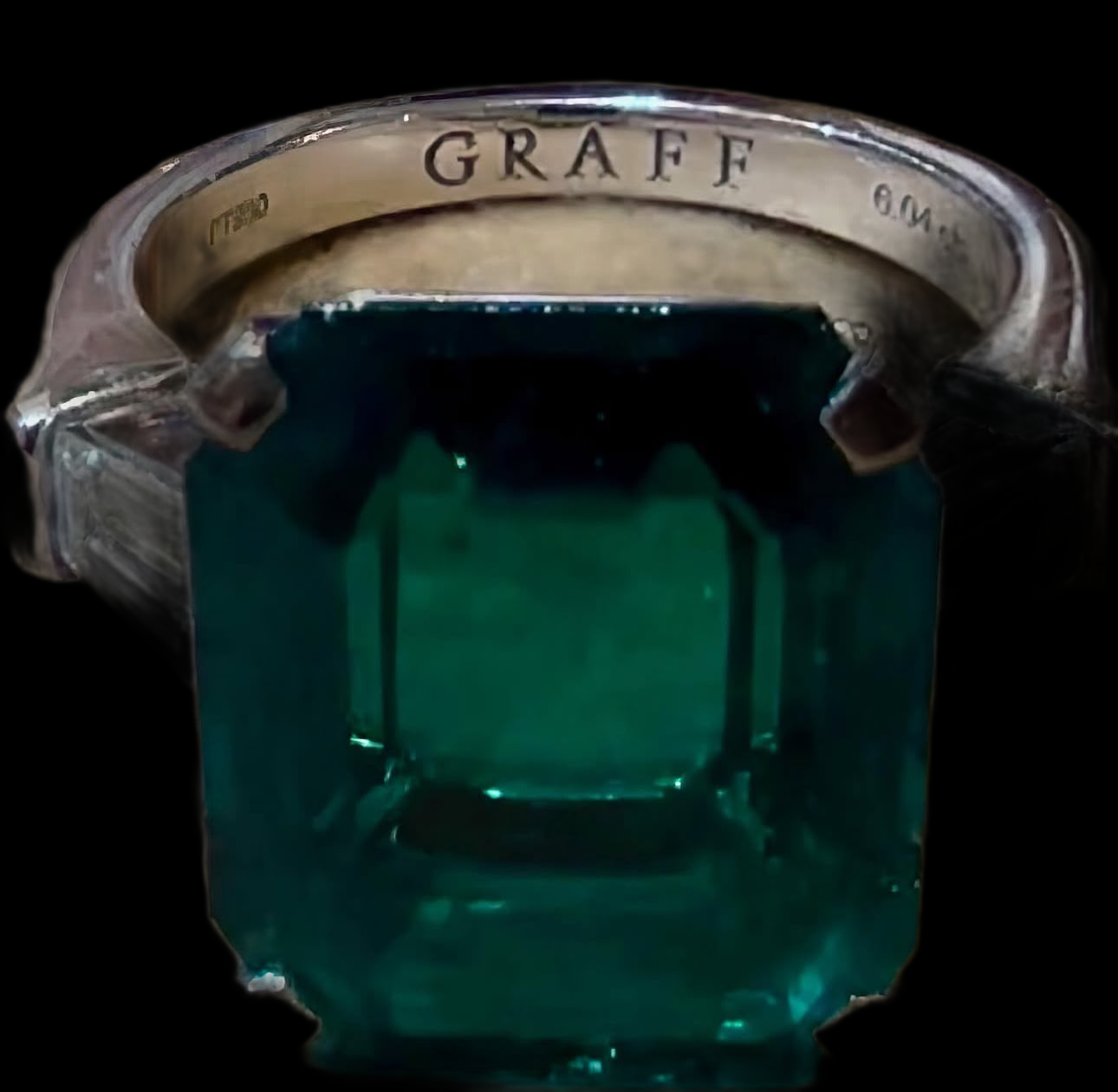
Graff Emerald and Diamond Ring

An emerald and diamond ring mounted in platinum, the central emerald weighing 6.04 carats, signed Graff.

Accompanied by a report for the emerald.

Price on enquiry
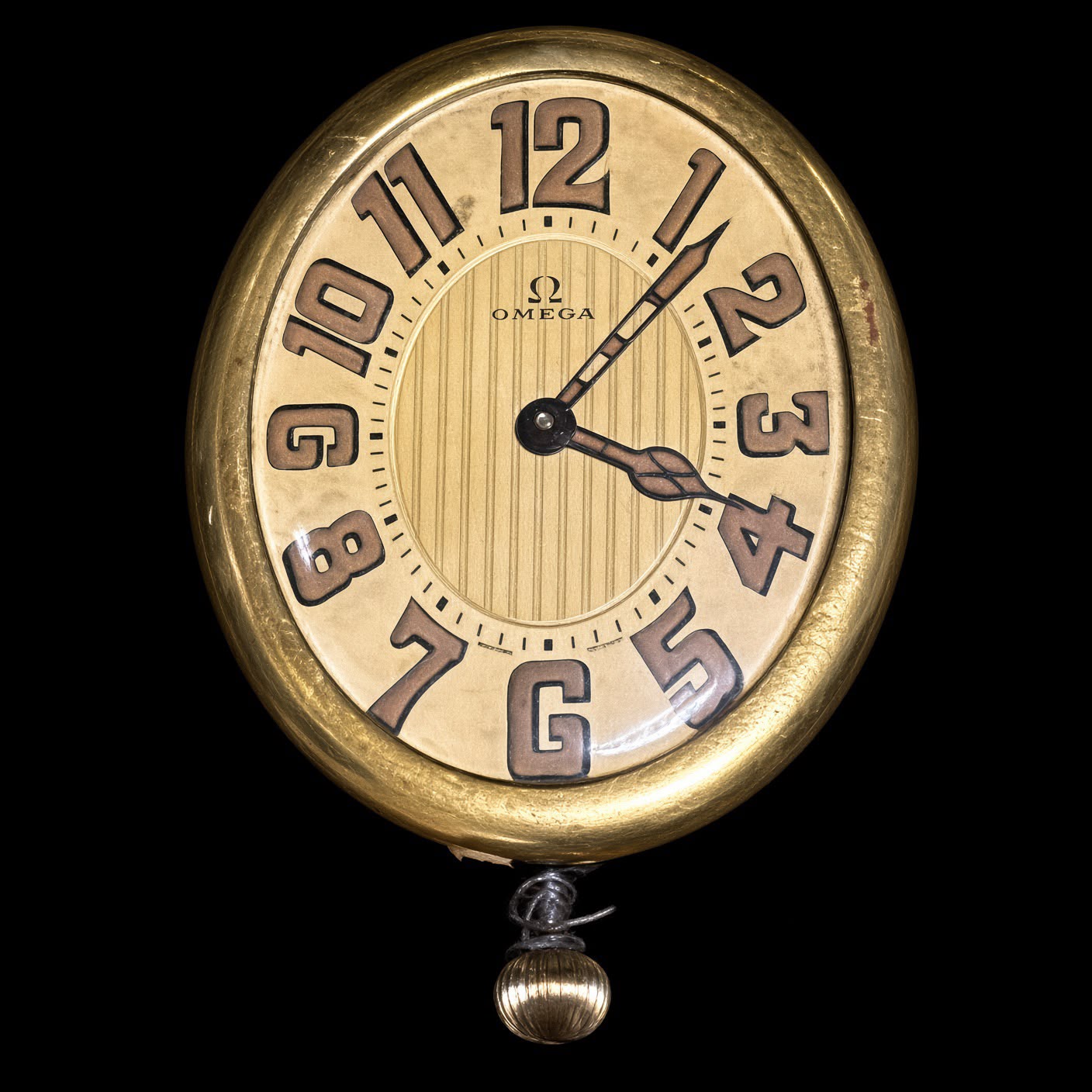
Art Deco Omega Automobile Clock
Decorative Arts

Art Deco Omega Automobile Clock

From the Dein-Bacher family, Waldorf Astoria, New York

The oval gilt dial with grained centre and bold stepped Arabic numerals, signed Omega, Swiss Made, under a domed glass in a gilt bezel. Gilt-metal hinged case, the back opening for winding. 15-jewel movement signed Omega Watch Co. Swiss, adjusted 2 positions, numbered 4805925. Running.

Acquired in New York, circa 1975, by a member of the Dein-Bacher family of the Waldorf Astoria; thence by descent. Accompanied by an old card bearing the embossed seal of Dein-Bacher Inc., inscribed "One of a kind 'Past Elegance' Auto Clock, circa 20s, Bugatti Royal 1932

For the Dein-Bacher firm, see The New York Times, 3 October 1947, "Dein-Bacher Furs Interpret Trends".

Swiss watch movements were imported in quantity to the United States in the early twentieth century, where they were often cased and fitted with new dials by American makers; "adjusted" markings such as this were typical of movements made for the American market. The oval drop-in case, made to sit in a recessed panel, is characteristic of automobile and dashboard clocks of the 1920s.

Serpent Ring
Jewellery

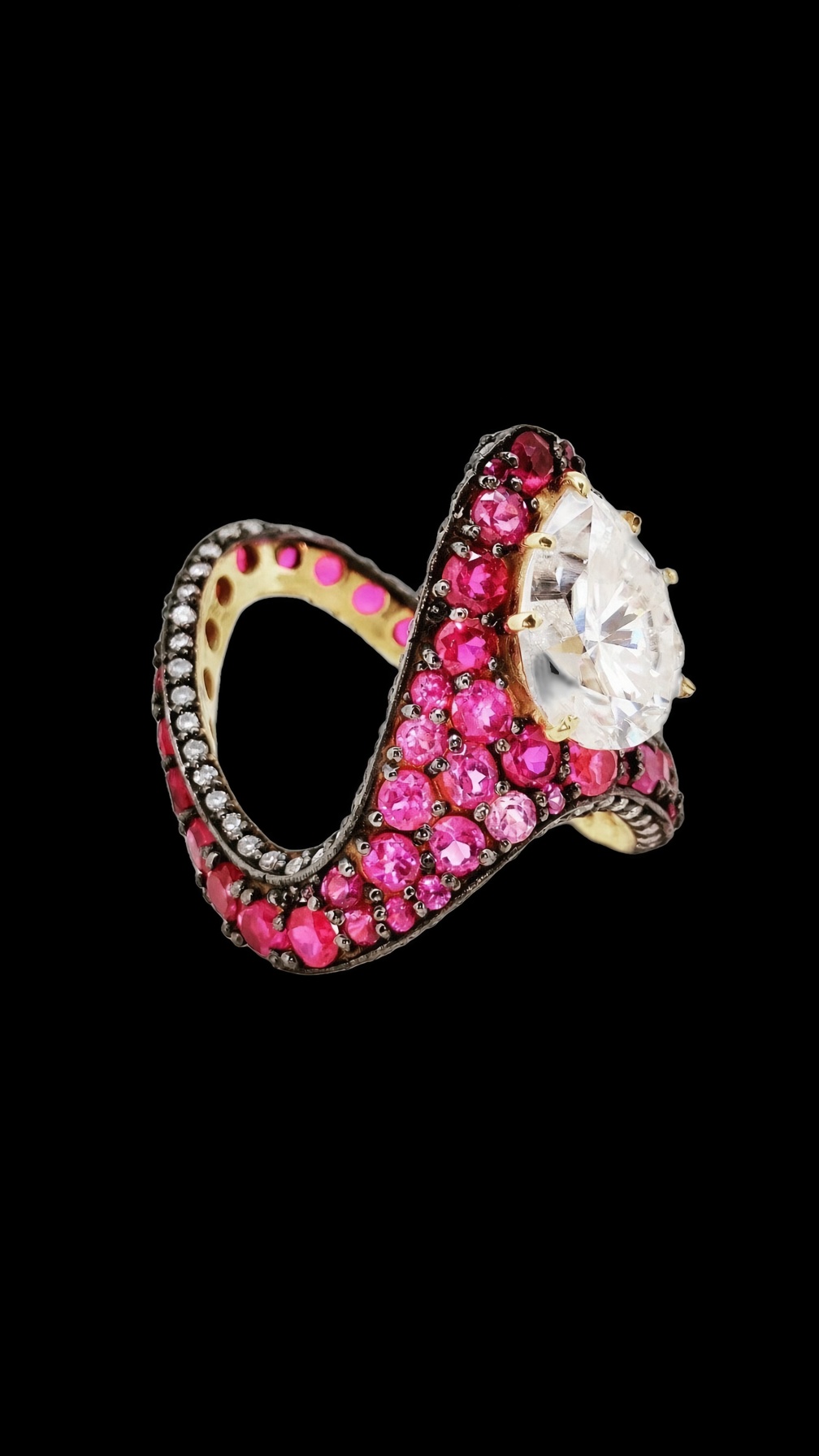
Serpent Ring

Rubies, silver and 22ct gold

Blackened silver and 22ct gold; rubies over the coil, a colourless brilliant in the head. Contemporary, handmade. In the manner of JAR, Paris. The stones are uncertified.

Price on enquiry
Painted Plaster Fragment with a Red Phallus
Curiosities

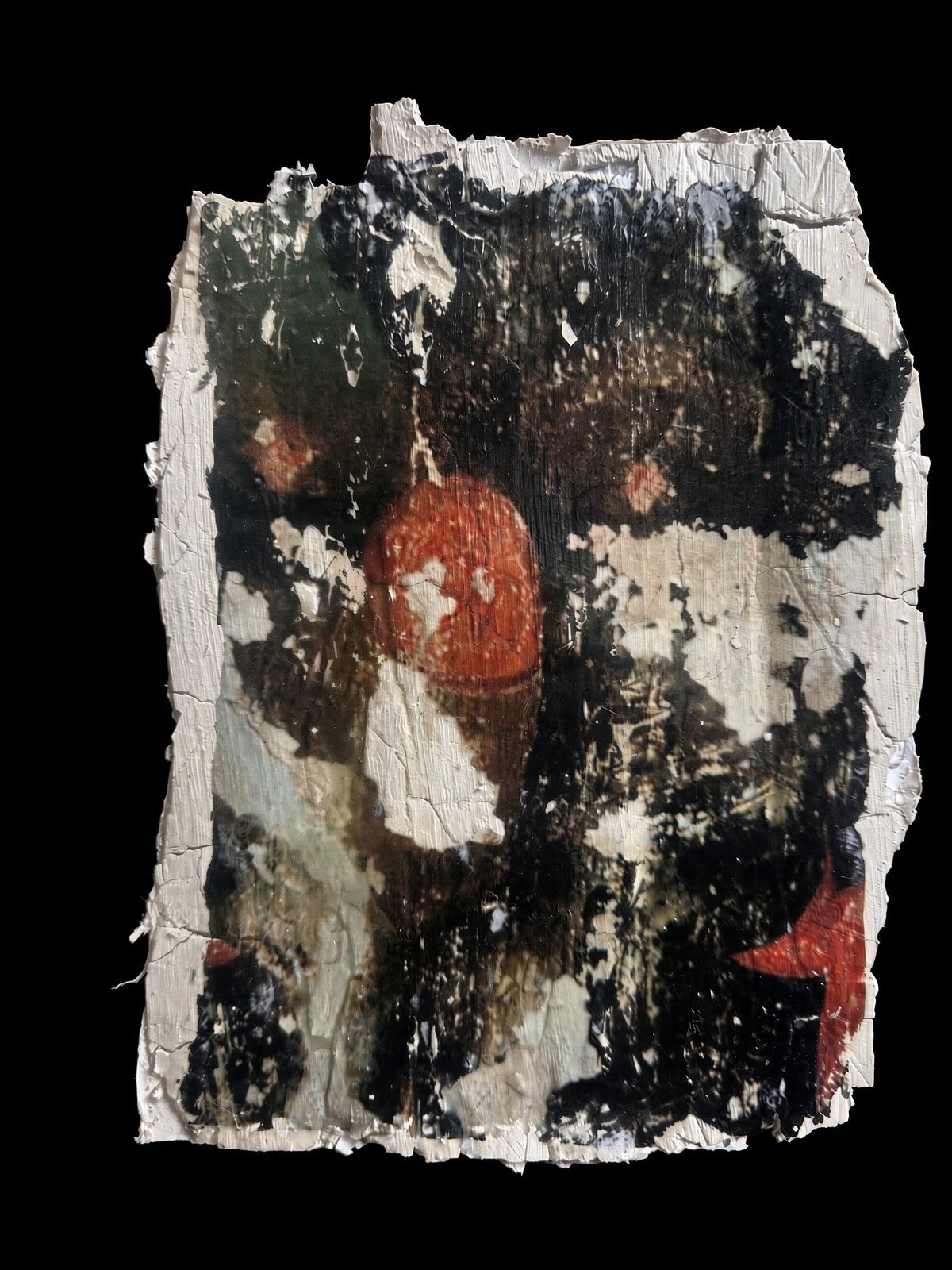
Painted Plaster Fragment with a Red Phallus

Said to be associated with the Abbey of Thelema, Cefalù, with a letter from Kenneth Anger

A fragment of painted plaster said to be associated with the Abbey of Thelema at Cefalù, the house occupied by Aleister Crowley from 1920 until his expulsion from Italy in 1923. A red oval sits on a dark ground, with two smaller red marks above and a red form at the lower right. The edges are broken and irregular. After 1923 the Abbey's murals were whitewashed. In 1955 Kenneth Anger uncovered and filmed surviving decoration. This fragment is accompanied by a personal letter from Anger to a former owner concerning the piece. It is not identified with any picture titled by Crowley, and it is not claimed as a section still visible in published photographs of the house. The association rests on that letter.

By repute, the Abbey of Thelema, Cefalù, Sicily. Private collection, accompanied by a personal letter from Kenneth Anger to the then owner concerning the fragment; thence to the present owner.

Yorke Collection, Warburg Institute, NS74: p. 220, three photographs of paintings in the Chambre des Cauchemars; pp. 221–222, further photographs of paintings at Cefalù. This fragment is not identified among them. NS52: photograph of Kenneth Anger and Dr Alfred Kinsey at Cefalù, 1955.

Surviving painted fragments from the Abbey of Thelema are exceptionally uncommon. Much of the decoration was whitewashed after 1923 and is known chiefly from photographs, or remains in the building. The accompanying letter from Kenneth Anger gives this example its documentary interest. Since December 1990 the villa has been under a Sicilian protection order as of important artistic interest, so painted plaster still on the walls cannot lawfully be removed. That protection is context. For the villa and its protection, see Villa Santa Barbara, Abbazia di Thelema, FAI.

Price on enquiry
Marble bust of a lady
Art

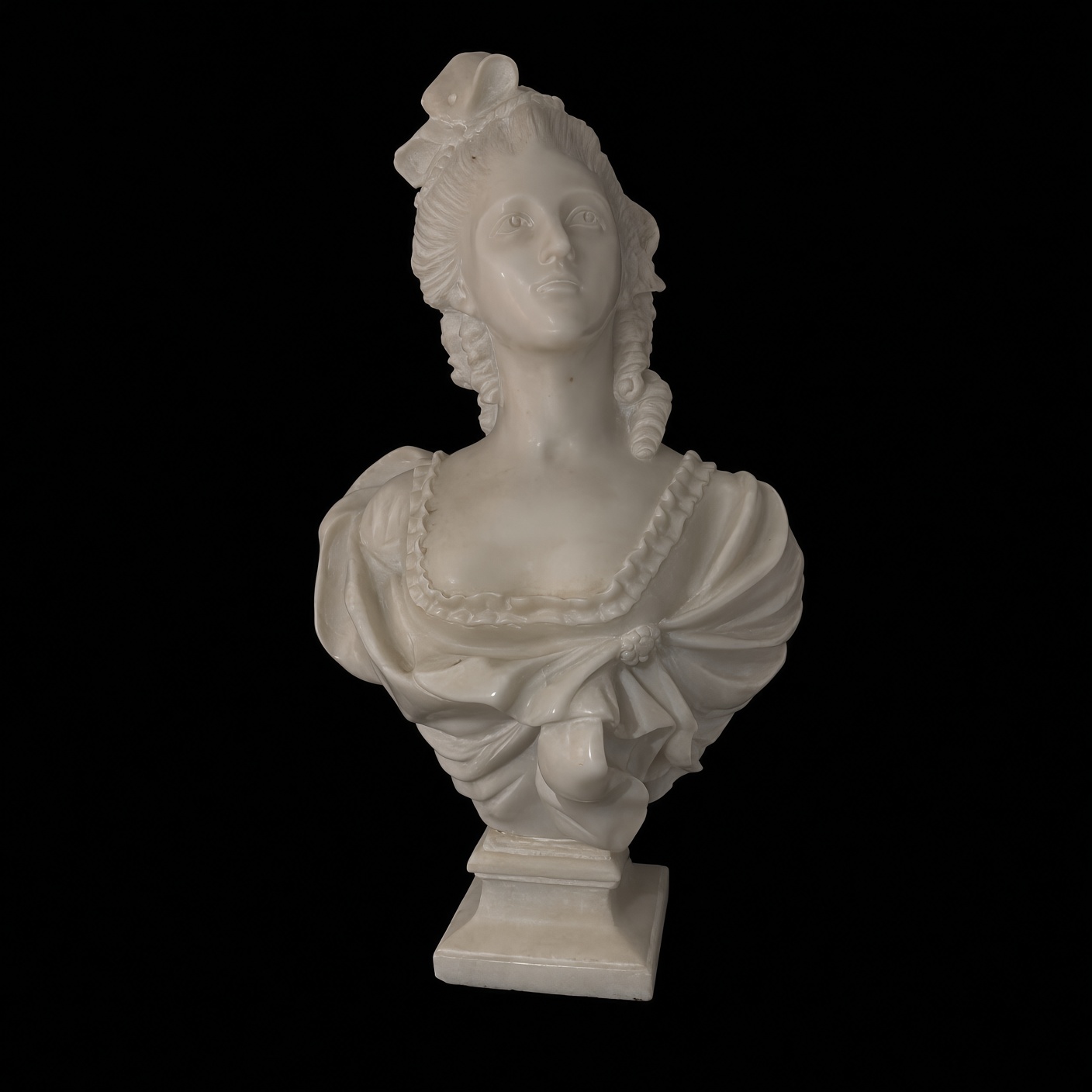
Marble bust of a lady

A finely carved white marble portrait bust

A carved white marble bust of a young woman, 63 × 37 cm (24¾ × 14½ in), the head turned and slightly raised, the hair dressed high with a ribbon, the shoulders draped over a square socle. Heavy, solid marble throughout. Unsigned. In the manner of late XVIII-century French portrait sculpture.

Property of a Belgravia house, London, for approximately 70 years; subsequently in the collection of the New York artist and collector Helen Livingston Broome; by gift to the present owner.

The coiffure and drapery belong to the decorative revival of Louis XVI portrait busts.

Price on enquiry
Man's Survival After Death
Curiosities

Man's Survival After Death

The haunted vicar of Weston, London, 1920

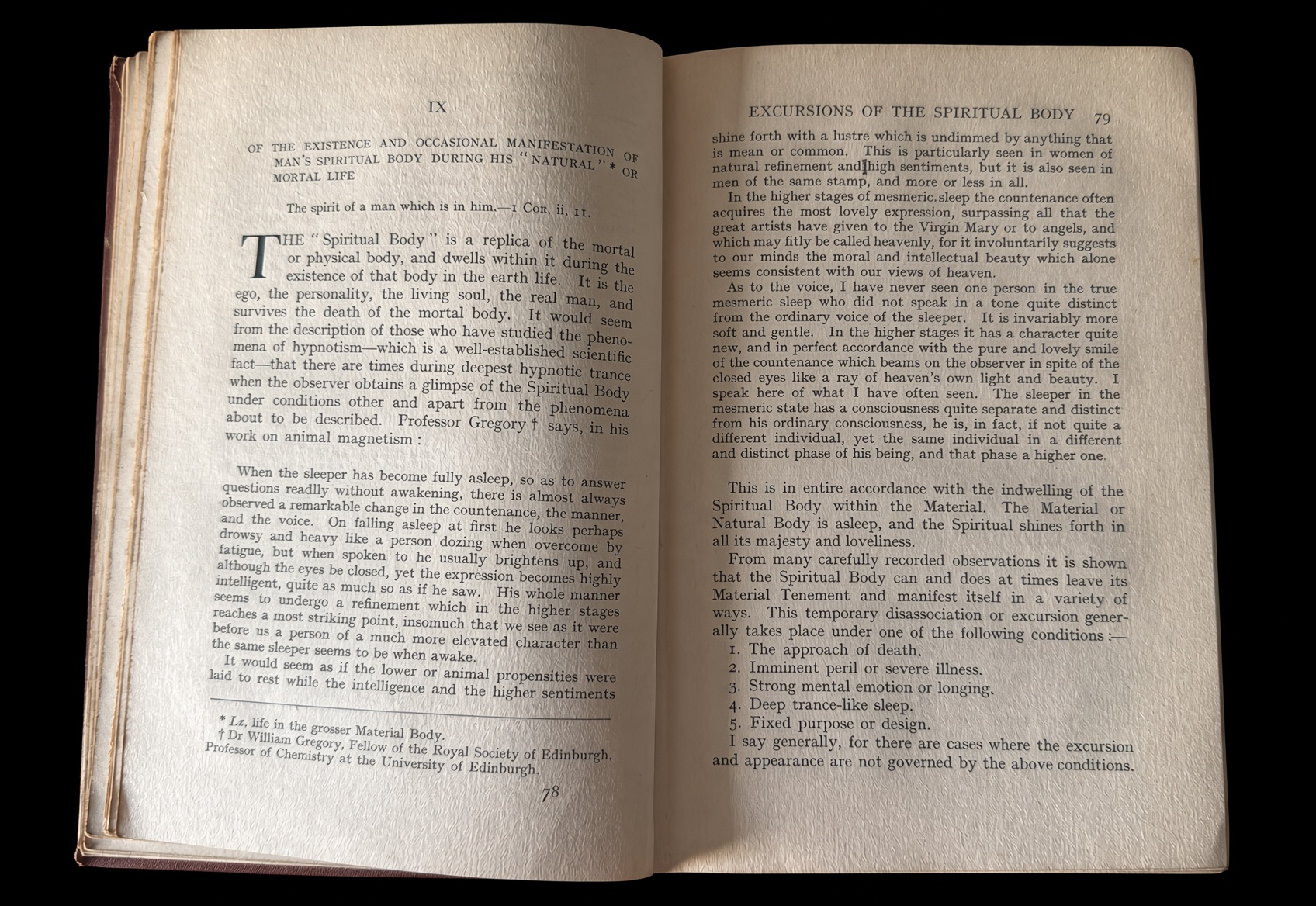
Man's Survival After Death; or, The Other Side of Life in the Light of Scripture, Human Experience, and Modern Research. Second edition, January 1920, first published October 1909. London: Grant Richards Ltd. Printed by the Riverside Press, Edinburgh. The Rev. Charles Lakeman Tweedale, vicar of Weston, near Otley, was one of the best-known Church of England advocates of spiritualism. He reported psychic phenomena at Weston Vicarage between about 1905 and 1923, a case investigated by W. W. Baggally of the Society for Psychical Research, and in the early 1920s he founded the Society of Communion for spiritualist members of the Church of England. He died in 1944.

For the Weston Vicarage haunting, see "The vicar who spoke to the dead"; for the author, Charles Lakeman Tweedale.

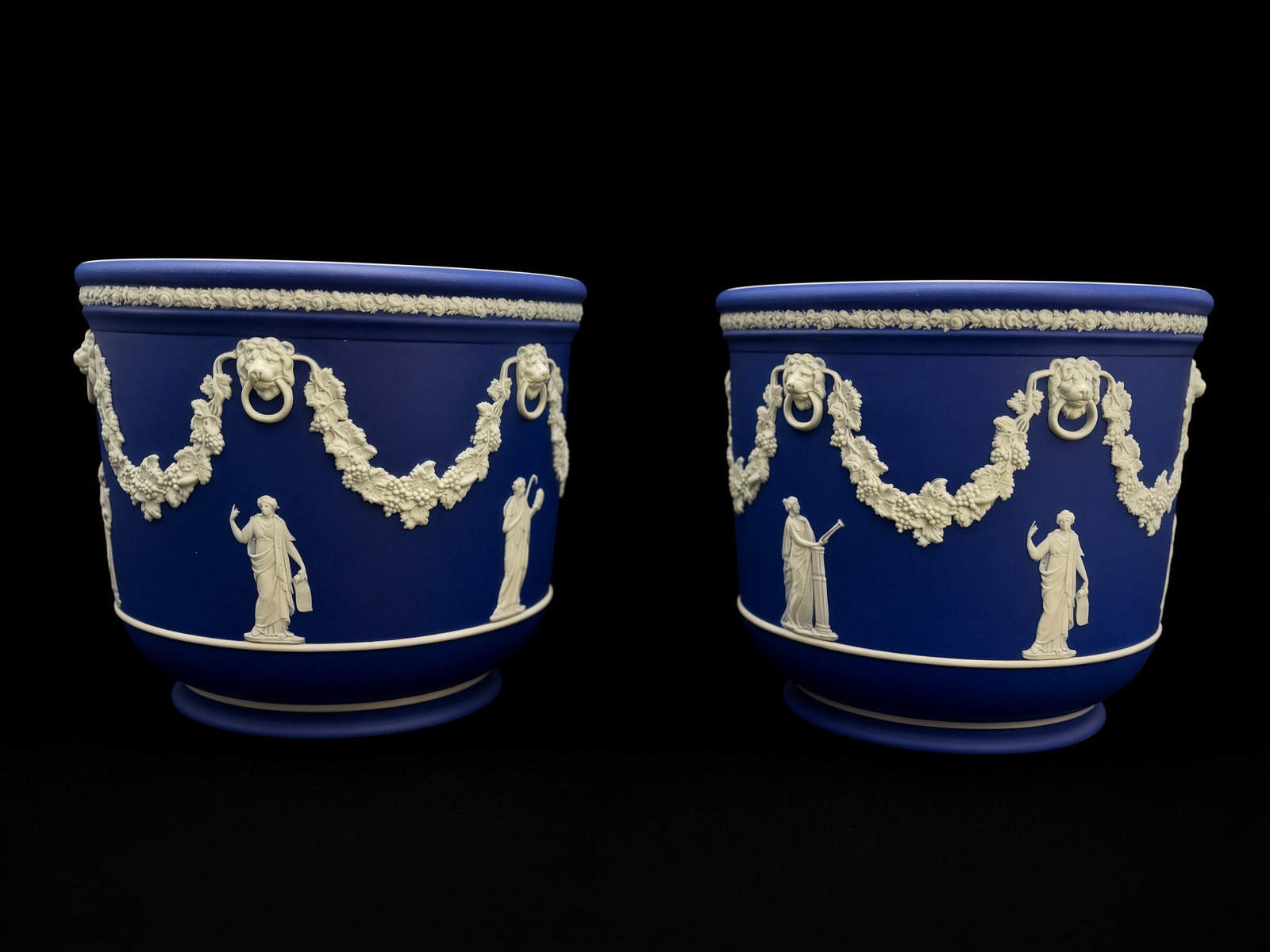
Pair of Wedgwood Dark Blue Jasperware Jardinières
Decorative Arts

Pair of Wedgwood Dark Blue Jasperware Jardinières

Late Victorian / Edwardian, circa 1891‑1908

A handsome matched pair of Wedgwood dark blue jasperware jardinières, each applied in white with classically draped figures beneath fruiting vine swags suspended from lion-mask ring handles. A continuous floral border encircles the upper rim, with white line decoration above the moulded foot. The deep cobalt-blue ground, crisp neoclassical relief and substantial scale give the pair an imposing decorative presence.

Comparable Wedgwood jasperware jardinières with classical figures, lion-mask handles and fruiting vine swags are documented in late nineteenth- and early twentieth-century production.

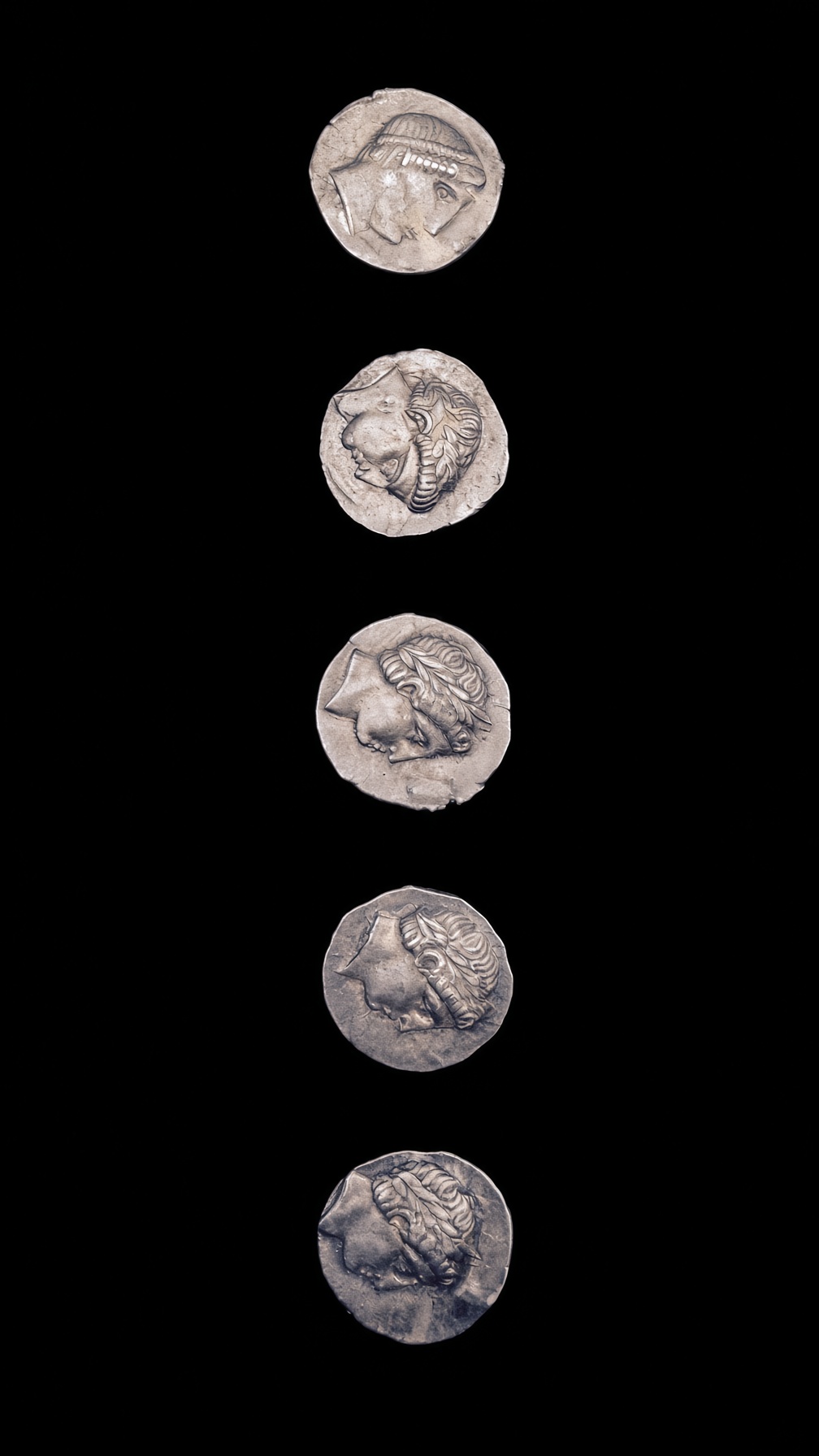
Five Silver Tetradrachms of King Patraos of Paeonia
Antiquities

Five Silver Tetradrachms of King Patraos of Paeonia

Kingdom of Paeonia, circa 335–315 B.C.

Five silver tetradrachms struck for Patraos, king of the Paeonians, whose small kingdom lay north of Macedon. His reign overlapped with that of Alexander the Great, and Paeonian horsemen rode as allies in Alexander's army. Each coin bears the laureate head of Apollo to the right. On the reverse, a Paeonian cavalryman on a rearing horse spears a fallen warrior sheltering behind his shield, with the king's name, ΠΑΤΡΑΟΥ, around the edge. They are thought to have been struck at Astibos or Damastion. Found together in the Paeonian Hoard and kept together since their sale in New York in 1969, the five are offered as a group. Fine to very fine, with varied and sometimes off-centre strikes, edge splits to some flans, untoned surfaces and natural wear from circulation.

From the Paeonian Hoard; Sotheby's, New York, 9 December 1969, where acquired as a group by a private New York collector; by whom bequeathed to the present owner. Their origin in the 1969 sale was confirmed in writing by Morton & Eden, London, in January 2016; a copy accompanies the coins.

IGCH 410; Coin Hoards I, 40. Sotheby's / Parke-Bernet Galleries, New York, 9 December 1969.

Compare a tetradrachm of the same type, purchased from Edward Perry Warren in 1900, in the Museum of Fine Arts, Boston (00.177). For the type, see HGC 3.1, 148; SNG Copenhagen 1390; Sear, Greek Coins 1520.

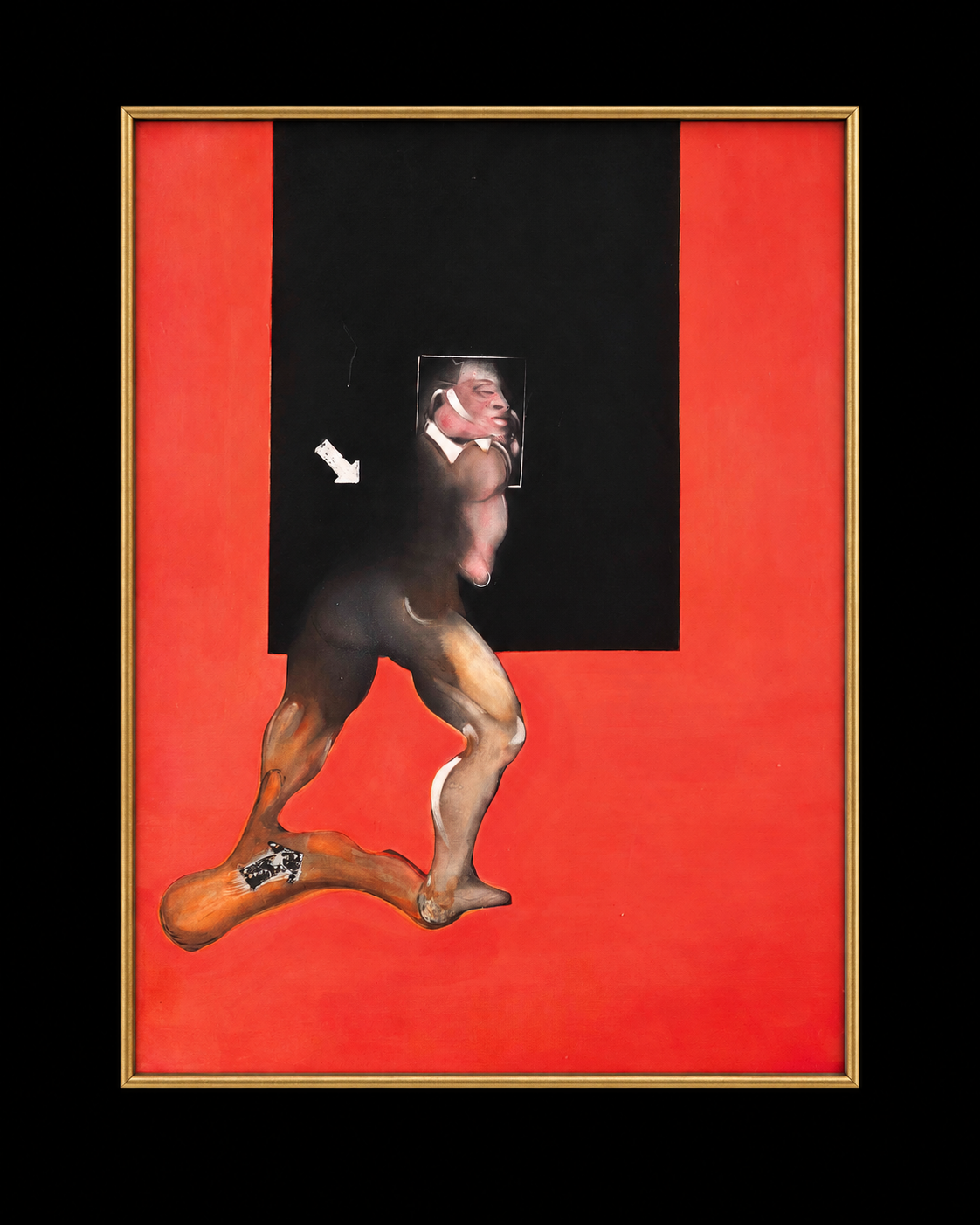
Study from Human Body
Art

Study from Human Body

After Francis Bacon (1909‑1992)

The composition relates to Bacon's 1992 aquatint, published in an edition of 90 impressions. This example bears the pencilled notation '1/90' on the reverse. In the absence of verified publisher's or printer's marks, it is offered as a reproduction rather than an authenticated impression from the original edition.

Numbered 1/90 in pencil on the reverse; no identifiable publisher's or printer's blindstamps, ; original edition not authenticated.

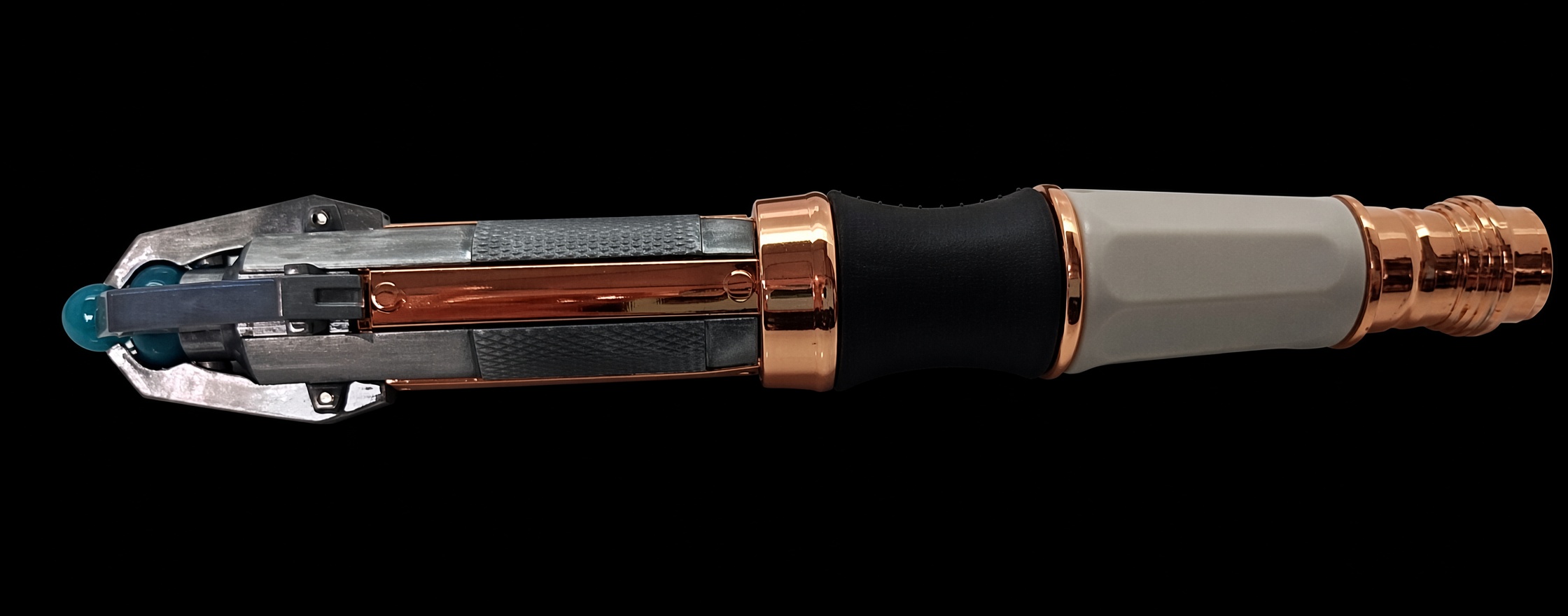
Eleventh Doctor’s Sonic Screwdriver

Eleventh Doctor’s Sonic Screwdriver

Dr. Who Collectable

A detailed replica of the sonic screwdriver carried by Matt Smith’s Eleventh Doctor. Designed as a gesture-based infrared universal remote, it can learn up to 39 commands from conventional infrared remotes and features authentic Doctor Who sound effects. Supplied with its original display stand, clear presentation cover and printed blueprint instruction manual. Outer box not present.

For contemporary coverage of this model, see Jim MacQuarrie, Sonic Screwdriver Universal Remote, WIRED, 8 September 2012.

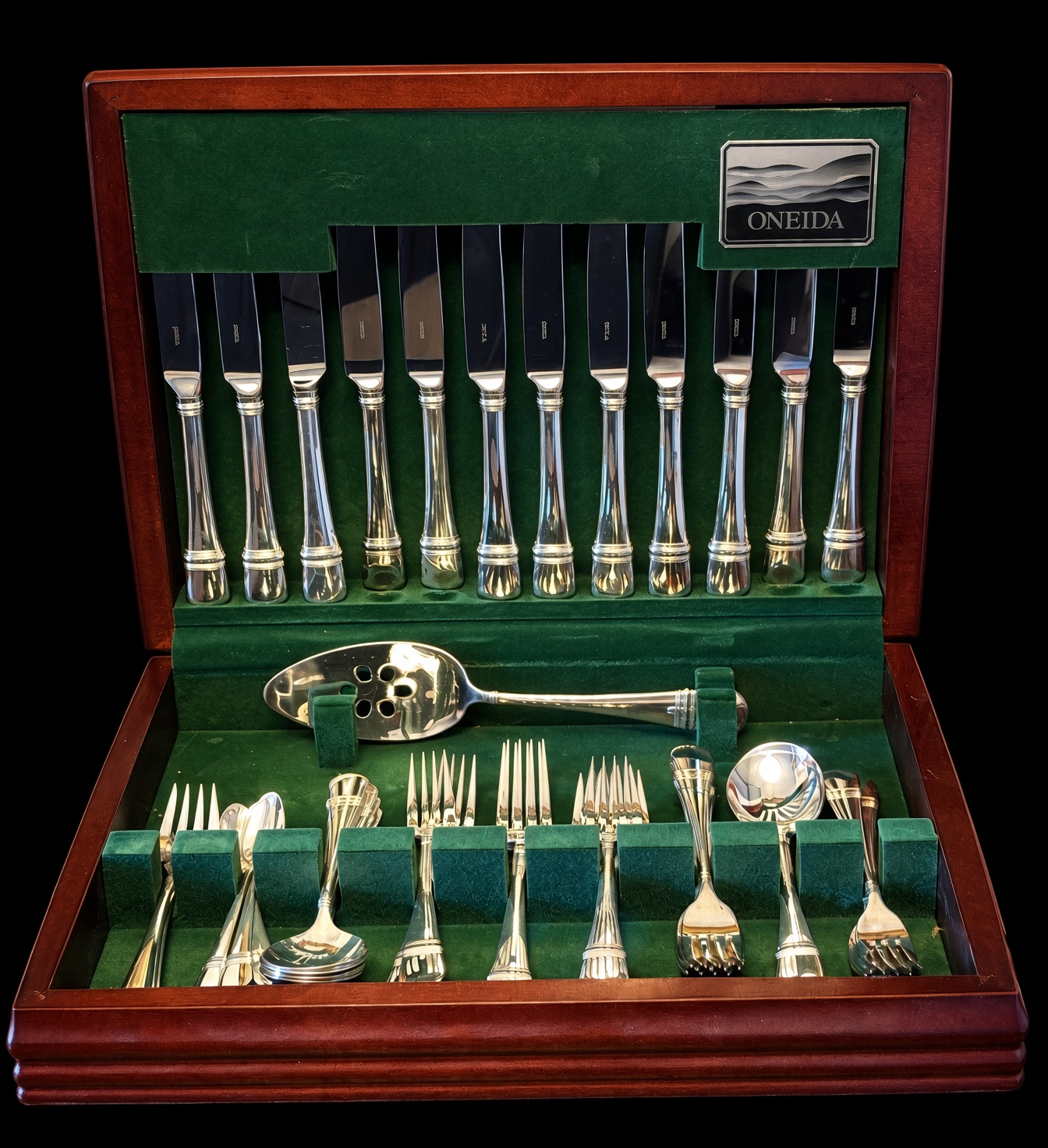
Oneida Silver Plated Canteen

Oneida Silver Plated Canteen

40 pieces in a fitted presentation case

An attractively presented Oneida canteen, with tapered handles articulated by paired bands. The wooden case opens to a fitted green interior, with the knives held in the lid beneath an Oneida plaque. Comprising 40 pieces, including table and smaller knives, assorted forks, large spoons, teaspoons and a pierced serving spoon. The cutlery shows surface marks consistent with light use. The case and lining show signs of handling and wear.

Oneida’s silverware business originated within the nineteenth-century Oneida Community, a religious communal society known for its unconventional system of “complex marriage”. Silver plated tableware production began in 1877. This later canteen connects to that unusual history through the manufacturer’s origins. For historical background, see Syracuse University Libraries, The Oneida Community Collection.

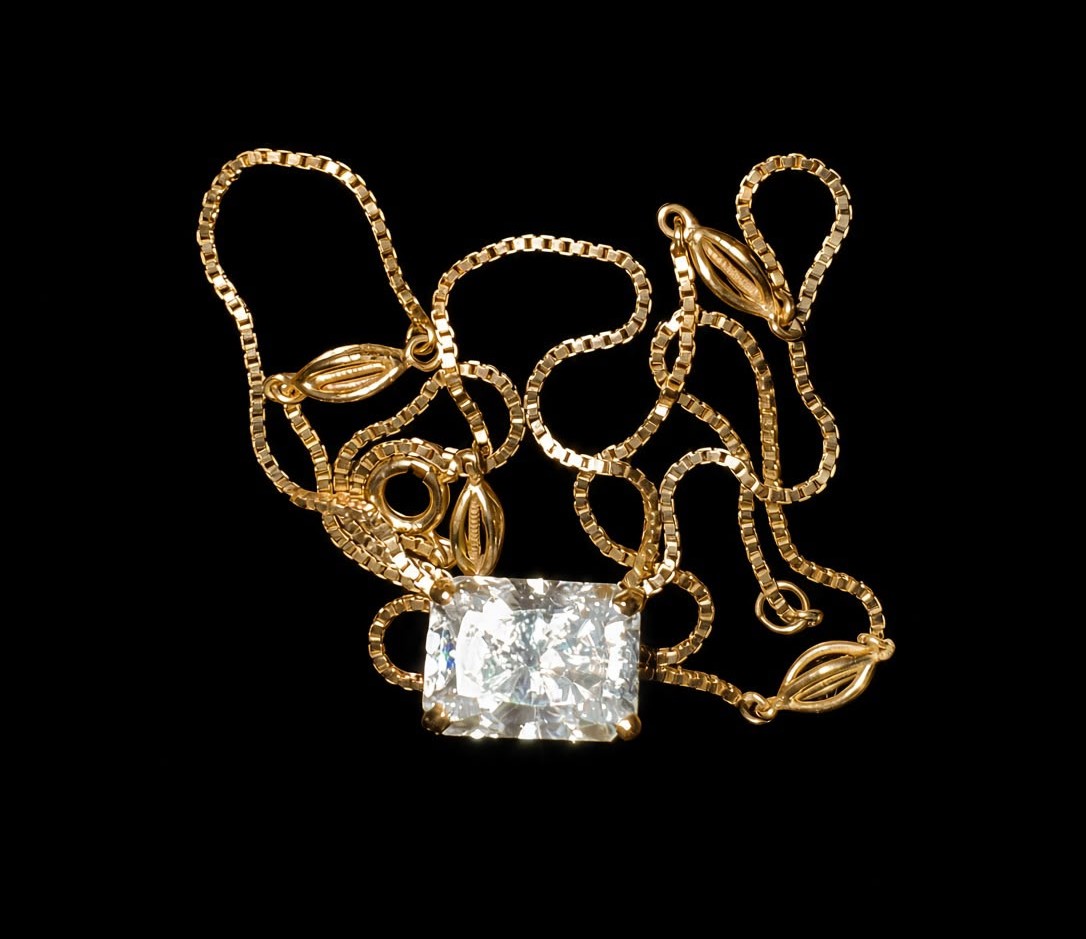
Aristocratic Hair Ornament & Floating Solitaire Necklace
Jewellery

Aristocratic Hair Ornament & Floating Solitaire Necklace

An Italian Countess’s dual-purpose jewel in 9ct & 22ct gold

An dual-purpose hair ornament and necklace, worn woven into the coiffure at state receptions or suspended as a solitaire at the collarbone. Set at the centre is a colourless radiant-cut moissanite of 14mm × 10mm, a bespoke, non-standard scale specially cut during the Charles & Colvard patent period to mirror the exact proportions of the Countess’s vaulted family diamond. The stone is carried on a fine 53cm Italian 9ct gold box chain, spaced at exact intervals by four earlier, hand-wrought 22ct gold cages with barley-twist centres. The marriage of late-19th-century high-karat goldsmithing with an archival, custom-proportioned centre stone lends the piece an understated aristocratic provenance and remarkable versatility

Accompanying archival documentation is available for inspection upon private enquiry

Price on enquiry
UK REGISTRATION ON RETENTION, B19 COX
Collectables

Private Registration B19 COX

Cherished Registration on Retention

A cheeky modern status token with unmistakable two-line swagger; held on DVLA retention entitlement for UK transfer, bike or car, subject to statutory registration rules and buyer eligibility.

Not what you are looking for?

The most
interesting objects
rarely appear here.

We are always interested in the exceptional, the unexpected and the difficult to classify. If you are seeking something specific, or have an object to place, please write.

Begin a private conversation